

When SPN 3251 FMI 0 shows up on your screen, it means your engine’s exhaust system is blocked. This is a serious issue — your Diesel Particulate Filter (DPF) is full, and the exhaust pressure is too high. When this happens, your engine will lose power or might even shut down to protect itself. This guide will help you understand what’s happening and walk you through simple steps to find and fix the problem so you can get your machine running right again.
What Is SPN 3251 FMI 0?
This code means:
Aftertreatment 1 DPF Outlet Pressure — Data Valid but Above Normal Range (Most Severe Level).
Let’s say that in plain terms:
- Your machine is telling you the pressure at the end of the DPF is way too high.
- The sensor is working properly — the problem is real, not electrical.
- The Engine Control Module (ECM) sees that the exhaust is blocked and cuts power to protect the system.
Think of FMI 0 as your engine shouting: “Help! I can’t breathe out!”
4 Common Symptoms You’ll Notice
When SPN 3251 FMI 0 shows up, you will notice clear signs that the DPF is badly clogged:
- Severe Power Loss: The machine runs weakly because the ECM limits power immediately.
- “Stop Engine” Light: A red warning or critical aftertreatment light will come on.
- Failed or Constant Regeneration Attempts: The system keeps trying (and failing) to clean itself.
- Black or White Smoke: You may see smoke from the exhaust because of extreme backpressure.
Why Does This Fault Happen? 3 Main Causes
In simple terms, something is blocking your DPF. Here are the three main reasons:
1. DPF Full of Ash
Your DPF collects soot and burns it off during regeneration. But ash — leftovers from oil and fuel — doesn’t burn.
Over a long time, this ash builds up inside and blocks the filter completely.
No amount of normal regeneration can remove this ash.
2. Failed or Incomplete Regenerations
If regenerations don’t finish properly, soot builds up faster than it can be burned.
Common reasons include:
- Running the engine at low loads or for short times.
- Idling too long.
- Turning off or stopping regeneration on purpose.
3. Engine or System Problems Creating Extra Soot
If the DPF keeps clogging fast, the real cause might be deeper — the engine itself.
Possible problems include:
- Leaking fuel injectors
- Failing turbocharger
- Dirty air filter or intake leaks
- Bad EGR Valve
- Bad temperature or pressure sensors
All of these can make the engine produce more soot than normal.
How to Fix SPN 3251 FMI 0: A 5-Step Plan
Follow these steps carefully to find and fix the real cause.
Don’t jump straight to replacing the DPF — it’s expensive and may not be the root problem.
Step 1: Check Regeneration History and Operation
Start simple:
- Is the Regen Inhibit switch ON?
- Has the machine recently finished a regeneration?
- Ask the operator if regenerations have been stopped or canceled often.
If regenerations aren’t completing, the DPF is likely full of soot.
Make sure operators know to let the regeneration finish every time.
Step 2: Try a Forced (Parked) Regeneration
Use a service tool or the dashboard to start a forced regeneration.
This process heats the exhaust to burn off soot.
- If it completes successfully and the code clears → the DPF was full of soot, not ash.
- If it fails to start or stops early → the DPF is too plugged and needs cleaning.
Do not try to force multiple failed regenerations back-to-back. Too much heat can damage the system.
Step 3: Check the DPF Pressure Sensor and Hoses
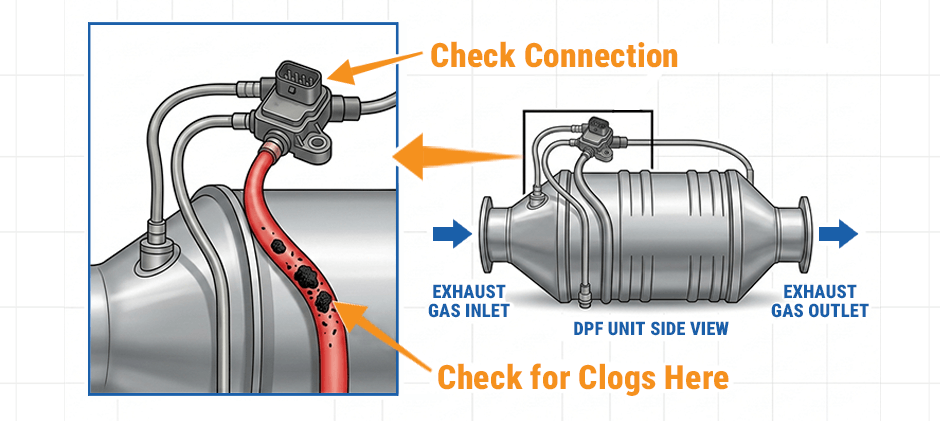
Before removing the DPF, look at the small hoses and sensor that measure DPF pressure.
- Hoses can get clogged with soot or moisture, giving false high readings.
- Remove the hoses carefully and clean them with compressed air.
- Check that the sensor plug is tight and the sensor isn’t damaged.
Then restart the machine and see if the code clears.
Step 4: Remove and Professionally Clean the DPF
If the code comes back after trying the steps above, the DPF is most likely full of ash.
You’ll need to remove it and send it for professional cleaning.
Technicians use a “bake and blow” process to heat and clear the ash safely.
Do not try to clean the DPF with water or air in the field — it won’t work and might ruin the filter. After cleaning, reinstall the DPF and clear the fault codes.
Step 5: Find Out What Caused the Plugging
Once the DPF is clean, figure out why it got blocked in the first place.
Otherwise, it will clog again.
Check:
- Are the injectors leaking fuel?
- Is the air filter dirty, or is the intake system leaking?
- Is the turbocharger working right?
- Are temperature and pressure sensors reading correctly?
Fix any issues before returning the machine to service.
When Should You Replace the DPF Outlet Pressure Sensor?
Only replace the sensor after you’ve cleaned the DPF and lines and still see high pressure readings.
If the hoses are clear and the DPF is clean, but the sensor still shows high pressure, then the sensor itself might be bad.
To confirm, compare its reading to a mechanical pressure gauge.
If it’s off by a lot, replace the sensor.
Otherwise, the issue is physical blockage — not electronics.
Conclusion
The SPN 3251 FMI 0 fault means your engine’s exhaust is badly restricted — the DPF is full or blocked. By doing these steps in order, you can clear the code, protect your engine, and avoid expensive downtime. Regular maintenance and completing regeneration cycles keep your DPF and engine breathing freely for years to come.
- If your diagnosis points to a faulty sensor, we have a wide selection of Pressure Sensors and Temperature Sensors.
- For issues within the Emission & Exhaust System, you can find everything from EGR Valves to complete Turbocharger & Kits.
- etc.
Trust FridayParts to supply the quality aftermarket parts you need to fix it right the first time and keep your engine breathing freely for years to come.
