

When you’re browsing utility vehicles for sale, you might notice some are 4×4, and others are 4×2. What’s the Difference Between utility 4×2 vs 4×4? And if you’re buying a utility vehicle for your farm, construction site, or property, which drive type should you pick?
What’s the Difference Between 4×4 and 4×2?
The key to telling these two apart is drive wheels—it’s basic mechanical stuff. Every vehicle’s engine makes power. The drivetrain is just the set of parts that sends that power to the wheels to get the machine moving.
Drive wheels are the ones that get power from the engine to push or pull the vehicle forward. Non-drive wheels don’t get any engine power—they just spin freely when the machine moves.
The numbers in 4×2 and 4×4 are just an easy code. The first number is the total number of wheels (most utility vehicles have four). The second number is how many of those wheels are drive wheels.
What is 4×2?
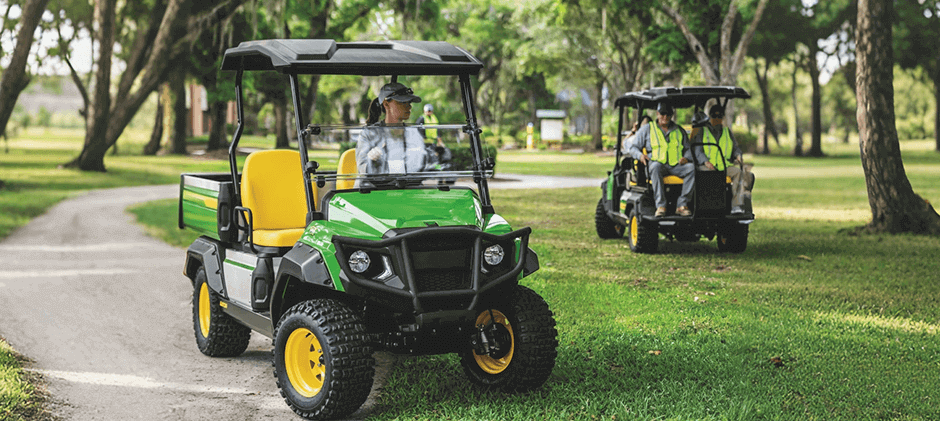
A 4×2 (also called 2WD) utility vehicle is two-wheel drive. The engine only sends power to two out of the four wheels. For almost all off-road utility machines, this is a rear-wheel drive (RWD) setup. Here’s how a regular 4×2 utility vehicle works:
- Power goes from the engine through the transmission.
- Then it travels down a single driveshaft to the rear axle.
- A part called the rear differential splits that power and sends it to the two rear wheels.
The rear wheels do all the work to push the vehicle forward. The front wheels? They’re just non-drive wheels—they are to steer the vehicle and roll along as it moves. It’s a simpler, no-fuss design that’s been a dependable standard for decades.
What is 4×4?
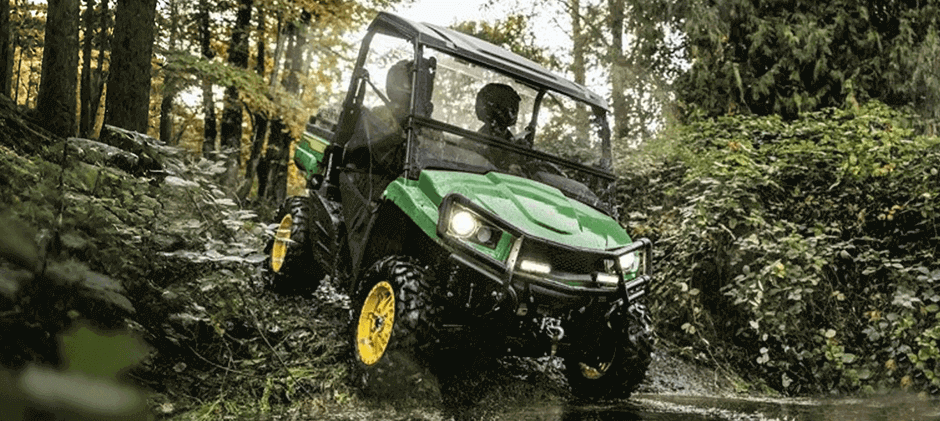
A 4×4 (or 4WD) utility vehicle is four-wheel drive. As the name says, it can send power to all four wheels at once. It’s a more complex setup built for maximum grip. Here’s how power moves in a regular 4×4 utility machine:
- Power goes from the engine through the transmission to a special gearbox called a transfer case—this is the heart of the 4×4 system.
- The transfer case splits the engine’s power and sends it to both the front and rear axles using two separate driveshafts.
- Then the front and rear differentials split that power again to all four wheels.
Most utility 4×4 systems are part-time, which makes them super flexible. Normal driving? Just use 4×2 mode (usually rear-wheel drive) — saves gas and less wear on parts. Hit slippery mud, steep hills, or thick snow? Flip a simple lever or press a button to turn on 4×4 mode. Then all four wheels get power, and you’ll have all the extra grip you need. Some fancy models come with a full-time 4×4; it stays on automatically, no switching required.
Utility 4×2 vs 4×4: Which Is Better?
Picking a 4×2 vs 4×4 utility vehicle isn’t about finding a “better” one—it’s about matching the machine to your work and where you use it. Let’s break down the pros and cons based on what matters most.
The Case for a 4×4 Utility Vehicle: Power and Capability
A 4×4 is all about maxing out grip and capability. If your work means dealing with unpredictable conditions, this setup lets you get the job done without getting stuck—no stress.
- Way Better Traction: This is the main reason to choose a 4WD. Power can be transferred to four wheels. It can also cope when encountering mud, snow, sand and loose gravel roads. When one or both wheels lose grip, the other wheels can continue to pull forward. On undeveloped land, humid climates or steep terrain, the advantages of 4WD are evident.
- More Stable Towing and Hauling: On paper, towing capacity might look similar between 4×2 and 4×4. But a 4×4 gives you way more control when hauling heavy loads on bumpy or slippery ground. The extra grip from the front wheels stops the trailer from pushing you around, and makes starting/stopping on hills or slick surfaces way steadier.
- Enhanced Versatility: A 4×4 can do everything a 4×2 can— but a 4×2 can’t do everything a 4×4 can. It lets you tackle almost any task or terrain you run into, making it a real all-around workhorse. That “go anywhere” ability is priceless for peace of mind.
- Holds Resale Value Better: Because 4×4s are more capable, they’re in higher demand on the used market. They keep their value longer over time, which helps make up for their higher upfront cost.
The Case for a 4×2 Utility Vehicle: Efficiency and Cost-Effectiveness
A 4×2 is the king of efficiency and value. For lots of owners, it gives you all the power you actually need—no extra cost or hassle of a 4×4 system.
- Lower Upfront Cost: Straight from the factory, a 4×2 is almost always way cheaper than the same model in 4×4. For businesses buying a whole fleet, or folks on a tight budget, this initial saving can be the deal-maker.
- Less Maintenance and Repair Bills: Simple is better here. A two-wheel drivetrain has fewer moving parts. There is no transfer case, drive shaft, or front differential. Fewer parts will also result in less wear and tear and lower long-term maintenance costs.
- Better Gas Mileage: All the extra bits on a 4×4 add a ton of weight. A lighter 4×2 doesn’t need as much energy to move, so it burns less fuel. Over hundreds or thousands of hours of use, those savings really add up.
- Tighter Turning Circle: Without all the front drivetrain stuff, the front wheels of a 4×2 can turn a lot sharper. That gives you a tighter turning radius, making the machine way easier to maneuver in tight spots—like barns, warehouses, or landscaped yards.
| Feature | Utility 4×2 (2WD) | Utility 4×4 (4WD) |
|---|---|---|
| Traction | Good on flat, dry surfaces | Excellent in mud, snow, and on hills |
| Purchase Price | Lower | Higher |
| Maintenance Cost | Lower (fewer parts) | Higher (more complex system) |
| Fuel Efficiency | Higher | Lower |
| Weight | Lighter | Heavier |
| Towing/Hauling | Good on stable ground | Superior control on uneven/slick ground |
| Complexity | Simple, easy to operate | More complex, requires engagement |
| Resale Value | Lower | Higher |
Utility 4×2 vs. 4×4: Which Should You Choose?
Don’t pay for power you’ll never use, but don’t save a little cash now just to end up with a machine that can’t get the job done later. Let’s break down how to decide.
Choose a 4×2 Utility Vehicle if:
- Your Terrain is Consistent and Mostly Flat: You drive mostly on pavement, hard-packed dirt, level grass, or inside big buildings. Rarely do you hit deep mud, thick snow, or steep, slippery hills.
- Your Work is Light-Duty: You mainly haul people, carry small tools, or move light loads over smooth ground. No need to tow heavy trailers through tough spots.
- Budget is Your Main Concern: You want a reliable machine at the lowest upfront cost, and you’re looking to keep fuel and maintenance bills down long-term. For big fleets used on managed properties like golf courses or resorts, the cost savings of 4×2s add up big time.
In short, a 4×2 is a smart, budget-friendly pick for controlled areas where you don’t need max traction every day.
Choose a 4×4 Utility Vehicle if:
- Terrain is Challenging and Unpredictable: When working, we often pass steep slopes and forest paths, and the ground turns into muddy areas when it rains. Or live in an area with a lot of snow and want a machine that can operate all year. In places like construction sites and logging sites, the road conditions are already very poor.
- Work is Heavy-Duty: You’ll need to tow a heavy trailer to transport heavy material, such as gravel or firewood. Or use a ground work attachment such as a snow plow. Additional traction is necessary for safety and operability.
- Maximum Reliability and Versatility: You need a machine that can handle any work task, regardless of weather or road conditions. You value the confidence that the machine won’t get stuck in the critical moments.
If you look at your property and see challenges instead of smooth paths, the 4×4 is almost certainly the right choice.
The Final Thought
A 4×2 is a budget-friendly workhorse for predictable conditions. A 4×4 is a tough, powerful machine—ideal for challenging jobs. No matter which drive type you pick, good-quality parts can boost your experience and performance. Don’t risk safety by using worn or broken parts. Check out top-quality UTV replacement parts from FridayParts right now!
