

If your EFI riding mower or zero-turn (ZTR) idles roughly, cranks long after a fill-up, or throws an EVAP code, the purge valve is one of the first parts to suspect. This guide walks through the seven purge valve symptoms that show up most often on the seat, plus how to tell the valve apart from a loose cap or cracked hose before you spend money on parts.
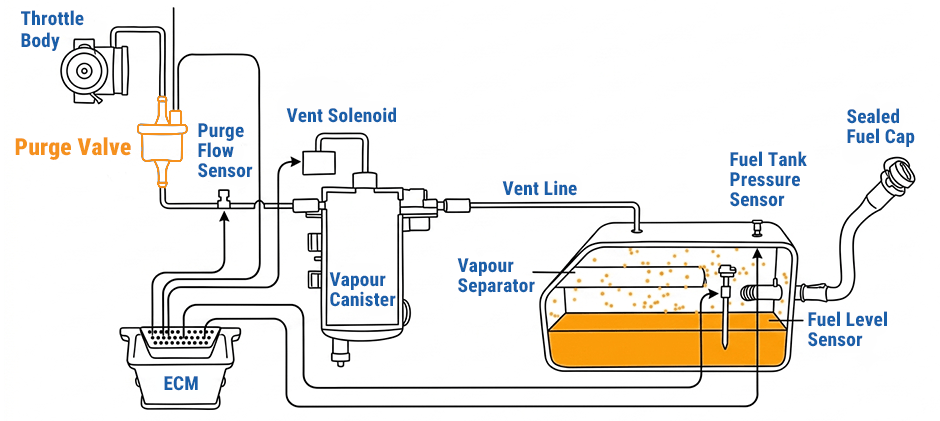
Quick Answer: The purge valve sits between the charcoal canister and the engine’s intake. It releases stored fuel vapors so they get burned instead of being vented to the air. When it sticks open or closed, you’ll see rough idle, hard starts after refueling, EVAP codes (P0443, P0441, P0455), and a slow creep in fuel use — the classic bad purge valve symptoms on a riding mower or ZTR.
Applies to: EFI-equipped riding mowers and zero-turn mowers running Kohler Command Pro EFI / Confidant EFI, Kawasaki FX/FT EFI, or Briggs & Stratton EFI engines — including John Deere X350R/X380/X500/X700 and Z500/Z700/Z900 series, Cub Cadet XT2/Ultima/PRO Z, Husqvarna YTH/MZ/Z-series, Toro TimeCutter HDX/TITAN, Bad Boy Maverick/ZT Elite, and similar machines.
Does NOT apply to: Carbureted mowers (no EVAP system) or compact diesel tractors (no purge valve).
What Are the 7 Most Common Purge Valve Symptoms?
1. Check Engine Light or EVAP Fault Code
This is the earliest warning on EFI mowers with a diagnostic port. The ECU detects a flow or pressure problem in the EVAP system and stores a code.
| Code | Meaning | Link to Purge Valve |
|---|---|---|
| P0443 | Purge control circuit fault | Strong |
| P0441 | Incorrect purge flow | Likely |
| P0446 | Vent control circuit fault | Possible |
| P0442 | Small EVAP leak | Possible |
| P0455 | Large EVAP leak | Possible |
| P0456 | Very small EVAP leak | Possible |
A code puts the valve high on the inspection list — but the fuel cap, vapor hose, or vent solenoid should also be checked, since those EVAP parts can trigger the same codes.
2. Rough Idle When the Deck Is Disengaged
A valve stuck open lets extra vapor into the intake at idle, throwing off the air-fuel mix. You’ll feel the mower shake through the seat, hear the RPM dip when you back off the throttle, and sometimes catch it nearly stalling at the end of a row. The shake often smooths out as the engine warms up — but returns at the next cold start.
3. Hard Start Right After Refueling
This symptom points to the purge valve more than any other. When the valve sticks open, vapors created during refueling rush into the intake. The next start floods the engine — it cranks long, stumbles, or stalls right after firing. The second crank usually goes smoother because the extra vapor has cleared.
If your mower only acts up after topping off the tank in the shed, this is the strongest single clue on the list.
4. Fewer Acres Per Tank
A purge valve problem can slowly raise fuel use. You won’t see a dramatic shift overnight, but you may notice the mower needs to refuel mid-job on a yard that used to finish on one fill, or that the same route takes more gas than it did last month. Before blaming the valve, make sure the air filter is clean, the blades are in good cutting condition, the tire pressure is set correctly, and seasonal fuel-blend changes are taken into account.
5. Fuel Smell Near the Tank or Canister
You might catch a gasoline odor near the rear of the mower, especially after it sits in the sun on a trailer or in a hot shed. This is a possible sign, not a certain one. Fuel odor more often comes from a cracked filler neck, an aging vapor hose, or a cap seal that no longer seats. Check the cap and hoses before chasing deeper EVAP parts.
6. EVAP Codes That Return After You Clear Them
Clear the code, run the mower, and watch what happens. A one-time loose cap usually stays gone. A bad purge valve brings the code back — often after the next refuel, the next warm restart between yards, or a long idle. Recurring P0441, P0443, or P0455 after a clear cycle means purge control is consistently out of spec, and the valve becomes the leading suspect.
Note the pattern (cold start vs. warm restart vs. after fueling) — it helps narrow the next test.
7. Hesitation Under Load
Long-running valve faults show up as weak throttle response and short stumbles when the engine is working hard. On riding mowers and ZTRs, this looks like:
- A stumble when engaging the PTO to start the deck
- Sluggish response when climbing slopes or pushing through thick, wet grass
- Hesitation during zero-turn pivots at full throttle
- A soft spot when accelerating between mowing passes
Hesitation rarely appears alone — it usually shows up alongside rough idle or hard starts.
Is It the Purge Valve or Something Else?
Most wrong replacements happen because operators jump straight to the valve. These four EVAP parts share symptoms — sorting them out first saves money.
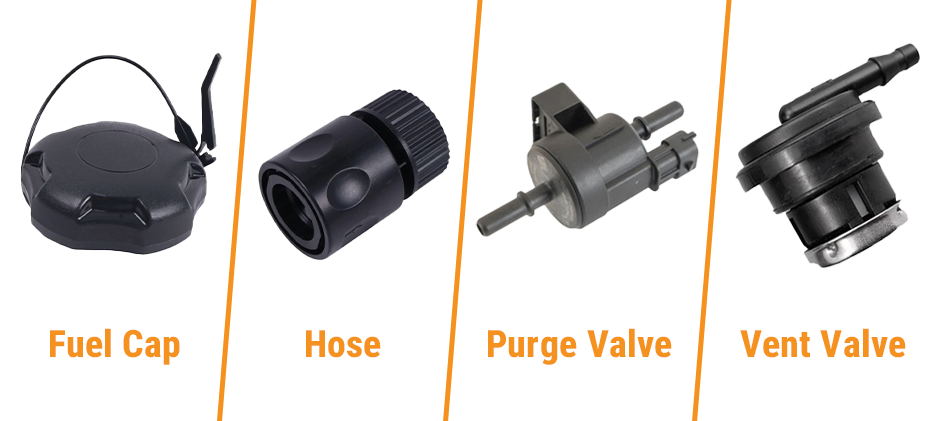
| Symptom | Purge Valve | Vapor Hose Leak | Bad Fuel Cap | Vent Solenoid |
|---|---|---|---|---|
| Hard start after refueling | Strong | – | – | – |
| Rough idle | Yes | Yes | – | – |
| Check engine light only | Yes | Yes | Yes | Yes |
| Fuel odor near tank | Maybe | Yes | Yes | – |
| Repeated EVAP codes | Yes | Yes | Yes | Yes |
| Failed vent flow test | – | – | – | Yes |
If the only sign is a check engine light, start with the cap seal. It’s the cheapest fix and the most common cause of mild EVAP codes (P0455, P0456) on mowers.
Why Do Purge Valves Fail on Mowers?
Four causes account for most failures on riding mowers and ZTRs:
- Solenoid burnout. Long mowing seasons in hot weather overheat the coil. The valve ends up stuck open or closed.
- Electrical connector wear. Grass clippings, dust, and moisture under the seat or near the engine shroud can affect the connector over time, making a new electrical connector or purge valve connector worth checking.
- Carbon and debris. Particles from the charcoal canister jam the valve seat — common on machines stored over winter with old fuel.
- Seal aging. Ethanol-blend fuel hardens the internal seals. The valve eventually leaks in either direction.
Mowers kept outside, washed often, or worked on dusty gravel lots tend to see these problems sooner than machines stored in a clean shed.
Can You Keep Mowing With a Bad Purge Valve?
Short term, yes — you can finish the route or the weekend yardwork. Long term, no.
A valve that stays open too long can upset the mixture, which may lead to earlier spark plug service, extra oil contamination checks, and added stress on the muffler catalyst on machines equipped with one. Repeated hard starts also wear the starter, solenoid, and battery faster than normal. On a commercial route, a no-start at a customer’s site costs more than the part itself.
Rule of thumb: schedule the purge valve replacement within a week or two — don’t let it sit until next season.
What to Do Next
Catching purge valve symptoms early on a riding mower or zero-turn saves you from rough idle, hard starts, and bigger repair work mid-season. If the signs above match what you’re seeing, start with the cheapest checks first — tighten or replace the fuel cap, inspect the vapor hoses for cracks, and scan for EVAP codes before swapping the valve itself. When a replacement is needed, match the new valve to your mower model, engine, and production year — the same model family can use different valve styles, and a wrong-spec part won’t pass the ECU’s flow check. Fridayparts stocks aftermarket purge valves, vapor hoses, EVAP canisters, filters, belts, and blades for John Deere, Cub Cadet, Husqvarna, Toro, Bad Boy, and other major mower brands — order with confidence and keep your fleet running.
