

ATV weight typically falls between 200 and 800 pounds. Sport models are usually lighter, utility models heavier, and add-ons can raise the weight fast. If you’re trying to figure out what your machine can safely handle, this isn’t minor. Weight affects trailer choice, storage, braking, and trail rules in some states. A quick look at the averages helps, but the bigger question is which weight figure to trust and what changes it once you’re actually using the machine.
Average ATV Weight by Type and Engine Size
Most adult ATVs land in the mid-hundreds, not the low hundreds. Lighter sport models often stay between 350 and 450 pounds. Utility models are often much heavier, at 600 to 800 pounds. Youth ATVs commonly weigh about 200 to 400 pounds.
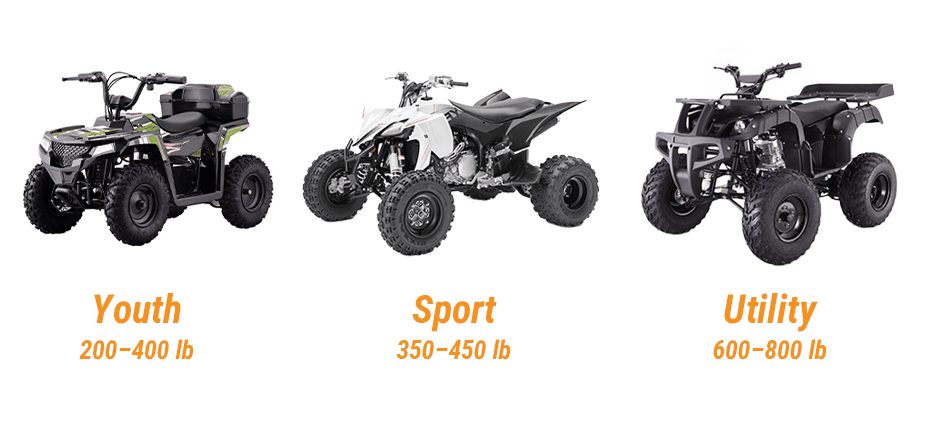
That range lines up with the model class as much as with engine size. A 450cc sport ATV can average about 400 pounds, while a 450cc utility ATV can sit closer to 550 pounds. So engine displacement helps, but it does not tell the full story.
Typical ATV Weight by Type
| ATV Type | Common Weight Range |
|---|---|
| Youth ATV | 200 to 400 lb |
| Sport ATV | 350 to 450 lb |
| Utility ATV | 600 to 800 lb |
Average ATV Weight by Engine Size
| Engine Size | Average Weight |
|---|---|
| 50cc | 215 lb |
| 70cc | 250 lb |
| 90cc | 265 lb |
| 110cc to 125cc | 200 to 300 lb |
| 200cc to 400cc | 495 lb |
| Around 400cc | 400 to 450 lb on many recreational models |
| 400cc to 600cc | 650 lb |
| Around 450cc | About 520 lb on average across types |
| 500cc | 600 to 650 lb |
| 600cc to 1000cc | 840 lb |
| 650cc to 700cc | 630 to 700 lb |
| 800cc to 1000cc | over 700 lb |
A few model examples show how wide the spread can be:
| Model | Listed Weight |
|---|---|
| Yamaha Blaster | 324 lb |
| Yamaha Banshee | 386 lb dry |
| Yamaha YFZ 450 | 405 lb |
| Honda TRX 90 | 251 lb |
| Honda Rancher 420 | 611 lb |
| Suzuki Z400 | 372 lb |
This is where ATV weight starts to connect with parts choices. A machine with a steel frame, larger tires, full racks, a plow mount, or a winch will weigh more than a basic version. That also changes wear patterns on ATV tires, brake parts, suspension components, and wheel bearing kits. That also changes wear patterns on sport ATV/UTV parts such as tires, brake parts, and suspension components.
Dry Weight, Curb Weight, and Capacity
A lot of confusion comes from comparing the wrong number. When checking the weight of an ATV, three terms matter most.
Dry Weight
This is the vehicle weight without fluids. Fuel, oil, and coolant are not included. Minnesota defines ATV dry weight as follows in its ATV class rules.
Curb Weight or Wet Weight
This is the machine ready to ride, with operating fluids onboard. For daily use, transport, and garage planning, this is usually the more useful number.
GVWR
GVWR means the maximum safe total weight of the vehicle plus passengers and cargo. It is not the same as the ATV weight. A machine can weigh 650 pounds and still have a much higher GVWR.
Why Does the Difference Matter?
Using the wrong number can lead to bad decisions:
- A trailer may seem large enough if only dry weight is used
- A ramp may be rated close to the machine’s real loaded mass
- Added gear can push the setup much higher than expected
- State rules may refer to a specific weight definition
For real use, it helps to check the machine in the same condition in which it will travel. Fuel, tools, front and rear cargo, and add-ons such as rack accessories, a winch, or hitch components all count in practice, even if a regulation uses the manufacturer’s listed dry figure.
Why Does ATV Weight Matter on the Trail and Trailer?
Weight is not just a spec sheet number. It changes how the machine feels, how it stops, and how easy it is to live with.
On The Trail
A lighter ATV usually feels quicker and easier to place in tight sections. That is one reason many sports models stay lean. A heavier utility machine can offer better traction and work stability, but it will usually need more room to stop and more effort to redirect.
Main effects include:
- Acceleration – Less mass usually helps power-to-weight response
- Braking Distance – More mass usually means a longer stopping distance
- Steering Feel – Heavier front setups can feel slower in rough turns
- Fuel Use – Extra weight often increases fuel consumption
- Tire Load – Heavier builds put more demand on tire choice and pressure
If the machine carries plows, cargo boxes, or larger wheels, the extra load can also shorten service intervals for axle components, steering parts, and suspension components.
During Transport
Many buying mistakes show up when it is time to haul the ATV home.
Before loading, check:
- The ATV’s actual operating weight
- Trailer capacity
- Ramp rating
- Tie-down points
- Truck bed or trailer deck width
- Combined load with fuel, tools, and gear
This is one reason the average ATV weight is only a starting point. Two machines in the same CC class can place very different demands on the trailer, tow vehicle, and loading gear.
Why ATV Weight Limits and Width Rules Matter
ATV weight limits are not about payload at all. They are about state definitions and registration rules.
Minnesota
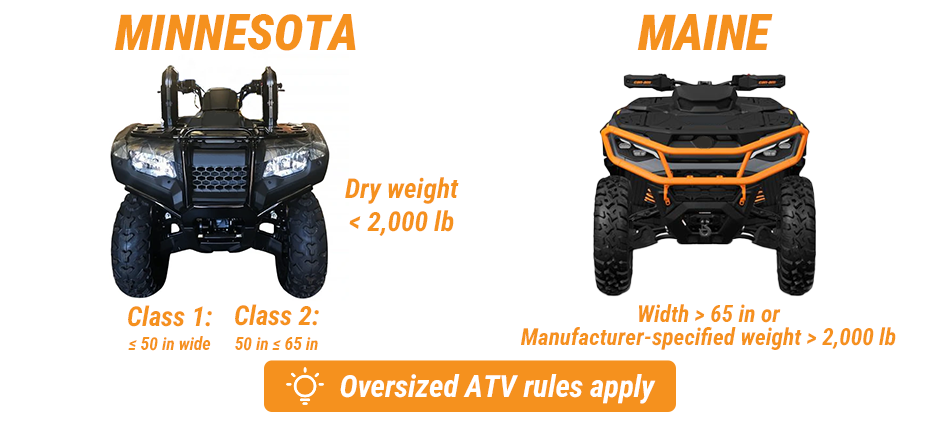
Minnesota defines an ATV as a vehicle with at least three and no more than six low-pressure or non-pneumatic tires, a total dry weight less than 2,000 pounds, and a total width of 65 inches or less from the outside of the tire rim to the outside of the tire rim. The state also splits ATVs into two classes:
- Class 1 ATV – 50 inches wide or less
- Class 2 ATV – More than 50 inches wide, but not more than 65 inches
Minnesota also excludes golf carts, mini-trucks, dune buggies, go-karts, and vehicles made for lawn care, agriculture, logging, or mining from its ATV definition.
Maine
Maine law generally prohibits registration of oversized ATVs for recreational use. In Maine, an ATV is considered oversized if it is more than 65 inches wide or weighs more than 2,000 pounds according to the manufacturer’s specifications. The law has been in effect since 2021.
Important points for Maine:
- Certain oversized ATVs registered in Maine before January 1, 2022, may continue under a narrow grandfathered exception
- Those machines may only operate where specifically allowed
- Landowners and clubs can still set their own restrictions
- Since July 29, 2026, dealers must notify buyers of oversized ATV rules at the time of sale and complete the required form
That matters if a machine looks trail-ready but crosses a legal threshold on paper. A side-by-side or large utility unit may be sold by a dealer and still be ineligible for ATV registration in Maine.
This is also where ATV weight connects with equipment setup. Factory accessories included as manufactured and sold may count toward compliance in Maine, so details in the build sheet matter. If a machine is close to the limit, it is worth checking manufacturer specs carefully, along with trailer wiring parts and transport gear if a legal ride area is farther from home.
What To Check Before Buying or Transporting an ATV?
Once the numbers are clear, the next step is simple: verify the machine against the way it will actually be used.
Buying Checklist
Before purchase, confirm:
- Manufacturer-listed weight
- Whether the number is dry or curb weight
- Total width
- GVWR and payload capacity
- Tire size and frame material
- Factory-installed accessories
- Registration rules in the state where the ATV will be used
Transport Checklist
Before hauling, confirm:
- Trailer rated capacity
- Ramp capacity
- Tire condition on the trailer and tow vehicle
- Total combined load
- Proper tie-down points
- Space for fuel cans, tools, and spare gear
Service And Upgrade Checklist
Before adding equipment, account for:
- Winches
- Plows
- Cargo boxes
- Larger tires and wheels
- Front and rear racks
- Heavy-duty bumpers
- Tool kits and spare parts
Those changes can shift the real average ATV weight far enough to matter for trail feel and transport. They also affect what service parts make sense later, including engine service parts, tire and wheel assemblies, and brake parts.
Final Words
In the end, ATV weight shapes more than transport. It also affects control, safety, and trail access. A few minutes spent checking the real specs can prevent expensive mistakes later. If the machine needs dependable replacement parts or routine service items, FridayParts offers affordable aftermarket options, wide model coverage, and solid inventory support for many types of equipment.
