

Three factors determine the right backhoe bucket: trench width, material, and fitment for your machine. If you’re comparing options, check bucket width along with pin dimensions, capacity, and the ground conditions you actually work in. The backhoe bucket size chart below makes that process easier and can help you avoid buying a bucket that costs more time and money once it gets to the jobsite.
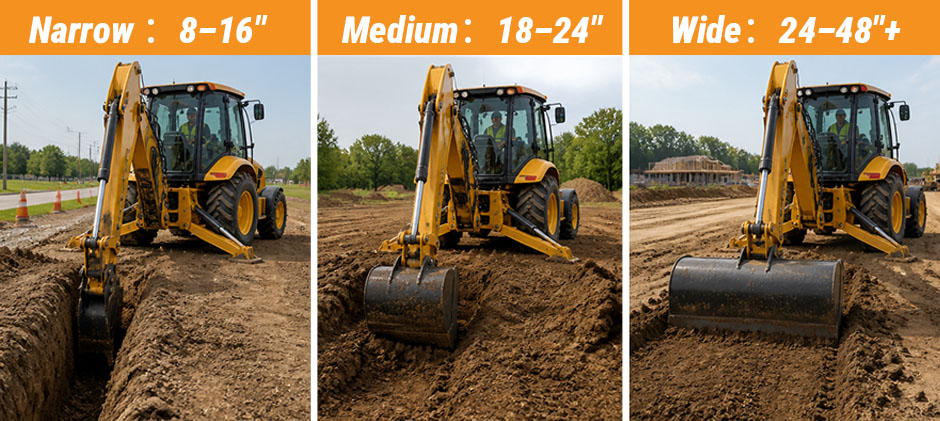
Backhoe Bucket Size Chart by Job and Machine Class
The right bucket depends on the work first, then the machine. Trenching for pipe is not the same as moving loose topsoil, and a bucket that works well in sand may be a poor choice in wet clay or rock.
The chart below gives a practical starting point.
| Backhoe Class | Typical Net HP | Typical Dig Depth | Common Jobs | Common Bucket Width Range |
|---|---|---|---|---|
| Compact class | 24 to 63 hp | 8 ft 3 in to 14 ft 2 in | Light farm work, landscaping, shallow trenching, snow work | 8 in to 18 in for trenching, wider for loose material |
| Mid class | 70 to 86 hp | 14 ft to 18 ft 10 in | Trenching, backfilling, earthmoving, loading | 12 in to 24 in for trenching, larger for general digging |
| Heavy class | 90 to 109 hp | 14 ft to 20 ft 1 in | Utility work, road work, heavier digging, debris handling | 12 in to 36 in depending on material and lift limits |
| Large class | 110 to 131 hp | 14 ft 5 in to 17 ft | Heavy loading, deep utility work, demanding site work | 18 in to 36 in plus specialty buckets |
For many jobs, these width ranges are more useful than a simple one-size answer. A narrow bucket often cuts faster in dense ground. A wider bucket can save time with light material.
Bucket Width by Material and Task
The backhoe bucket size chart above groups widths by machine class, but material and task often narrow the choice further. Bucket width should match both the trench or cut you need and the material being moved. That balance affects cycle time, breakout performance, and fuel use.
Narrow Buckets
Best for:
- trenching
- utility lines
- compacted soil
- clay
- rocky ground
Common sizes:
- 8 in
- 10 in
- 12 in
- 14 in
- 16 in
Common narrow backhoe bucket sizes include 8, 10, 12, 14, and 16 inches, with 24-inch buckets also used for lighter general digging or wider trench work on suitable machines. The 8-inch backhoe bucket is described for ditches and trenches and comes with three forged carbon steel teeth. Its listed size is 22 inches high, 8 inches wide, 27 inches deep, with a 60 lb product weight.
Medium Buckets
Best for:
- general digging
- mixed soil
- backfilling
- moving spoil
Common sizes:
- 18 in to 24 in
These sizes are often a practical middle ground when the work changes during the day.
Wide Buckets
Best for:
- loose sand
- topsoil
- grading
- ditch cleaning
Common sizes:
- 24 in to 48 in or more, depending on machine type
Wide buckets move more volume, but only when the material is light enough and the machine can handle the load.
Fresh bucket teeth, cutting edges, and retainers also help maintain digging performance, especially in packed ground.
Backhoe Size Chart and Machine Limits
Bucket size should always be checked against machine class. A larger bucket may hold more, but that does not mean the backhoe will run it well.
| Machine Class | Operating Weight | Dig Depth | Typical Use |
|---|---|---|---|
| 40+ hp backhoe | 4,001 to 8,925 lb | 8 ft 3 in to 14 ft 2 in | farms, landscaping, small property work |
| 70+ hp backhoe | 13,514 to 17,196 lb | 14 ft to 18 ft 10 in | trenching, loading, general construction |
| 90+ hp backhoe | 17,101 to 21,870 lb | 14 ft to 20 ft 1 in | utility work, snow, road, and heavier digging |
| 110+ hp backhoe | 20,077 to 24,039 lb | 14 ft 5 in to 17 ft | heavy loading and demanding site work |
Machine specs that matter most include:
- horsepower
- operating weight
- digging depth
- bucket force
- loader lift capacity
- loader hinge point
If the work is mainly shallow trenching on a small property, a compact backhoe with a narrow bucket may be enough. If heavier material must be loaded or deeper utility work is planned, a larger class is usually the safer choice.
This is also where pin kits and bushing parts matter. A machine that has wear in the bucket connection points may not hold the bucket as tightly as it should.
Fitment Checks Before Buying Any Bucket
A bucket can be the right width and still not fit the machine. Fitment should be checked before ordering.
For pin-on buckets, three measurements are critical:
- Pin diameter
- Pin centers
- Dipper gap
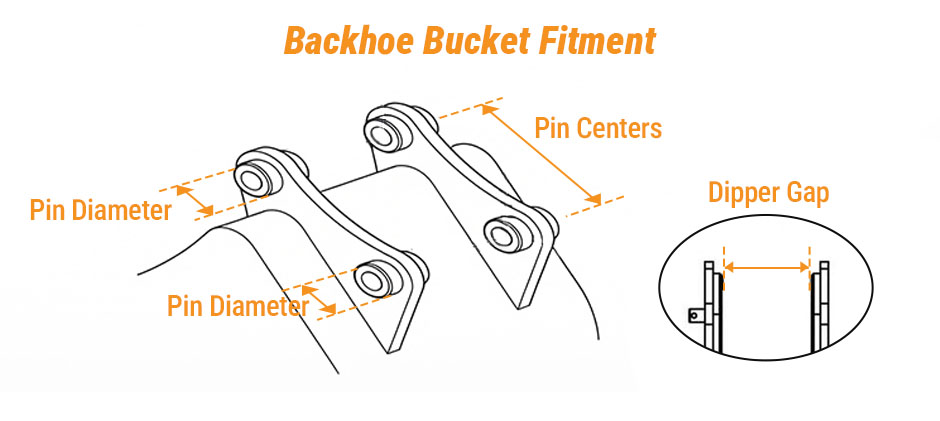
These measurements determine whether the bucket will mount correctly. Buckets are not universal across all machines, even though some fitments do cross over between certain brands and models. On larger excavators with hydraulic quick couplers, there is often more flexibility. On smaller machines, exact dimensions are more important.
When measuring:
- Measure the widest part of the pin
- Measure the internal gap between bucket hangers
- Measure from the front edge of one pin to the front edge of the other pin
A good time to check bucket pins, bushings, and coupler parts is before the new bucket goes on. Worn connection parts can create play, poor fit, and uneven wear. If those parts need replacing, check the backhoe parts category before ordering a new bucket.
How To Estimate Bucket Capacity?
A backhoe bucket size chart tells you the width and class, but it does not always list capacity. Capacity is just as important as width. Two buckets can be close in width and still move very different amounts of material.
Use this simple process.
Step 1: Measure Internal Dimensions
Measure the inside of the bucket:
- length from cutting edge to back wall
- average internal width
- average internal depth
Step 2: Find Struck Capacity
Multiply:
Length × Width × Depth
Example:
- 30 in long
- 18 in wide
- 20 in deep
Result:
- 10,800 cubic inches
Step 3: Estimate Heaped Capacity
Apply a heaping factor, usually 1.1 to 1.3
Example with 1.1:
- 10,800 × 1.1 = 11,880 cubic inches
Convert to cubic feet:
- 11,880 ÷ 1,728 = 6.875 cubic feet
Convert to cubic yards:
- 6.875 ÷ 27 = about 0.25 cubic yards
This helps when planning:
- truck loading cycles
- trench spoil volume
- pass counts
- fuel use
Capacity should always be judged together with bucket weight and material density. A bucket that works well in loose soil may be too much in wet clay or rock.
Common Bucket Buying Mistakes
A few mistakes show up often and usually cost time or money later.
- Choosing by width alone
- Ignoring bucket weight
- Using a wide bucket in dense material
- Skipping pin measurements
- Forgetting site access limits
- Running worn bucket teeth and adapters
- Overlooking the effect of material density
Another common issue is treating excavator bucket charts and backhoe bucket charts as the same thing. They overlap, but backhoes are multi-use machines. Bucket choice should still match the digging job, machine balance, and working conditions.
Also Read: CAT Excavator Bucket Size Chart: How to Choose the Right One?
Final Words
A backhoe bucket should do more than fit on the arm. It should match the job, hold up in the material you work in, and let the machine perform the way it should. That is why checking width, fitment, and capacity together usually leads to a better buy. If you are replacing worn teeth, edges, pins, or related parts, FridayParts can be a convenient place to look for compatible replacements.
