

If you’re replacing a Champion spark plug, the quickest way to get started is with a reliable cross-reference table—but the number match alone is not the whole answer. Some replacements look correct and still cause hard starting, fouling, or poor performance because the reach, seat, or heat range is off. The sections below break down the most common Champion spark plug cross-reference chart worth checking before you install one.
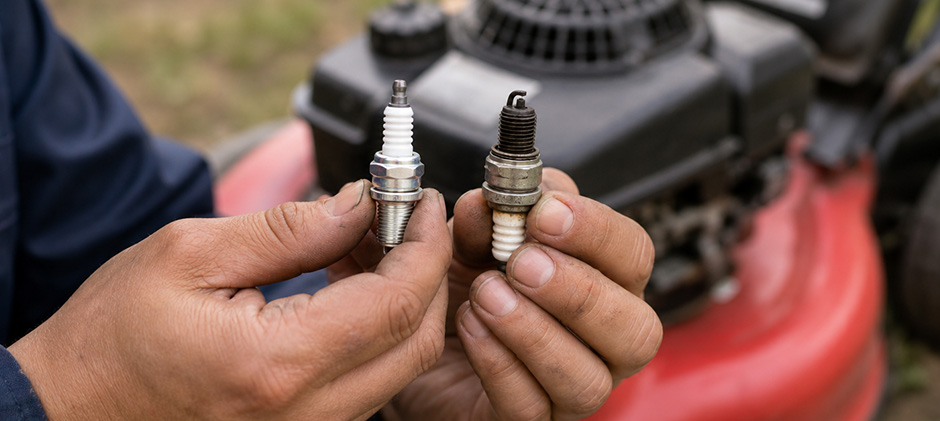
How To Read Champion Spark Plug Numbers?
Champion spark plug numbers often indicate several design features within a plug family. In many common small-engine applications:
- R usually indicates a resistor plug
- The following letter or letter group often identifies shell design or thread family
- The number typically indicates heat range within that family
- Ending letters often describe firing-end design
- A final suffix number may indicate a wide-gap version in some plug lines
Examples such as RJ19LM, RC12YC, RN11YC4, CJ8Y, and RCJ6Y show why the full part number matters. Similar-looking numbers do not always share the same reach, resistor design, or firing-end structure.
Champion Spark Plug Cross Reference Chart
The Champion spark plug cross-reference chart below uses Champion as the base reference and lists common cross-brand replacements for small engines and utility equipment. Because catalog listings can vary by engine family, these numbers should be treated as fitment references rather than universal one-size-fits-all substitutions.
| Champion | NGK | Denso | Autolite | Bosch | AC Delco / Other | Common application |
|---|---|---|---|---|---|---|
| RJ19LM | BR2-LM | W14LM-U | 458 | W7AC | 77-305-1 | Briggs flathead engines, walk-behind mowers |
| J19LM | B2-LM | W9LM-US | 458 | W9EO | — | Small L-head engines |
| RC12YC | BCPR5ES | Q16PR-U | 5224 | FR8DC | FR2LSK | Briggs Vanguard, Kohler Command, general OHV applications |
| RC14YC | BKR5E* | — | 3926 | FR8DC | — | OHV utility-engine applications; verify by engine model |
| RN11YC4 | BPR5ES | W16EPR-U | 4263 | WR8DS | — | Honda GX-series and similar OHV engines |
| N11YC | BP5ES | W16EX-U | 54 | W8DC | — | Honda GVX120, GSX270 |
| N9YC | BP6ES | W20EP-U | 53 | W6D | — | General small-engine service |
| CJ8 | BM6A | W20M-U | 2995 | WS8E | CS41 | Briggs, Echo, John Deere, Poulan, and similar equipment |
| CJ8Y | BPM6A | W20MP-U | 2976 | WS7F | — | Echo and John Deere handheld equipment |
| CJ6Y | BPM7A | W22MP-U | — | WS5F | — | Kawasaki and Tecumseh applications |
| CJ7Y | BPM7A | W22MP-U | 2974 | WS8F | CS42S | Chainsaws and similar handheld equipment |
| RCJ6Y | BPMR7A | W22MPR-U | 2984-family listings | — | — | Chainsaws, blowers, trimmers |
| RCJ8Y | BPMR6A | W20MPR-U | 2986-family listings | — | — | Two-stroke handheld equipment |
| DJ8J | BM6F | T20M-U | 2956 | HS8E | CS45T | Homelite, McCulloch, hedge trimmers, chainsaws |
| RN9YC | BPR6ES | W20EPR-U | 3923 | — | — | Honda OHC and Robin engines |
| L87YC | BP4HS | W16FP-U | 275 | — | — | Small-displacement engine applications |
* RC14YC is commonly associated with NGK BKR5E, but the correct replacement should be confirmed by engine model, reach, seat type, and resistor design rather than assumed from family grouping alone.
Heat Range Comparison
Heat range numbering does not move in the same direction across brands. The heat range table below is a practical addition to any Champion spark plug cross-reference chart for common small-engine plug families rather than a universal exact conversion chart.
| Relative heat level | NGK | Denso | Champion | Bosch |
|---|---|---|---|---|
| Hotter | 5 | 16 | 11, 12 | 8 |
| Medium | 6 | 20 | 9, 10 | 6, 7 |
| Colder | 7 | 22 | 7, 8 | 5 |
| Coldest in this group | 8 | 24 | 6 | 4 |
In general:
- NGK numbers usually get colder as the number gets larger
- Champion numbers in these common families usually get colder as the number gets smaller
- Denso numbers usually get colder as the number gets larger
- Bosch numbers usually get colder as the number gets smaller
This comparison is useful for preventing obvious heat-range mistakes, but the final choice still needs to stay within the plug family and engine application.
Champion Plug Groups By Equipment Type
Flathead Mower Engines
Common Champion numbers in this group include:
- RJ19LM
- J19LM
Typical replacements include:
- RJ19LM → NGK BR2-LM / Denso W14LM-U / Autolite 458
- J19LM → NGK B2-LM / Denso W9LM-US / Autolite 458
These are widely used in older mower engines where correct fit, gap, and clean ignition are more important than upgraded electrode materials.
OHV and General Utility Engines
Common Champion numbers in this group include:
- RC12YC
- RC14YC
- RN11YC4
- RN9YC
- N11YC
- N9YC
Typical replacements include:
- RC12YC → NGK BCPR5ES / Denso Q16PR-U / Autolite 5224
- RC14YC → verify by engine model before selecting an NGK equivalent
- RN11YC4 → NGK BPR5ES / Denso W16EPR-U / Autolite 4263
- RN9YC → NGK BPR6ES / Denso W20EPR-U / Autolite 3923
- N11YC → NGK BP5ES / Denso W16EX-U / Autolite 54
- N9YC → NGK BP6ES / Denso W20EP-U / Autolite 53
This group covers many Briggs OHV, Honda-style, and general-purpose utility engines. Thread size alone is not enough for selection, especially when resistor and non-resistor families are mixed.
Handheld Two-Stroke Equipment
Common Champion numbers in this group include:
- CJ8
- CJ8Y
- CJ6Y
- CJ7Y
- RCJ6Y
- RCJ8Y
- DJ8J
Typical replacements include:
- CJ8 → NGK BM6A / Denso W20M-U / Bosch WS8E
- CJ8Y → NGK BPM6A / Denso W20MP-U / Autolite 2976
- CJ6Y → NGK BPM7A / Denso W22MP-U
- CJ7Y → NGK BPM7A / Denso W22MP-U / Autolite 2974
- RCJ6Y → NGK BPMR7A / Denso W22MPR-U
- RCJ8Y → NGK BPMR6A / Denso W20MPR-U
- DJ8J → NGK BM6F / Denso T20M-U / Autolite 2956
For chainsaws, trimmers, blowers, and similar tools, resistor type, terminal design, and correct reach often matter more than broad equipment category.
What Champion Plug Codes Actually Mean?
Champion part numbers are not decoded exactly the same way across every product family and era, but the pattern below is a useful guide for many common small-engine plugs.
Using RV15YC4 as a simplified example:
| Position | Character | General meaning |
|---|---|---|
| 1 | R | Resistor |
| 2 | V | Shell design / thread family |
| 3–4 | 15 | Heat range |
| 5 | Y | Firing-end design |
| 6 | C | Additional design feature, often copper-core related |
| 7 | 4 | Wide-gap version in some plug families |
Common shell-code examples include:
- J / L for common 14 mm small-engine thread families
- C / D / N for different 14 mm shell and reach combinations
- B for 18 mm thread families
- G for 7/8″-18 thread families
As a general rule, the code is most useful when comparing plugs within the same Champion family rather than across unrelated series.
Fitment Checks Before Installing A Spark Plug
A cross-reference table narrows the search, but several physical details still need to match the engine specification.
| Specification | Why it matters |
|---|---|
| Thread diameter | Incorrect diameter can damage the cylinder head |
| Reach | Too short can reduce combustion efficiency; too long can expose threads or interfere with the chamber |
| Seat type | Taper-seat and gasket-seat plugs are not interchangeable |
| Resistor / non-resistor design | Affects ignition behavior and electrical noise control |
| Projected tip design | Changes flame travel and operating temperature pattern |
| Gap | Affects starting, spark intensity, and load response |
This is especially important when the replacement looks close on paper but belongs to a different plug family in practice.
How To Read A Used Spark Plug?
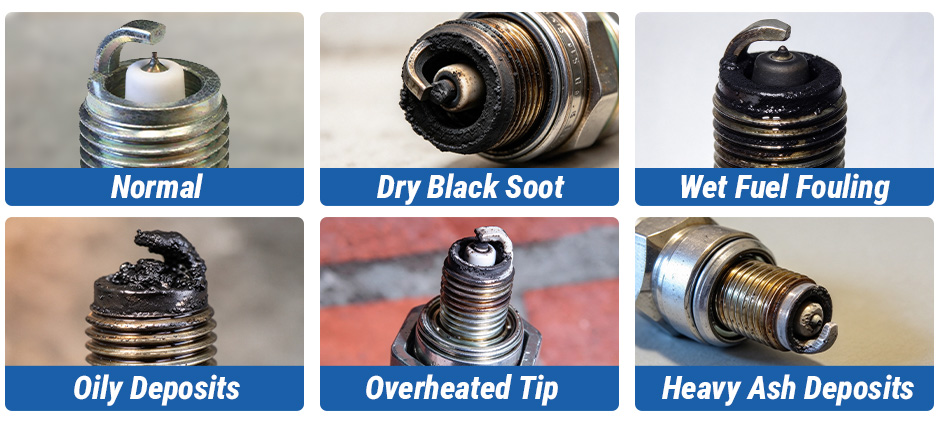
The removed plug often tells you whether the problem is plug selection, engine condition, or fuel and ignition performance.
| Plug appearance | Likely condition | What to inspect |
|---|---|---|
| Light tan or gray | Normal combustion | Routine maintenance only |
| Dry black soot | Rich mixture or weak spark | Air filter, choke, ignition output |
| Wet fuel fouling | Incomplete combustion or repeated no-start attempts | Ignition coil, fuel filter, gap, compression |
| Oily deposits | Oil entering the combustion chamber | Rings, valve guides, breather system |
| White blistered tip | Overheating or lean operation | Cooling, intake leaks, heat range |
| Heavy ash | Oil consumption or additive deposits | Service interval and engine wear |
A correct cross reference will not solve fouling or overheating if the underlying engine condition is still present.
Final Words
In most cases, the best results come from using the Champion number as the starting point and confirming the plug’s fit and heat range before ordering a replacement. That approach helps avoid misfires, fouling, and repeat repairs. If you’re sourcing maintenance and replacement parts for small engines or equipment, FridayParts offers a wide range of aftermarket options to help keep machines working reliably.
