

Winter is coming, and so is snow. Your John Deere has the power to move it—but the right blade makes the job faster, cleaner, and safer. A snow blade is not “just a piece of steel.” It’s a tool that must match your machine, your driveway or lot, and the kind of snow you get.
This guide helps you stop asking, “What’s the best blade?” and start asking, “What blade works best for my work?” If you choose well, you’ll get a setup that works for many winters without constant frustration.
Three Key Questions Before You Buy
Before you shop, take two minutes to answer these three questions. They will narrow your choices fast.
1. What’s Your John Deere?
Fit comes first, so you should first know the year of your John Deere equipment, as well as weight, power, traction, and hydraulics, to decide what it can handle.
- Lawn Tractors (e.g., X300, X500 Series): Best for lighter snow jobs. A smaller, lighter straight blade works well on paved driveways in normal snowfall.
- Compact Utility Tractors (CUTs) (e.g., 1-4 Series): Stronger frames, 4WD options, and hydraulics make these very capable. They can run wider straight blades, and many models can also handle a V-plow.
- Skid Steers & Compact Track Loaders: Built for hard, daily work. They can push big loads and are a great match for large V-plows and snow pushers.
2. What’s Your Battlefield?
The place you plow matters as much as the tractor.
- Short, Paved Driveways: A straight blade is usually enough.
- Long, Gravel, or Sloped Driveways: You need a tougher setup and better control. A V-plow can help break through drifts and open a path on gravel.
- Large Parking Lots or Commercial Areas: Speed matters. A snow pusher moves a lot of snow quickly in open spaces.
- Narrow Walkways or Paths: You need a smaller width so you can fit and steer easily.
3. What Kind of Snow Do You Get?
Snow can be light and fluffy—or heavy and stubborn.
- Light, Powdery Snow: Most blades handle it well.
- Heavy, Wet, or Compacted Snow: A V-plow often works better because it can “cut” into dense snow.
- Icy Conditions: A strong blade with a good trip mechanism helps protect your machine when you hit hidden ice chunks or curbs.
Straight Blade vs. V-Plow vs. Snow Pusher: Which Suits You Best
Here’s what each tool does best.
The Straight Blade: The All-Rounder
- Pros: Lower cost, simple, easy to use. Great for most home jobs.
- Cons: In deep snow, it can struggle, and snow may spill off the sides.
- Best For: Lawn tractors and smaller CUTs clearing moderate snow from paved areas.
The V-Plow: The Versatile Problem-Solver
- Pros: Very flexible. Use the “V” shape to break drifts, the “scoop” shape to carry snow, straight for pushing, or angled for windrowing.
- Cons: Costs more, weighs more, and usually needs good hydraulics.
- Best For: CUT and skid steer owners who see changing conditions—drifts, heavy snow, and mixed areas.
The Snow Pusher: The Efficiency Monster
- Pros: Moves huge amounts of snow fast. Leaves a clean finish in open areas.
- Cons: Pushes straight ahead only (no angling). Not ideal for tight spaces.
- Best For: Big, flat areas like parking lots, yards, and long open lanes.
If you want to know more about the snow blade types, you can read: How to Choose the Best Snow Blade for Your Skid Steer.
Features You Need to Pay Attention to
Small details can change how your blade feels every time you plow.
- Width: A helpful rule: when the blade is angled, it should still be wider than your tire tracks. If it’s too narrow, you’ll leave ridges of snow.
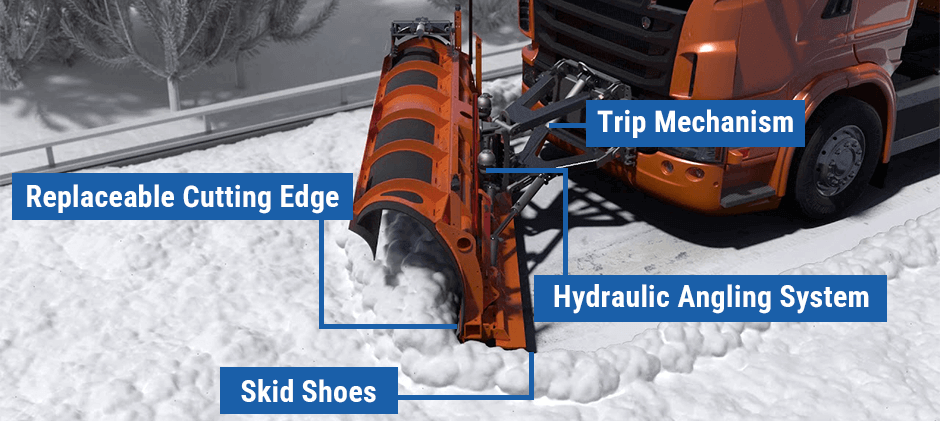
- Lift & Angling System: Manual systems work, but hydraulics make life easier. If you can lift and angle from the seat, you work faster and stay more comfortable.
- Trip Mechanism: This protects you when you hit something hidden. A spring-loaded trip edge (or full-moldboard trip) lets the blade kick back instead of slamming your tractor.
- Cutting Edge:
- Steel: Tough and aggressive on packed snow.
- Polyurethane or rubber: Quieter and gentler on surfaces like pavers, bricks, and decorative concrete.
Snow Blade OEM vs. Aftermarket Cost
- John Deere OEM: Usually a sure match with dealer support, but often costs more.
- FridayParts Aftermarket: Can be a smart choice if you buy from a trusted seller. The key is clear fitment info, solid build quality, and parts support.
In many off-road attachment and parts markets, OEM pricing is commonly ~15%–50% higher than a comparable aftermarket option. For simpler wear items, the gap is often smaller (frequently ~10%–35%).
These are broad ranges—always compare quotes for your exact model and blade size.
Putting It All Together
| Your Role | Your John Deere | Typical Scenario | Top Recommendation | Upgrade/Alternative |
|---|---|---|---|---|
| Homeowner | X300/X500 Series | Paved driveway, walkways | 48″ Straight Blade | Model with hydraulic lift |
| Large Property Owner | 1025R / 2-Series CUT | Long gravel lane, multiple buildings | 54″-60″ Hydraulic Straight Blade | Compact V-Plow |
| Commercial Operator | 3/4-Series CUT, Skid Steer | Commercial lots, access roads | 72″+ V-Plow | Snow Pusher |
Conclusion
Choosing the right snow blade is not one-size-fits-all. It’s a practical match between machine, property, and snow type. If you choose based on those three things, you’ll plow with less wheel spin, fewer stuck moments, and better results.
Now that you know what to look for, the next step is picking the right attachment and parts for your setup. At FridayParts, we offer a comprehensive range of durable and reliable snow equipment designed to meet the demands of any John Deere owner. Explore our collection today and equip your machine to conquer winter.
