

Picking the right spark plug is about one thing: reliable starts and smooth running when you’re far from help. A bad or dirty plug can make your ATV, UTV, dirt bike, or snowmobile run rough—or not start at all. Copper vs. Iridium Spark Plugs are common choices. Each works best in certain engines and riding styles. Follow this guide and learn how to choose.
Copper vs. Iridium Spark Plugs: What Are the Main Differences?
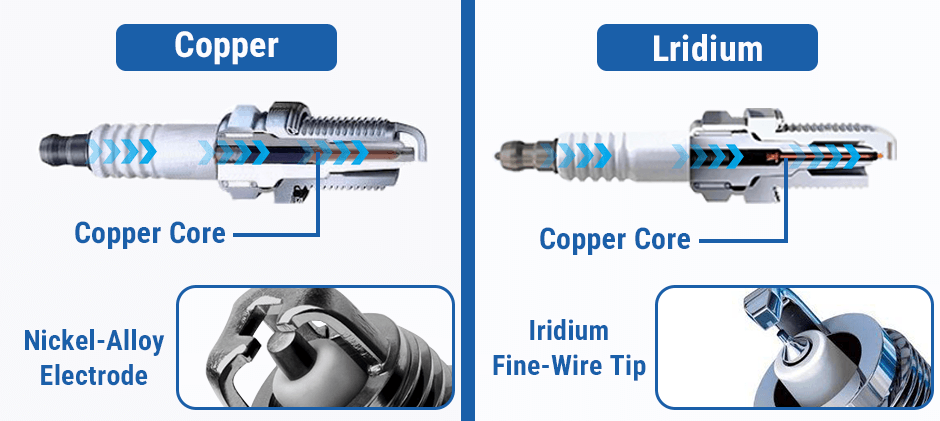
“Copper spark plug” is a common nickname, but the firing tip is usually not copper. Most “standard/copper” plugs use:
- a copper core (inside) to move heat well, and
- a nickel-alloy electrode (outside) because copper is too soft and would wear out very fast.
Iridium spark plugs use iridium on the centre tip. Iridium is very hard and resists wear and corrosion. Because it is so hard, the tip can be made very thin (fine-wire), which helps it spark with less voltage and stay consistent longer.
How Do They Perform in Off-Road Conditions?
Standard (“copper”) plugs are great at moving heat away from the tip. That can help some engines avoid knock/pre-ignition when working hard (slow technical climbs, towing, deep snow, sand, mud). The discussion around copper vs iridium spark plugs often points to this heat-control advantage, especially for older, air-cooled, or modified engines.
Iridium fine-wire plugs usually need less firing voltage, so they can:
- start easier in cold weather,
- resist fouling a bit better during lots of idling/short trips,
- put less stress on coils and wires over time,
- Keep the spark consistent for many more hours/miles.
They do not usually add “big horsepower.” If you feel a huge power gain from new plugs, the old plugs were likely worn, or the engine had another issue.
3 Key Reasons to Stick with Copper
1. What is the Main Advantage of Cost?
They cost less. That matters for off-road use because plugs can get fouled from:
- rich fueling,
- lots of low-speed riding and idling,
- water crossings and wet conditions.
With cheaper plugs, it’s easy to carry spares and swap one in on the trail.
2. Why is Heat Dissipation Important?
Heat control helps engine safety. Standard plugs (nickel-alloy on a copper core) often run in a way that works well for:
- older engines,
- air-cooled engines,
- carbureted setups,
- high-compression or tuned engines that run hotter.
If your engine is sensitive to knock or runs hot under load, a standard plug in the correct heat range can be a smart, simple choice.
3. How Does Copper Affect Older Ignitions?
Older ignition systems were often designed around standard plug designs. Many can run fine on iridium, but some older setups behave better on standard plugs.
Also, while fine-wire plugs can fire with less voltage, a standard plug can still work very well if the ignition system is healthy and the gap/heat range is correct. As one mechanic on an enthusiast forum noted:
“I bought an old truck once that the previous owner…put iridium plugs in, it was running kind of off, and when I put coppers in it, it ran way better and made noticeably more power.”
When Should You Invest in Iridium?
1. For Unmatched Longevity
Iridium plugs are built to last much longer. Many riders choose them because they want fewer plug changes each season. If your machine is hard to access (tight engine bay, lots of panels), the longer service life is a real benefit.
2. For a More Efficient and Powerful Spark
Fine-wire tips concentrate the spark and usually need less voltage to fire. Benefits are often small but real:
- smoother idle,
- cleaner throttle response,
- easier starting,
- less misfire as the plug ages.
This is more noticeable on modern engines and in cold weather.
3. For Modern, Stock Engines
If the owner’s manual specifies iridium (or another fine-wire precious-metal plug), follow it. Many EFI engines are tuned around a certain plug type, resistance, and firing behaviour. Changing types can sometimes cause rough running or fault codes.
How to Make the Final Decision
1. Check your manual first. Use the correct heat range and plug type recommended by the maker.
2. Think about your real goal:
- Want low-cost and easy-to-trial spares? Choose standard (“copper”) plugs and change them more often.
- Want long life and stable starting/idle? Choose iridium.
3. If you had plug failures (misfires, “cracked” plugs), check the basics:
- Don’t install a plug that was dropped. A tiny crack in the porcelain can cause misfires later.
- Buy from a reputable seller to avoid counterfeit plugs.
- Use the correct torque and don’t overtighten.
- Make sure the gap is correct (and be careful re-gapping fine-wire plugs).
4. Consider a middle option. Platinum (and other fine-wire designs) can sit between standard and iridium in cost and life, depending on availability for your engine.
Conclusion
Finally, there is no single “best” plug for everyone. The best choice is the one that matches your engine, your riding conditions, and your preferred maintenance schedule.
When you’re ready to buy, focus on fitment first, then choose the plug material based on how often you want to change it. Either way, using a quality, correctly gapped spark plug is a basic step for reliable off-road performance. The FridayParts product page makes it easy to browse options and pick up a few spares so you’re not stuck waiting when the season is short.
