

When your Craftsman riding mower blades won’t engage, the most likely cause is a snapped or stretched manual engagement cable. If that cable still looks good, chances are the drive belt has slipped off or your tension spring is broken. This guide shows you simple steps to figure out what’s wrong fast and swap out the bad parts. Get your mower fixed up and back to mowing grass the same day.
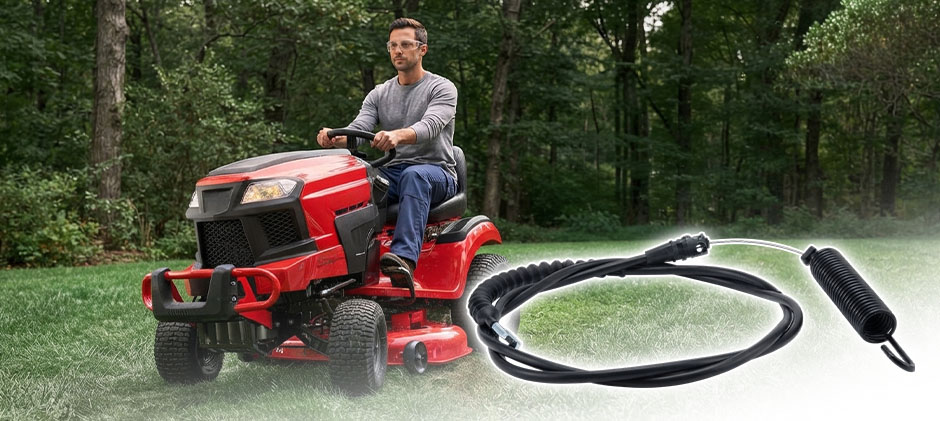
Why Won’t the Blades Engage on a Craftsman Riding Mower?
To fix the problem, we first need to look at how the power delivery system operates. The blades rely on a continuous mechanical connection from the engine pulley down to the mower deck. When this connection breaks, the cutting system stops completely. Most manual systems use a mechanical Power Take-Off (PTO) cable that pulls a tension spring, which then tightens the deck belt against the pulleys. If any part of this sequence fails, the blades remain still.
Sometimes, the issue is as simple as a drive belt that slipped off its track because of built-up grass clippings. Other times, a component like the clutch actuator assembly or the engagement cable might be completely worn out and broken. We recommend starting your diagnosis with a thorough visual inspection. Lower the deck to its lowest setting or remove it entirely. The deck is often held on by simple retaining clips and support arms, making it easy to slide out. Removing the deck gives you a clear, unobstructed view of all the moving parts, allowing you to pinpoint exactly where the mechanical failure occurred.
Check the PTO Engagement Lever and Cable
Moving from the dashboard controls down to the cutting deck, the manual engagement lever connects directly to a braided steel cable. Over time, this cable handles a massive amount of tension and is highly prone to stretching, fraying, or snapping. You can usually tell if the cable is the root of the problem by observing a few clear symptoms:
- The lever feels unusually loose and offers zero resistance when you pull it.
- You hear a click, but the lever hits a barrier and stops without engaging the deck.
- The braided wire shows visible fraying or has snapped completely near the lower spring eyelet.
- The plastic retaining tabs near the steering housing are cracked or broken.
“A snapped or stretched engagement cable is the most frequent reason a manual PTO system fails to activate the cutting deck on a riding mower.”
Follow the cable routing from the lever down to the mower deck. Look closely at the eyelet where it attaches to the tension spring. Corrosion, dirt, and constant engine vibration often cause the wire to break right at these lower connection points. If the cable appears intact, check the actuator assembly near the steering housing. When the plastic housing cracks, the entire cable moves with the inner wire, preventing the system from pulling with enough force to tighten the drive belt.
Inspect the Deck Belt, Idler Pulley, and Spring
If your cable works and pulls nice and tight, next you’ll want to check the drive belt and tension setup. The deck belt takes spinning power from the engine over to your blades. A belt that looks okay at first sight could still be stretched out. Once a belt stretches, the tension spring can’t pull the idler pulley hard enough to grip it, so your blades won’t spin. When you go over the tension system, take a good look at these parts:
- Deck Belt: Check the belt sides for big cracks, fraying, or chunks of rubber missing. Also make sure it runs correctly through every belt guide.
- Idler Pulley: This pulley slides back and forth on a metal arm to tighten the belt. Spin it by hand. It should turn freely, no grinding sounds or shaky wobbling.
- Tension Spring: Confirm the spring hooked to the idler arm is still in place. These springs often snap or even pop loose when you mow over bumpy ground.
If that tension spring fails, your cable can’t push the pulley against the belt at all. The belt stays loose, and the blades won’t turn. Also, if the bearings inside the idler pulley lock‑up, or if its mounting metal pin gets bent, the pulley can’t shift over to create the needed belt tension.
Check the Blade Spindles and Pulleys
Sometimes your engagement linkage works just fine, but the parts right on the mower deck still won’t spin. Your blade spindles hold the inner bearings that let the blades spin fast. When a lawn tractor sits idle for a long time or gets soaked by lots of rain, those bearings can rust up and lock solid. Here’s how you can check the spindles and get rid of any jamming debris:
- Disconnect power: Pull off the spark‑plug wire before you reach under the deck. That keeps the engine from firing up by accident.
- Take off the covers: Remove the plastic protective covers sitting on top of the deck. These also work as belt guides, so make sure you put them back on later.
- Clean out debris: Blow or scrape away caked‑on grass, dirt and small sticks. Thick piles of gunk can stop the pulleys from turning or knock your belt out of position.
- Check rotation: Spin the blade pulleys by hand. They should turn easily with very little resistance.
If the pulleys feel really tight or won’t move at all, your spindle assembly is seized and you will need to swap the whole unit out. Don’t forget to refit those plastic covers before you mow. Without them, your belt will pop right off the pulleys as soon as you disengage the blades.
How to Replace the Blade Engagement Cable?
Replacing a broken engagement cable is a straightforward process you can do in your garage. Before starting, park the mower on a flat surface, turn the ignition off, remove the key, and let the engine cool down completely.
- Access the upper assembly. Depending on your exact model, you may need to remove the battery or the fuel tank to reach the back of the dashboard. Use a socket wrench to unthread the mounting bolts and set the tank or battery aside. If you remove the battery, take a moment to clean any white corrosion off the terminals and hold-down brackets.
- Disconnect the old cable from the dashboard lever. Unthread the screws securing the clutch actuator assembly. Detach the small spring from the pin, remove the washer, and use a pair of pliers to squeeze the retaining tabs. This allows you to pull the cable out of the steering housing.
- Move to the lower end of the mower. Lower the deck or slide it out from under the frame by removing the retaining pins on the support arms. Locate where the cable hooks into the deck bracket and the idler arm spring. Squeeze the lower retaining tabs with your pliers and unhook the broken cable from the spring.
- To install the new part, hook the new cable spring onto the idler arm and snap the lower plastic retainer into the deck bracket. Route the cable back up through the frame to the steering housing. Position the upper cable eyelet on the actuator pin, slide the washer on, and secure it with the retaining spring. Snap the upper retainer into the frame assembly.
- Reassemble the mower. Reattach the deck support arms, realign the belt on the engine pulley, and secure the fuel tank or battery. Test the engagement lever to ensure it pulls with proper tension before starting the engine.
Wrapping Up
Fixing a mower when the Craftsman riding mower blades won’t engage usually comes down to replacing a worn cable, a stretched belt, or a seized pulley. Regular maintenance keeps these parts running smoothly. At FridayParts, you can easily find the exact replacement belts, cables, and spindles you need to get your lawn tractor back in action.
