

If your machine door’s power lock isn’t working properly, maybe the door lock actuator has gone faulty. In tough, dusty job-site conditions, a secure cab protects your tools, electronics, and machine. This guide explains how to identify actuator problems, confirm the failure, and choose the right replacement.
What Is a Door Lock Actuator?
A door lock actuator is a small electric motor or solenoid that controls the locking mechanism inside the door. When you press “lock” or “unlock,” the vehicle’s control module sends a signal to the actuator motor to turn — one direction locks, the other unlocks.
Because heavy equipment operates in high‑vibration and extreme environments, actuators are rugged — but over time, dust, moisture, and wear can still cause failure.
4 Common Symptoms of a Bad Actuator
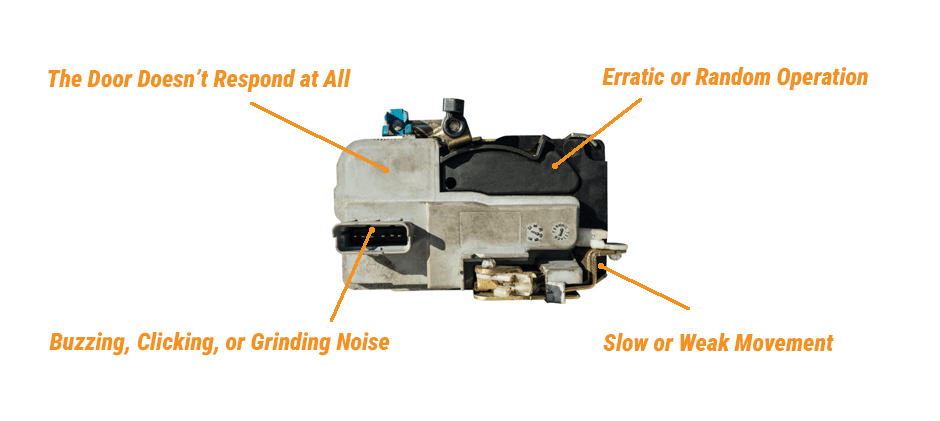
If only one door is affected, the problem is likely in its actuator or wiring (not a central fuse or relay). Just as there are clear 4 Common Bad Blower Motor Symptoms, a failing actuator has its own distinct signs:
1. The Door Doesn’t Respond at All
You press “lock,” other doors click — but one stays open. Manual locking still works, but the power function is dead. This points directly to a failed actuator or broken wiring.
2. Buzzing, Clicking, or Grinding Noise
You hear buzzing or grinding when pressing the lock switch. This usually means plastic gears inside the actuator are stripped or damaged — the motor spins, but the lock doesn’t move.
3. Erratic or Random Operation
The door locks or unlocks by itself, or does the opposite of what you press. This “ghost locking” indicates an intermittent short or partially failing actuator.
4. Slow or Weak Movement
The lock moves sluggishly or only halfway. The actuator motor is losing torque, a common sign of internal wear.
How to Diagnose a Faulty Door Lock Actuator
You can confirm actuator failure before replacing it. The goal is to check whether it’s receiving power.
Always wear safety glasses and follow your machine’s service manual during inspection.
Tools Needed
- Digital multimeter (DMM)
- Basic hand tools to remove the door panel
Step‑by‑Step
- Access the Actuator: Remove the interior door panel carefully to reach the latch area.
- Visual Inspection: Check the actuator, rods, and cables. Make sure nothing is bent, disconnected, or jammed.
- Unplug the Connector: Disconnect the actuator’s electrical connector.
- Test for Voltage
- Set your multimeter to 20V DC.
- Ground the black probe to a clean metal surface.
- Press and hold the lock button — use the red probe on each terminal. You should see around 12V.
- Press the unlock button and test again — the voltage should appear on another wire.
Results
- Power present but no movement: Actuator is bad; replace it.
- No power: Check the upstream — this could be a blown fuse, a bad relay, a broken wire, or a faulty switch/module. This diagnostic process is similar to determining a bad alternator vs a bad battery to pinpoint the source of an electrical failure.
If there are more than two wires on the connector, consult the service manual wiring diagram before testing.
What to Do If the Actuator Is Faulty
You’ve got two choices:
Option 1: Temporary Fix
Operate the lock manually. Works short‑term, but leaves the cab vulnerable.
Option 2: Replace It
Installing a quality replacement actuator restores both security and convenience. It also prevents theft and saves time during daily operation.
Choosing a Durable Replacement
For heavy machinery, choose actuators built for vibration, dust, and temperature extremes. Avoid generic parts — they often fail faster in harsh conditions.
Reliable suppliers that specialize in heavy equipment parts offer actuators designed for an exact fit and long service life. Using durable parts ensures your machine’s security and uptime stay intact.
If you need a high‑quality, job‑site‑ready part, check out door lock actuators for heavy equipment — designed for precise fitment and long‑term durability in tough environments.
Quick Summary
| Problem | Likely Cause | Action |
|---|---|---|
| The door won’t lock/unlock | Burned actuator motor or damaged gears | Replace actuator |
| Clicking or grinding noise | Worn internal gears | Replace actuator |
| Random locking | Short or failing actuator | Inspect and replace |
| Slow movement | Weak motor | Replace actuator |
| No power at the connector | Wiring, fuse, or control issue | Diagnose upstream |
Final Takeaway
A failing door lock actuator may seem minor, but it affects safety, security, and daily productivity. Diagnosing and replacing it early prevents downtime and protects your cab from theft or damage.
For dependable, heavy‑duty replacements that match your machine’s specs, explore FridayParts heavy equipment door lock actuators — built to perform reliably even in the harshest job‑site conditions.
