

Electric tractors are growing popular as an eco-friendly, high-efficiency option for modern farming. Most of them run at 70 to 74 horsepower, powerful enough for many medium farm jobs. They cut emissions and fuel costs, making farming more sustainable. New electric tractors come at competitive prices, so they’re a great pick for modern farm operations. In this guide, we’ll look at the main pros and cons of electric tractors and explore where this technology is heading in the future.
Pros and Cons of Electric Tractors for Farming
Heavy equipment industries like mining have used electric power for a long time. Take big Cat electric rope shovels, for instance. They hook up to power cables to move huge piles of material quickly. Tractors out in fields can’t use cables like that, but the main advantages of electric power still push new tech forward.
The Good Points
- Lower running costs: Besides saving on fuel, electric motors have way fewer moving parts. No oil changes, no fuel filters, no complicated exhaust parts, and much less regular maintenance. Over the years you own the tractor, these savings really add up.
- Instant torque and smooth power: Diesel engines need time to rev up, but electric motors deliver full power right away. They run smoothly and pull strong, without needing a complicated transmission.
- Quiet and clean: They barely make any noise. That makes work more comfortable and is better when working around livestock. No exhaust fumes, so they work great inside barns and other closed spaces.
- Energy self-sufficiency: Farmers can power these tractors using solar or wind power set up right on their land. This helps them become more sustainable and less affected by unpredictable fuel prices.
The Downsides
- Battery limits: run time and charging. This is the biggest issue by far. Diesel packs a huge amount of energy in every gallon, and today’s batteries just can’t compete. During busy planting and harvest seasons, farmers often work 16+ hour days and keep tractors running nearly nonstop. Right now, electric tractors under heavy load only last 2 to 4 hours. Then they need 4 or more hours to recharge.
- Charging setup: Most farms, especially out in rural areas, don’t have high-voltage power lines for fast-charging big batteries. If lots of farms start charging these high-power tractors at once, the local power grid might struggle. A diesel tractor can refuel out in the field in minutes. Electric tractors have to stay next to their charger.
- Extra weight and soil compaction: Batteries are very heavy. To get even a few hours of work time, electric tractors need huge battery packs, which make the machine much heavier. That raises the risk of soil compaction. This hurts soil quality and can lower crop yields — a big worry for farmers.
- High upfront price: Buying an electric tractor costs more than a similar diesel model right now. Government subsidies can help, but farmers have thin profit margins. It makes sense they’re careful about spending more on new tech that can’t work as long.
Electric Tractor Reviews
To get a real sense of the sentiment, you just have to listen to what farmers themselves are saying. In online forums and discussions, the conversation is lively, practical, and brutally honest.
One farmer summed up the needs of large-scale operations perfectly: “Let me know when Case IH brings out a 500hp quadtrac that can run for 16 hours straight and I will be first in line. Until then there is nothing electric that meets my needs.” This highlights the core issue—current technology doesn’t match the endurance required for broadacre farming.
Another user echoed this, stating, “You cannot stop in the middle of planting or harvest to charge your farm equipment. Time is money. Money is survival.” This practical reality trumps almost any other benefit for commercial farmers.
However, there is also a lot of forward-thinking optimism. One experienced operator noted that while today’s electric tractors may not be ready, the technology is improving rapidly. He argued that the electric motor itself, with only one moving part, is far more reliable than a complex diesel engine. He envisioned a future where fleets of autonomous electric tractors work around the clock, making charge times less of an issue.
The consensus for now seems to be that electric power is perfectly suited for smaller, predictable tasks. A small electric UTV like those from Boson Motors is great for chores around the farmyard. An electric skid steer used in a dairy barn, which has lots of downtime and returns to the same spot every night, is another ideal application. But for the heavy-duty fieldwork that defines modern agriculture, the technology isn’t there yet.
How Electric Farm Equipment Is Changing Maintenance and Repairs
Switching over to electric power is going to totally change how farm equipment gets serviced. It cuts out a lot of old maintenance work, but brings a whole new set of tricky problems.
On one side, most regular upkeep for diesel machines goes away. No more engine oil and filter replacements, fuel filter replacements, or hassle with diesel particulate filters (DPF) and DEF exhaust fluid systems. Electric drivetrains have far fewer mechanical parts, so they’re more reliable and should last longer.
On the other side, repair work now calls for very specialized know-how. Mechanics need to master high-voltage battery packs, power inverters, and advanced cooling systems that keep batteries and electronics from overheating. This work is nothing like fixing a regular diesel engine.
What’s more, farmers already worry about the right-to-repair issue. Modern tractors already run on locked proprietary software. Many fear electric tractors will turn into “black boxes.” Only dealers with special tools can run diagnostics and fix them, leaving farmers without control over their own machines.
Which Brands Are Developing Electric Tractors?
All the big names in farm equipment are pouring money into electric tech. That shows they believe electric machines will be a huge part of farming’s future.
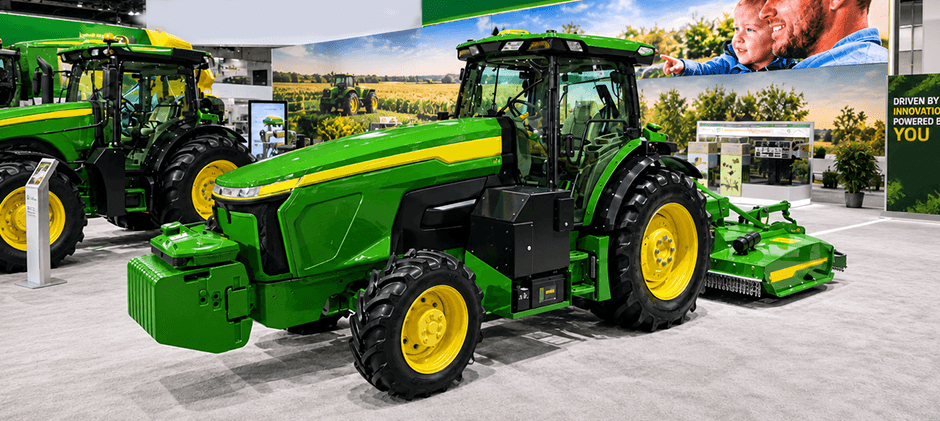
- John Deere: This famous green brand is busy developing its electric tractor. They’ve shown off prototype models and also built hybrid tech such as the Electrically Variable Transmission (EVT). It uses electric motors to boost efficiency on their big 8R series tractors.
- Case IH: This industry giant has also entered the arena with its Farmall 75C Electric, a utility tractor aimed at showing the viability of electric power for general farm tasks.
- Monarch Tractor: This California-based startup has made waves with its fully electric, driver-optional “smart” tractor, which integrates automation and data collection.
- Kubota and Solectrac: These brands are also key players, focusing primarily on the compact tractor market where battery technology is already a practical solution.
The Future of Electric Farm Equipment
The shift will probably happen little by little, driven by a few key technologies.
- Hybrid tech as a stepping stone: A lot of people think diesel-electric hybrid systems are the best next move for heavy equipment. This tech already works well in other industries. Take Caterpillar’s D6 XE dozer. It uses a diesel-electric drive and saves up to 25% fuel. The engine runs steadily at its most efficient speed. The US Army’s new AbramsX tank also uses a hybrid power system, cutting fuel use by half. Hybrids save plenty of fuel and boost performance, without the limits of today’s batteries.
- Battery replacement: No more long charging waits. Just pull out the empty battery and put in a fully charged one in minutes. Mining electric trucks already use this idea, and it could fix downtime problems for farmers.
- Autonomous machine fleets: Pairing electric power with self-driving tech is one of the most exciting ideas ahead. Forget one huge tractor run by a person. Picture a group of smaller self-driving electric tractors working as a team. They can run around the clock, head back to charge automatically when needed, and totally change how farms operate.
Farms are moving toward electric power, but this will be a slow evolution, not an overnight change. It will start with small utility vehicles and hybrid setups on bigger machines. As battery tech gets better and self-driving systems grow more popular, that quiet, strong buzz of electric power will definitely become the new sound of modern farming.
Final Thoughts
Right now, the electric tractor works best for specific jobs and smaller farms. These places don’t need machines that run all day or deliver huge horsepower. However, the trend is undeniable. Electric tractors make electrical components more important than ever. FridayParts supplies a huge range of aftermarket replacement parts for all kinds of farm equipment, including electrical and engine parts that fit most major machine models.
