

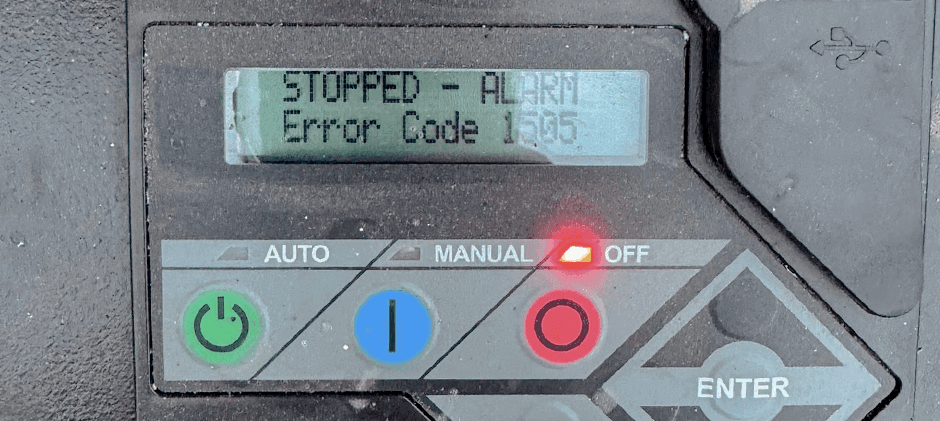
When your generator dies out of nowhere, all you care about is getting it running again. Generac error code 1505 is an RPM sense‑loss alarm that shuts the unit down while it’s cranking to start. The engine is trying to fire up, but the system isn’t picking up its engine rotation speed. The generator stops automatically to keep itself safe. We’ll talk about what causes this trouble and how you can fix it, so your generator is back up and running.
What Does Generac Error Code 1505 Mean?
Generac error code 1505 means RPM sense loss. Put simply, the controller isn’t picking up the correct engine‑spin speed (RPM) while the generator is trying to start. The control board is waiting to see the engine turning at a certain speed. If it never gets that signal, the unit’s computer thinks the engine isn’t spinning or isn’t sending out that movement reading. To keep itself safe, the system throws an overcrank fault and shuts the generator down.
Important point: this alarm only happens during cranking. You will get this error when the generator is attempting to start — not after it’s already up and running under heavy load. Power gear works in rough conditions, so the startup‑related sensors and electrical parts take a lot of wear. Once the system can’t read the RPM signal, the generator stays locked out. You have to fix the underlying issue first, then manually clear the fault code to get it working again.
Common Causes of Generac Error Code 1505
A Generac error code 1505 nearly always points to something going wrong in the startup process. Heavy‑duty generators shake a lot and run in grimy environments, so ordinary parts wear out faster.
- Weak or dead battery. Even when your battery reads okay on voltage, it may not have enough cold cranking amps to spin up the big engine. Loose, grimy, or corroded battery terminals also cut down power flow, so the starter can’t spin fast enough.
- Starter relay or the starter motor itself. The relay works like a link between the control board and starter. Dirt or moisture can mess up its internal contacts, and then the starter never gets the signal to kick on. On top of that, the starter motor can have poor connections, or the little solenoid trigger wire may come loose.
- Trouble with the ignition coils or the wire that carries the RPM signal back to the control board can also bring up this fault. If gunk ruins the wiring or the flywheel sensor, the controller can’t tell that the engine is turning at all.
“Most RPM sense loss codes don’t come from a broken sensor. It’s just voltage dropping while the engine cranks. Always load‑test the battery before swapping out pricey replacement parts.”
How to Fix Generac Error Code 1505?
Fixing this takes step‑by‑step work. Modern generators are complicated. Always start at the battery and work your way through the electrical system.
Battery and Battery Connections
Generator batteries take a beating from vibration, which can damage the lead plates inside. You need a proper load tester, not just a multimeter. A battery can read 12 volts sitting there, but drop to 5 the second the starter kicks on. Drop it that far and the controller can’t read RPMs.
Check the cables and terminals too. Outdoors, mud, dust and moisture make corrosion pile up fast. That gunk blocks power like a wall. Pull the cables off, scrub the posts with a wire brush, and hit them with dielectric grease to keep moisture out. Tighten everything down hard. A loose cable acts just like a dead battery.
Starter Relay and Starter Motor
Battery checks out? Move to the starter relay. It’s usually a small black four‑wire block near the controller. It takes the low‑power signal from the board and bumps it up for the starter solenoid. These relays sit in dust and wild temperature swings, so their contacts wear out. Listen when you hit start. If you hear a faint click but the starter doesn’t spin, the relay is probably bad.
Look at the starter motor. Check the big power cable and the little trigger wire on the solenoid. If the starter gets full voltage but only clicks or grinds, the starter itself is dead.
Ignition Coils and RPM Signal Wiring
The control board counts on one specific wire — often marked wire 18 on wiring diagrams — to send the RPM signal over from the ignition coils or flywheel sensor to the controller. With all that shaking on the generator, wiring harnesses rub against the metal frame. Wires end up frayed and can short out.
Follow the wiring route from the engine block back to the control panel. Check for pinched wires, melted insulation, or loose‑out plugs. Thick mud or oil caked all over the ignition coils can stop them from making the right spark and signal. Cleaning around the coils and making sure the harness connections sit tight will very often get that RPM signal working again.
Controller and Related Fuses
Don’t jump straight to replacing the main control board. First go through the system fuses. You’ll usually find a 7.5‑amp fuse right on the controller. A power spike or wiring short can blow this fuse, and the whole starting process stops dead. Pull the fuse and examine the internal metal strip.
If the fuses are fine, take a look at those multi‑pin plugs on the back of the controller. Constant rough bouncing can work these connectors loose. Unplug them, check for bent or corroded pins, then push them firmly back in place. Faulty controllers don’t happen very often. But if every other part tests good, the board itself might have failed and you will need to swap it out.
How to Clear Generac Error Code 1505?
Once you’ve fixed that mechanical or electrical problem, the system won’t erase the fault code by itself. You have to reset the controller manually. To clear Generac error code 1505, go to the control panel. Hit the “Off” button and wait a couple of seconds. Then press “Enter” or “Reset” to wipe out the stored fault history. Last, tap the “Auto” button to put the generator back into regular standby mode. If the error pops right back up, that means the real hardware issue still hasn’t been fixed.
Why Can a Generac Generator Start Manually but Fail During Automatic Exercise?
A lot of owners run into this frustrating issue: the generator fires up great manually, yet it throws that RPM sense‑loss code on its scheduled automatic exercise. The automatic and manual start paths run through separate relays and wiring.
Manual mode uses a physical switch that sends a straight 12‑volt signal right to the starter relay. For automatic starts, the controller sends out a weaker low‑voltage signal through an internal relay to activate the main starter relay. Slightly dirty relay contacts or a little moisture inside the control panel can break this low‑voltage signal.
On top of that, automatic exercise runs on its fixed schedule, often early in the morning when it’s the coldest. You usually do your manual start later in the day once outside temperatures have warmed up. That temperature gap makes a big difference for battery output and how thick your engine oil gets.
Can Cold Weather Trigger Generac Error Code 1505?
Cold weather really gives generators a hard time and is a common reason for starting faults. Once temperatures get near or below freezing, two problems kick in. First, engine oil turns thick and sticky. The starter motor has to work much harder to spin the heavy engine internals.
Second, cold conditions hit the battery’s cold cranking amps (CCA) pretty hard. A battery that works perfectly at 70°F can lose half its power down at 30°F. Thick oil paired with a weakened battery makes the engine crank too slowly. The sensors can’t pick up the needed RPM reading, so the generator shuts itself down. If you run your generator through winter, adding cold‑weather kits like battery warmers and block heaters is your best bet to stop this fault from popping up.
Summary
Dealing with equipment downtime is frustrating, but fixing a Generac error code 1505 is highly manageable once you trace the voltage path. FridayParts provides the exact starters, relays, and electrical components you need to keep your machinery running strong all year long.
