

Winter puts extra stress on diesel engines, especially in colder regions like Canada and the northern U.S. Proper warm-up is key—otherwise you risk hard starts, more wear, and wasted fuel. That’s where glow plugs come in. They help the engine start smoothly in cold weather. So, how long do glow plugs take to warm up?? Let’s break it down.

What are Glow Plugs?
Why is it harder in winter to start a tractor? This is because, in low temperatures, the viscosity of diesel fuel increases, making it less fluid and causing the engine to start more difficulty. Glow plugs are devices that heat the combustion chamber before starting a diesel engine. Glow plugs and diesel engines are closely related, especially during extreme cold days.
In a diesel engine, the fuel is self-ignited by compressed air under high pressure, rather than relying on spark plugs for ignition as in a gasoline engine. When the outside temperature is low, the compressed air may not be hot enough to ignite the diesel fuel, which is where the diesel engine glow plug comes in. It is a long, thin, electrically heated element, usually installed in the combustion chamber of each cylinder, which heats the air in the combustion chamber before starting the engine, allowing the air-diesel mixture to reach ignition even at low temperatures.
Wonder how to choose the right lubricant for different seasons? Here to check the lubricant viscosity guide: How Do Seasons Impact Engine Lubricant Choice?
What Do Glow Plugs Do?
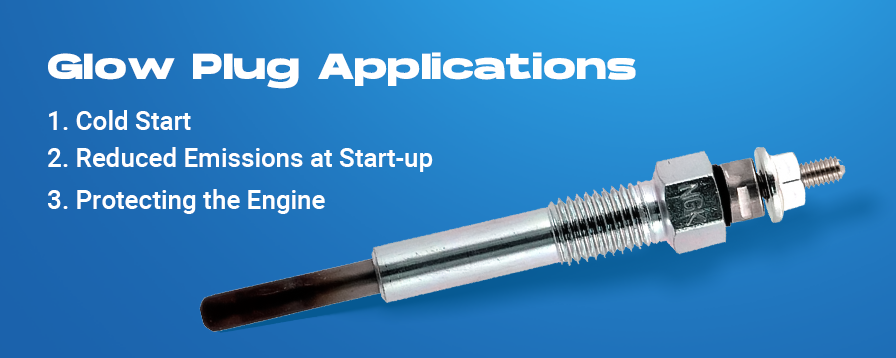
There are 3 main applications of the glow plug:
- Cold start: when the outdoor temperature is low, diesel fuel is difficult to ignite spontaneously. That is when the glow plug heats up the combustion chamber in advance so that the compressed air temperature reaches a level high enough to initiate combustion, thus avoiding starting difficulties.
- Reduced emissions at start-up: Glowing allows the diesel fuel to burn more fully at start-up. Also, it reduces unburned particles and harmful emissions at cold start-up and improves the environmental performance of the engine.
- Protecting the engine: In cold conditions, if the glow plug is not used or if it is not sufficiently warmed up. Incomplete combustion may occur inside the engine, leading to an increase in carbon deposits, which in turn affects the life of the combustion chambers, piston rings, and other key components.
How Long Do Glow Plugs Take to Warm Up?
Typically, glow plugs take between a few seconds and a dozen seconds to heat up. FridayParts is here to offer some common reference time. In warm winters (Usually refers to temperatures above freezing, around 32°F), the glow plug usually only needs to wait 5 seconds to 10 seconds to start the engine. In contrast, in cold winters (Usually refers to temperatures below freezing, especially below 14°F), the viscosity of the diesel will increase and the engine will become more difficult to start, so the glow plug will take longer to heat the combustion chamber, usually 10 to 20 seconds or even longer.
Factors Affecting the Heating Time of the Glow Plug
Though the time of glow plug heat has a universal standard, it is not fixed. It is affected by a number of factors:
- Outdoor operating temperature: In cold weather, the glow plug needs more time to heat the combustion chamber to the appropriate temperature. Generally speaking, the lower the ambient temperature, the longer the glowing time.
- Engine model: The design and performance of the glow plugs may vary from one diesel engine model to another, so the heating time may also vary. Operators should read the diesel engine manual carefully or seek assistance from the manufacturer if necessary.
- Glow Plug Type: There are various types of glow plugs available in the market, including traditional ceramic glow plugs and new metal glow plugs. Ceramic glow plugs typically have better heat retention, while metal glow plugs typically have higher heat transfer rates. This means that the warm-up time will be longer with ceramic glow plugs.
- Supply Voltage: The state of the battery voltage will also affect the heating time of the glow plug. Insufficient voltage can lead to longer warm-up times, so ensuring the health of your machine’s battery is also an important part of a proper start-up session!
Conclusion
In summary, glow plugs play a crucial role in the starting process of diesel engines. Using glow plugs correctly can enhance the engine’s starting performance and reduce wear and tear. Generally, the heating time for glow plugs ranges from a few seconds to several tens of seconds, depending on various factors. Mastering the skills to use glow plugs effectively not only ensures smooth engine starts in cold weather but also helps extend the engine’s service life. Hopefully, this article has helped you better understand the heating time and significance of glow plugs.
Find more winter tractor maintenance solutions and quality glow plugs at FridayParts. Hope your machine can survive the winter and run smoothly!
