

Bleeding air from the hydraulic system is as simple as regular hydraulic maintenance. You should release excess pressure, check for air leaks, and repeat the bleeding process. But how can you test the hydraulic system and when should you call a pro? This guide walks you through how to bleed the air yourself and everything you need to know to prevent expensive downtime and costly repairs.
What Happens If Air Gets into Your Hydraulic System?
Air in the hydraulic system is a big problem for excavators. It can impact performance and even damage your machine if left unaddressed. So, it’s essential to bleed air from the hydraulic system.
Performance Impact
If there’s air in the hydraulic system, your excavator won’t run as strong as it should. Here’s how it affects performance:
- Reduced Power: The air reduces the hydraulic pressure of your excavator, affecting its lifting capacity and efficiency.
- Erratic Movements: Your excavator may suffer from uneven movement or jerks during operation, leading to unstable performance.
- Inconsistent Pressure: The air in the hydraulics causes fluctuating pressure, leading to unresponsive hydraulic actions of your excavator.
Long-Term Damage
If air stays in the hydraulic system for too long, much bigger problems may happen.
- Hydraulic Pumps: The air in the hydraulic system can cause overheating and eventually hydraulic pump failure, leading to costly repairs.
- Seals and Gaskets: The seals and gaskets in the hydraulics are subjected to wear and tear if exposed to the air, causing hydraulic fluid leaks and hydraulic inefficiency.
- Other Hydraulic Components: Other components like hydraulic cylinders, valves and hoses can wear at an accelerated rate due to air exposure, bringing about expensive repair costs.
Impact Excavator Safety
If your excavator gets air in the hydraulic system, it can be sluggish and unable to respond to pressure promptly. The boom, arm or bucket of the excavator moves uncontrollably, raising the risk of accidents on construction sites where space is limited.
Common Signs of Air In the Hydraulic System
Here are some common signs of air in the hydraulic system.
- Weird noises like gurgling, whining, or squealing
- Slower or spongy excavator controls
- Droopy or downward creep on the arms and lifts
- Fluctuating pressure and inconsistent pressure readings
- Bubbles in the fluid of the hydraulic system.
How to Bleed Air from the Hydraulic System?
Bleeding air out of the hydraulic system is a part of your routine maintenance. Here’s a step-by-step guide on getting air out of your hydraulic system for optimal performance.
Safety First
Before you get started, you should take priority to safety to avoid injury. Here’s what to do:
- Park your excavator on level ground, engage the parking brakes and lower all implements to the ground
- Ensure adequate ventilation, especially when working indoors
- Shut off the engine and allow the system to cool down
- Wear safety gloves, goggles and any other PPE
- Have absorbent materials (pads or rags) ready for spills
- Place drip pans under potential leak points
- Make sure the machine is stable and secure before proceeding
Locate the Hydraulic Reservoir
Before trying to bleed the hydraulic system, it’s essential to figure out where the reservoir is and check the fluid level. You may encounter the following three situations:
- If the fluid level is low, top up the fluid with the recommended hydraulic oil
- If the fluid is clean, proceed to the next step
- If the fluid is contaminated, drain the old fluid and replace it with fresh oil
Bleed the Hydraulic System
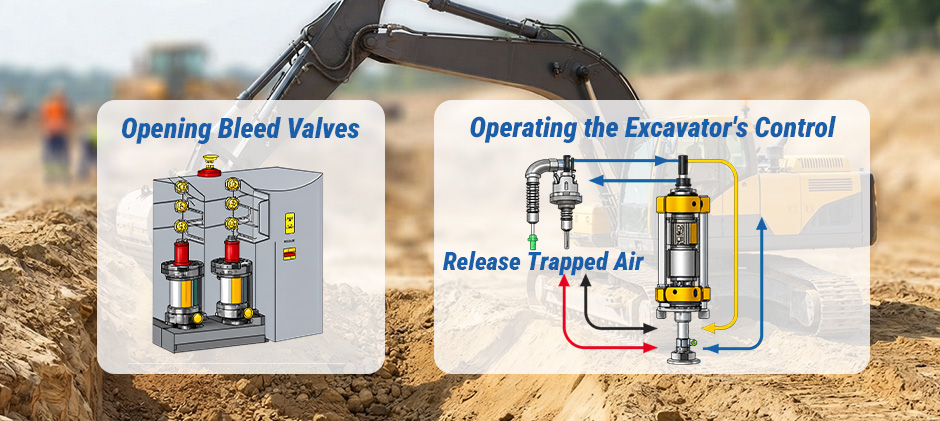
To ensure a smooth hydraulic system, bleeding the hydraulic system is widely used to remove any trapped air. There are two common ways to bleed the hydraulic circuit: manual bleeding and automatic bleeding. General steps involve:
- Locate the bleed valve that is used to release excess pressure and air from the system
- Open the bleed valve by turning it counterclockwise until it is fully open
- Allow the air to escape until you don’t notice visible bubbles in the fluid
- Close the bleed valve once all the air has been released
- Check the system pressure to ensure it is back to normal
- For dissolved air or “mixed” air where it is in the fluid, you can either increase the temperature of the fluid to release the air or pass the fluid through a gauze screen to remove the air bubbles
Check Hydraulic Oil
Make sure your hydraulic oil is in good condition after the bleeding. You may have these situations:
- If the hydraulic oil is clean and clear, no extra action is needed and top up if necessary
- If it’s dark and dirty, drain and replace with fresh hydraulic oil
- If it’s foamy or aerated, check for any leaks in the system and replace parts when necessary
Test the System
After bleeding the air out of the hydraulic system, you need to test the hydraulic circuit. You can operate the machine to ensure everything runs smoothly. If you notice any signs of air in the hydraulics or unusual noise and movements, you can repeat the bleeding process or turn to a pro for help.
When to Ask for A Pro?
Fixing air in the excavator’s hydraulic system is straightforward. But you may also require professional help in the following situations:
- Persistent air in the hydraulic system
- Your hydraulic pump is severely damaged
- You have major seal problems
Conclusion
It requires patience and close attention to bleed air from the hydraulic system. You should watch for key variables like fluid conditions, system positioning and controlled cycling speed for successful air bleeding. Most bleeding failures arise from rushing the process, failure to maintain the fluid level and ignorance of the root causes. It’s essential to do regular maintenance and start with quality hydraulic components. At FridayParts, you can explore a vast range of quality hydraulic cylinders, seals and fittings, hydraulic pumps and other hydraulic parts.
See Related
How to Bleed a Hydraulic Cylinder With & Without a Bleeder Valve?
