

To fix a Kubota 3-point hitch won’t lift issue, you usually just need to open the hydraulic flow control knob located right under the seat, top off low hydraulic fluid, or clean a clogged suction screen. Let’s walk through the exact steps to find out what is really going on with your tractor.
Why Won’t My Kubota 3-Point Hitch Lift?
When your Kubota tractor’s three‑point hitch won’t lift and stops you from getting work done, the problem normally comes down to one of three things: user‑setting mistakes, blocked hydraulic oil flow, or broken mechanical parts.
Your 3‑point hitch needs steady, pressurized hydraulic oil to push the internal piston and lift the arms. If the oil flow gets blocked, goes the wrong way, or doesn’t build enough pressure, the lift arms just won’t move.
Sometimes it’s just too much weight. Every tractor has a max lifting capacity. If you hook up a huge implement or a really heavy rear counterweight, the pressure relief valve will pop open to protect the system. This keeps your hoses from blowing out, but your hitch stays stuck down.
Other times it’s just poor maintenance, like old dirty oil or a plugged‑up filter. Start checking from the easiest fixes first before you dig into harder mechanical parts, and you can track down the issue fast.
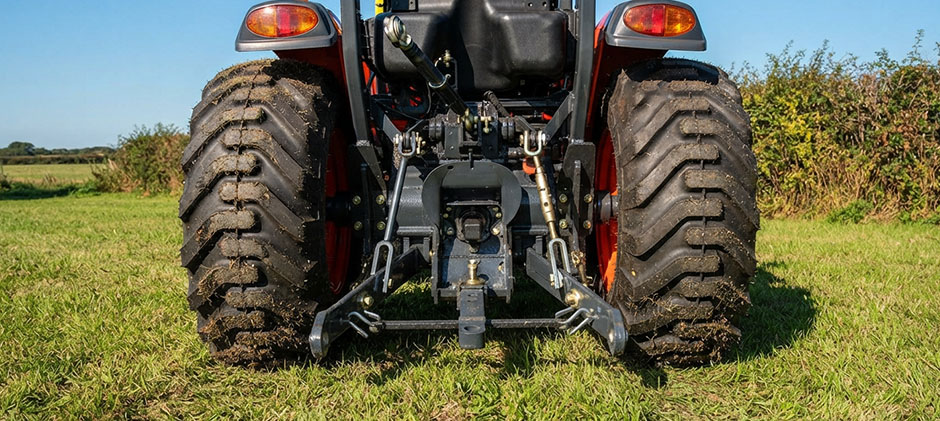
How to Fix a Kubota 3-Point Hitch That Won’t Lift?
When troubleshooting your compact tractor’s three‑point hitch, always check the quick, no‑cost fixes first before tearing parts apart or buying new replacements.
Hydraulic Flow Control Knob Under the Seat
A simple knob is the common reason. Nearly all Kubota compact tractors have this hydraulic pressure adjustment knob right under the seat. This valve controls how fast oil drains out of the lift cylinder. Its main job is slowing down heavy implements so they don’t crash hard into the ground. Lots of owners twist this knob by mistake, thinking it adjusts the seat suspension. If you crank this valve all the way shut, it traps the oil inside. Your hitch won’t drop, and sometimes it will even cause lifting issues.
To fix it, spin the knob counter‑clockwise several full turns to open it back up. Then test your control lever again.
Hydraulic Fluid Level and Type
If the knob is already open but your lift is still weak, next check your hydraulic fluid. The transmission and rear hydraulics run off one shared fluid tank. When the fluid gets too low, the pump starts sucking air instead of oil. Air compresses, but oil does not. That gives you soft, mushy lifting performance, or the hitch won’t lift at all.
Park the tractor on level ground, wait a couple of minutes, then pull out the rear dipstick to check the level. Top it up with the right fluid if it’s low. Most newer models take dedicated hydraulic‑transmission fluid, while some older manuals call for SAE 80W gear oil. Stick strictly to whatever your operator manual says. Mixing different oils creates foamy fluid, and that kills your lifting power.
Hydraulic Suction Screen and Filter
If your Kubota hydraulic pump makes a loud whining noise when you try to lift attachments, your hydraulic flow is most likely blocked. Hydraulic fluid first runs through a suction screen and a spin-on filter before reaching the pump. Over time, metal debris, dirt, and grime clog the screen. The pump has to work overtime to pull fluid through the blockage, which causes the loud whine.
Drain the hydraulic fluid, then take out the suction screen (it’s usually near the bottom of the transmission housing). Clean the screen thoroughly with parts cleaner, replace the filter, and refill the system with fresh hydraulic fluid.
Hydraulic Pressure and Control Valve
Does your tractor lift fine with no load, but lift very slowly or stop lifting entirely when carrying weight? This is almost always a pressure problem with the hydraulic control valve. The control valve sends fluid to the lift cylinder. If dirt gets stuck in the relief valve, it can jam open. This lets pressurized fluid skip the lift cylinder and killing lifting power. Torn piston seals inside the lift cylinder cause the same issue.
Quick test: Remove the valve cover and check the fluid flow. If you can block the flow easily with your thumb, the system can’t build enough pressure. Fix: Take apart the valve, clean all internal parts, and install new O-rings and seals.
Test the Hydraulic Pump for a Weak or Failing Pump
If you’ve checked the control knob, fluid level, screen, filter and valves, and the lift still doesn’t work right — your hydraulic pump is likely worn out. The hydraulic pump creates the flow that powers the whole hydraulic system. As tractors age, the pump’s internal gears wear down. A faulty pump needs a full replacement. /hydraulic-pump
FAQs
Why does my Kubota 3 point hitch whine and not lift unless I help it?
Usually, the load is over the tractor’s rated lift capacity, or the hydraulic suction screen is clogged and starving the pump. Check your ballast weight first to make sure it is not too heavy. If the weight is fine, drain the fluid and clean the suction screen.
What weight can a Kubota L225 3 point hitch actually lift?
When dealing with kubota L225 hydraulic problems, owners often overestimate the machine. The kubota L225 lift capacity is roughly 600 to 950 lbs right at the lift points. This capacity drops fast the further the load sits behind the arms. Anything past that limit will stall the pump and trigger the relief valve.
Why does my hitch only fail to lift after I have been using the tractor for an hour?
This happens because hydraulic fluid gets hot as you work. Hot fluid is thinner than cold fluid. If your pump has worn internal gears or your cylinder has bad seals, the thin, hot oil will easily slip past them, causing a loss of pressure. This is a strong sign that you need a pump rebuild or replacement.
Final Thoughts
When your Kubota 3-point hitch won’t lift or lower properly, start with the simple checks first. Make sure the hydraulic flow control knob is open, check the hydraulic fluid level and type, and inspect the suction screen and filter for blockage. If those checks don’t solve the problem, test the hydraulic pressure, control valve, and pump to find the actual cause. When your tractor hitch won’t lift or lower properly, the right hydraulic parts can help fix the problem. FridayParts offers hydraulic pumps and seal kits for Kubota tractors to help you repair the hitch and get it working properly again.
