

You can fix a tractor flat tire right at your driveway or out in the field with basic gear: a heavy‑duty ratchet strap, air compressor, and a simple plug kit. Whether you’ve just got a puncture in the tread or the tire has popped completely off the rim, you can get your machine running again. But what if the hole is on the sidewall? We’ll walk you step‑by‑step to get your equipment back up and running.
Why Does a Tractor Tire Go Flat?
Tractors run in rough conditions, so their tires run into all kinds of dangers all the time. Even with thick, heavy‑duty rubber, you still get flat tires pretty often. Figuring out what’s causing the problem helps you pick the right fix.
- Direct punctures are one of the common causes. Driving across farm fields, wooded areas, or job sites means tires roll over sharp stuff. Deer antlers, honey locust thorns, mesquite thorns, and rusty nails can poke right through the rubber.
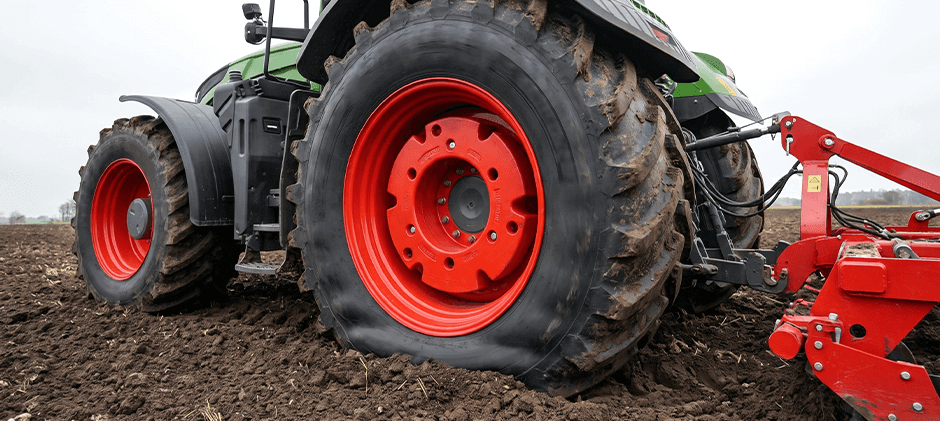
- Another trouble is tractor tire bead pop‑off. That’s when the tire edge (the bead) pulls away from the metal rim, and all the air rushes out right away. This usually happens when you run the tractor on low tire pressure while hauling a heavy load in the front bucket. Make a sharp turn in that state, and the side force yanks the tire straight off the rim.
- Age matters too. Over the years, rubber dries up and develops cracks — that’s dry rot. Those tiny cracks slowly let air seep out. And lastly, valve stems can go bad. Sticks or rocks can smack the valve stem, bending it or even breaking it clean off, which causes a fast air leak.
Check Your Tire Before Adding Air
Before you grab an air hose, you need to inspect the wheel. Pumping air into a damaged wheel without checking it first will just waste your time.
Look at the Tread and Sidewall
Start by doing a visual sweep of the rubber. Look for nails, thick thorns, or cuts. Check the tread area first, as this is where most debris enters. Then, inspect the sides. A tractor tire sidewall repair is much harder than a tread repair because the side flexes constantly as the machine moves. If you see a massive gash on the side, a simple plug will not hold.
Inspect the Valve Stem
Sometimes the rubber is perfectly fine, but the valve stem is leaking. Wiggle the stem gently. If it feels loose or cracked at the base, it needs replacing. You should also check the valve core, which is the tiny pin inside the stem. These cores can loosen over time. You can use a small core tool to tighten it.
Examine the Rim and Bead
Look closely at where the rubber meets the metal rim. Is the rim bent from hitting a rock? Is the rubber pushed inward, leaving a gap between the tire and the metal? If there is a gap, the bead is unseated. You will have to force the rubber back against the metal before the tire can hold any air. Make sure the bead area is clean. Dirt or mud trapped between the rubber and the metal will cause a slow, endless leak.
Use Soapy Water to Find the Leak
If your tire looks fine but just won’t stay inflated, you’ve got a hidden leak. Grab a spray bottle and mix up some dish soap and water. Spray the soapy water all over the tire, hit the tread, valve stem, and both sides of the rim. Keep a close eye. Wherever air is leaking out, it’ll bubble right up in the soapy mix to show you exactly where the trouble is.
How to Fix a Tractor Flat Tire?
If your tire has popped off the bead, a standard air compressor will not fill it. The air will just rush out of the gap. Here is how we fix an unseated bead safely and effectively.
- Take the weight off the wheel: If it is a front tire, use your front-end loader to push down on the ground, lifting the front wheels in the air.
- Clean the bead: Wipe away any grease, dirt, or debris from the metal rim and the rubber edge.
- Grab a heavy-duty ratchet strap: Wrap the strap all the way around the center of the tire tread. Start cranking the ratchet to tighten the strap. As the strap squeezes the center of the tread, it forces the sidewalls to bow outward. This outward pressure pushes the rubber bead tight against the metal rim.To help the rubber slide into place, apply tire soap or a thick soapy water mixture around the edge of the rim.
- Remove the valve core from the valve stem: This allows air to flow into the tire much faster.
- Connect a strong air compressor and start filling: You should hear the bead pop into place. Once the tire starts taking air and holding its shape, carefully and quickly release the ratchet strap. It will be under high tension, so watch your fingers.
- Finally, put the valve core back in and inflate the tire to the proper PSI listed on the sidewall.
How to Repair a Tractor Tire Puncture?
If the bead is seated perfectly but you found a puncture in the tread, you can usually fix it without taking the wheel off the machine.
For small holes caused by nails or thorns, a heavy-duty rope plug kit works best. Use the reamer tool from the kit to clean out the hole and make it rough. Thread a sticky rope plug through the insertion tool, push it firmly into the hole, and pull the tool out. The plug stays behind, sealing the leak. Cut off the excess plug material sticking out of the tread.
Some owners use liquid slime sealants for small leaks. While this can work for tiny thorn holes, it makes a mess inside the wheel. If you ever need to put a tube in later, you will have to clean all that slime out first.
If the tire constantly leaks or pops off the rim, a tractor tube replacement is a great permanent fix. Heavy-duty tubes hold air perfectly even if the outer rubber has small cracks or a weak bead.
However, rear tires are a different story. Many rear tires are filled with liquid ballast, like beet juice or calcium chloride, to add weight for better traction. A loaded tractor tire repair cost is much higher because of this fluid. If a loaded rear tire goes flat, it is very heavy and dangerous to handle without specialized equipment. In this case, we highly recommend calling a mobile tire professional. They have the pumps to remove and save the fluid, and the heavy cranes to lift the wheel safely.
When Should You Replace the Tire?
Not every flat tire is fixable. You’ve got to know when it’s time for a new tire.
- If the tread is totally worn out, your tractor won’t get good grip in the mud. It just can’t pull heavy loads anymore. When a tire has bad dry rot, the rubber is crumbling, so plugs and patches won’t stay in at all.
- Big rips on the sidewall also mean you need a new tire. The sidewall carries most of the tractor’s weight. Even if you patch up a big side‑wall cut, it will blow out later under pressure, that’s a safety risk.
- Whenever you swap tires out, try to change them in pairs: both front tires or both rear tires.
FAQs
Can tractor tires really get flat?
Yes. Despite thick rubber, tractor tires often fail from deer antlers, thorns, nails, dry rot, bent rims, or damaged valve stems, especially on older or heavily used machines.
Should I repair a flat tractor tire myself or call a mobile service
Small front tire punctures can be plugged or tubed at home with a jack and pry bars. Loaded rear tires almost always need a mobile pro due to weight and fluid.
Can I use starting fluid to seat a tractor tire bead?
While some people spray starting fluid inside the tire and light it to force the bead onto the rim with a small explosion, this is extremely dangerous. It can severely damage the rubber or cause serious injury. We strongly advise using the ratchet strap and air compressor method instead.
Wrapping Up
A flat or unseated tractor tire is a common problem. In many cases, you can fix a front tire puncture or reseat the tire yourself. If you need a new tire or replacement parts, FridayParts offers affordable options to help get your tractor back to work quickly.
