

A bush hog (also called a rotary cutter) is for clearing overgrown fields, thick brush, and rough trails. If your cuts start looking messy and your tractor’s working extra hard, dull or nicked blades are usually to blame. Worn-out blades rip plants instead of slicing cleanly, leaving ragged growth. We’ll cover how to sharpen bush hog blades. You’ll be ready to get back to work fast.
Should Bush Hog Blades Be Sharp?
Some people say bush hog blades don’t need to be sharp. A rotary cutter is for heavy rough work, not for a neat lawn cut. It’s meant to tear up thick brush, weeds and small saplings.
- A dull blade rips the vegetation apart, which damages unwanted growth better and slows it from growing back fast.
- Sharp blades get nicked and ruined easily by rocks, stumps and thick debris, so sharpening them feels like a waste of time. These people just run the blades until they’re totally worn out and then swap in new ones.
Others say blades should stay somewhat sharp. A bush hog often mow pastures and big fields too. Here’s why a sharper blade helps here:
- Sharp blades cut grass cleanly. That’s better for pasture health, especially when it’s dry, because clean cuts stress the plants less.
- It puts less strain on your tractor. Dull blades dragging through thick growth make the engine and PTO work overtime. Sharp blades cut down resistance, saving fuel and reducing wear on your tractor’s drive parts.
- It works better overall. Instead of just smashing grass flat, a sharp blade actually cuts it, leaving neater fields and faster clearing.
For most people with off-road equipment who mow both grass and brush, keeping blades sharp makes more sense. It balances heavy clearing power with easy pasture upkeep.
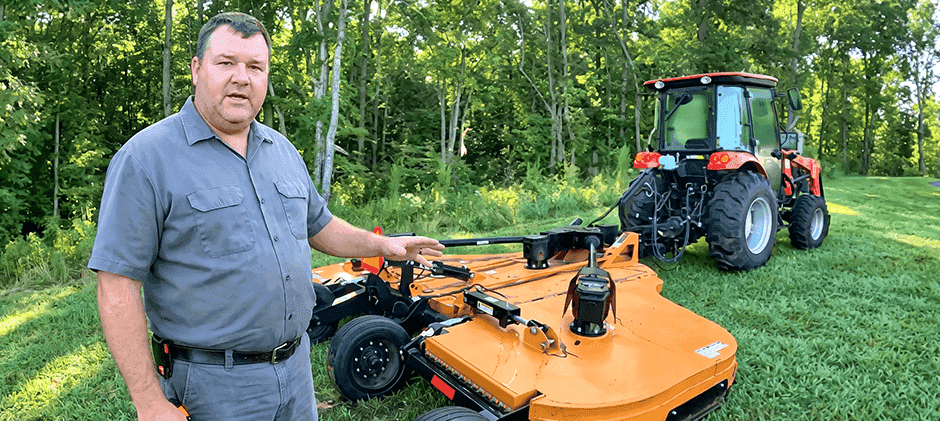
Where Should You Grind a Bush Hog Blade?
You should only grind the top, beveled edge of the blade.
Keep the bottom of the blade flat. This flat side is the cutting surface and runs parallel to the ground. If you grind the bottom, you’ll change the blade’s shape, hurting how it cuts and making it weaker. The bottom edge naturally wears down and rounds over time from hitting dirt and debris, especially at the outer tips where the blade spins fastest.
When sharpening, you only need to rework the factory angle on the top of the cutting edge. Grind off enough metal to remove all nicks, dents and rounded spots. This makes a smooth new edge that lines up with the untouched flat bottom of the blade.
How Sharp Should Bush Hog Blades Be?
This is another thing many people get wrong. A bush hog blade doesn’t need to be razor sharp like a kitchen knife or regular lawn mower blade. A super thin edge is too delicate for this rough work. It’ll chip, curl or crack right away if it hits rocks, thick branches or hard ground.
You want a tough, functional edge instead. The sweet spot is a bevel that tapers to a tiny flat edge, around 1/16 to 1/8 inch thick. This slightly blunt edge holds up to impacts, yet still cuts through grass and weeds easily. For tougher stuff like small trees and thick brush, this edge smashes and breaks the material — exactly what a rotary cutter is made for. A razor-sharp edge would try to slice through the wood, leaving sharp splinters that can puncture tires, and it would go dull immediately.
Preparing the Brush Hog for Safe Sharpening
Safety comes first whenever you work on heavy equipment. A bush hog is really heavy, and one careless mistake can cause bad injuries. Never get under the cutter if it’s only held up by the tractor hydraulics.
Follow these safe steps:
- Park on flat ground: Set up your tractor and bush hog on firm, level ground such as a concrete shop floor.
- Unhook the PTO shaft: Do this first before starting any work. This keeps the blades from spinning by accident.
- Raise and lock the mower: Lift the bush hog all the way up with the tractor’s three-point hitch. Then prop it securely. Use heavy jack stands, solid concrete blocks or big sturdy wood blocks under the front corners and rear tailwheel. Make sure it’s supported reliably with extra backup.
- Put on protective gear: Always wear a full face shield or safety goggles plus heavy gloves. Bits of flying metal from the grinder can seriously hurt your eyes.
Do You Need to Remove Bush Hog Blades?
Ideally, yes. Taking the blades off lets you clamp them in a vise and use a bench grinder, so you have better control and can sharpen more accurately. You can also weigh each blade afterward to make sure they’re perfectly balanced.
But for most people, pulling bush hog blades off is really tough. The nuts holding them are huge, 1‑1/2 inch or bigger, and torqued down extremely tight. After years of use, rust and gunk can lock them solid. You’ll need a heavy-duty large-drive impact wrench and a powerful air compressor just to break them loose. That’s why sharpening blades while they’re still mounted is the most common, practical way. This guide covers that on-the-spot method, since anyone with a handheld angle grinder can do it.
How to Sharpen Bush Hog Blades?
Lock the Blade
Bush hog blades spin freely. To hold one still, clamp a big set of locking pliers (Vise-Grips) on the blade tip and rest the handle against the inside of the mower deck. You can also slide a long wrench onto the blade bolt to stop it from turning.
Check for Damage
Look closely at the cutting edge. You’ll probably see nicks, chips and rounded wear. You need to grind past all that damage to get an even edge.
Use an Angle Grinder: A 4‑1/2 inch angle grinder with a grinding wheel or flap disc works best here. Flap discs cut more gently and help you get a smoother finish.
Grind in Smooth Passes
Position yourself so you can reach under the deck comfortably, without putting your body under it. Start grinding the top beveled edge.
- Stick to the Right Angle: Follow the blade’s original bevel. Don’t flatten the edge or make the angle too steep.
- Keep the Grinder Moving: Make long, steady passes along the edge. Don’t leave the grinder sitting in one spot too long — too much heat will overheat the metal, making it brittle and easy to snap.
- Grind From the Center Out: Start grinding near the thick bolt area and work your way out to the blade tip.
Pay Attention to Balance
Since you aren’t taking the blades off to weigh them, balance is critical. Unbalanced blades create strong, damaging vibrations. Remove roughly the same amount of metal from every blade by:
- Counting how many grinding strokes you use on each blade.
- Visually checking both blades to make sure they look symmetrical, with matching wear and similar finished edges. If one blade is more damaged than the other, you still need to grind both down to about the same amount to stay balanced.
Vibration Test After Sharpening
Once you’re happy with the edge on both blades, it’s time for the most important final step: the vibration test.
- Clear the work area: Take away all tools, blocks and jack stands around the mower, then reconnect the PTO shaft.
- Start the tractor slowly: Fire it up and keep it at low idle speed.
- Engage the PTO carefully: Turn on the PTO slowly. Listen and feel for any strange noises or shaking.
- Ramp up the RPM: If everything runs smoothly, gradually raise the engine speed until the PTO hits its normal working speed, which is usually 540 RPM.
- Check for vibration: Let it run for about a minute. The cutter should sound steady. If you feel heavy shaking through the tractor or see the mower vibrating badly, shut everything off right away. Bad vibration means the blades are unbalanced. You’ll need to go back and grind a little extra material off the heavier blade — the one that has less wear or thicker metal — then run the test again.
Final Thoughts
Sharpening your bush hog blades is a maintenance task. By learning the correct grinding location and sharpness level and carefully balancing the blades, you can keep your work efficient. FridayParts offers a wide range of replacement parts for tractors and attachments. Shop quality parts at affordable prices with fast shipping.
