

A John Deere riding mower that won’t start is one of the most frustrating spring surprises we hear about from homeowners. The good news is that most no-start problems trace back to a short list of causes: a missed safety step, a weak battery, stale fuel, or a worn spark plug. This guide covers how to start a John Deere riding mower the right way, then helps you narrow down the cause when the engine stays quiet.
Quick Answer: Start It in 7 Simple Steps
If you just need to know how to start a John Deere riding mower, the sequence is the same on most models. Follow these seven steps in order:
- Sit fully in the seat.
- Press the brake pedal and set the parking brake.
- Make sure the PTO or blade control is off.
- Move the throttle to choke if the engine is cold, or to about half throttle if it is already warm.
- Insert the key and turn it to the start position.
- Crank for no more than 5 seconds at a time.
- Once it starts, let it idle briefly before you begin mowing.
Do not crank longer than 5 seconds. Wait about 10 seconds before trying again — longer cranking can overheat the starter.
Why Won’t It Start?
If the starter stays dead when you turn the key, the safety interlock is often the reason. One switch out of position is enough to keep the engine silent, and the mower gives no warning about which one.
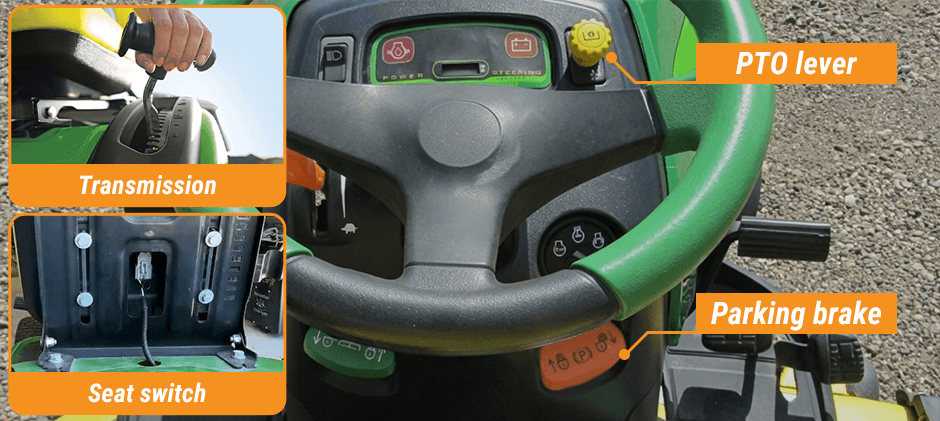
Check these first:
- Seat switch — must sense the rider’s weight
- Parking brake — must be set
- PTO lever — must be in the OFF position
- Transmission — must be in neutral, or the clutch fully in
If all of those look right and nothing happens, move on to the battery, fuse, and starting circuit.
What About Different Series?
Control layouts vary between the 100, E, S, X, and Z Series, and they change by model year and engine supplier too. A general chart will only get you so far — check the operator’s manual if you are not sure what your machine uses.
Older John Deere riding mowers usually have a manual choke. Newer S and X Series units often use auto-choke, and some higher-end models run EFI, which skips the choke step entirely. Zero-turn units need the control arms locked in the outward starting position before the starter will engage.
Shut It Down the Right Way
Knowing how to start a John Deere riding mower is only half the routine — shutdown matters just as much. Disengage the PTO, bring the throttle down to idle, and let the engine settle for a moment before turning the key off. Take the key out when you park — leaving it in the switch invites accidental discharge and drains the battery over time.
Common Starting Problems and Fixes
When the correct sequence still won’t wake it up, stop cranking and diagnose. Use this quick reference to match the symptom to the likely cause:
| Symptom | Likely Cause | Common Fix |
|---|---|---|
| Silent when the key turns | Battery, fuse, or interlock | Test battery, inspect switches |
| One click, no crank | Solenoid or starter | Replace failed solenoid |
| Cranks, won’t fire | Fuel or ignition | Fresh fuel, new plug, clean filter |
| Starts, then dies | Carb jet or fuel cap vent | Clean carb, replace cap |
| Slow crank | Weak battery or dirty cables | Clean terminals, charge or replace |
Nothing Happens on Key Turn
Silence usually means the electrical circuit isn’t completing. Common causes:
- Weak or dead battery
- Blown fuse near the battery
- Faulty seat or brake switch
- Corroded battery terminals or damaged wiring
Start with battery voltage and terminal condition. If those look fine but starting is intermittent, check for corroded connectors or damaged wiring that could be dropping voltage across the circuit. When the fault has been traced to burned or worn contacts inside the key switch itself, replacing the ignition switch is the usual next step. This kind of wear is common on machines stored in damp sheds or barns.
One Click, Then Silence
A single click when you turn the key usually points to the battery, solenoid, or starter itself. Try a jump-start first.
If it fires up on a jump, do not assume the battery is fine — a successful jump only tells you the battery was low enough to need help. Load-test it before mowing season gets going. If it still only clicks after a jump and the battery tests healthy, the starter solenoid is a likely suspect. Solenoids wear over time from heat cycling and internal corrosion, and a failing one can click audibly without actually engaging the starter motor.
Engine Cranks but Won’t Start
If it turns over but never catches, the issue usually comes down to fuel delivery or ignition. In many cases, stale gasoline, a plugged fuel filter, or a fouled spark plug is behind it. A dirty air filter or carburetor deposits from long storage can produce similar symptoms.
If the gas has been sitting since last season, drain it and refill with fresh fuel before you touch anything else. Ethanol fuel goes bad faster than most owners expect.
After winter storage, stale fuel is one of the most common causes of no-start complaints. If your John Deere riding mower sat all winter without stabilizer, check the fuel before you open the carburetor.
If the fuel is fresh but the flow still seems weak, inspect the inline fuel filter for restriction or discoloration. A partially blocked filter will often let the engine crank for a long time without lighting off, and it is worth ruling out before moving on to the carburetor.
It Starts, Then Dies
If the engine fires and quits a few seconds later, check:
- A clogged carburetor jet
- A blocked fuel cap vent
- A safety switch dropping out after start-up
Loosen the fuel cap and try starting again. If it runs longer with the cap loose, the vent is the problem — a blocked vent creates a vacuum in the tank that starves the carburetor within seconds.
First Start After Winter Storage
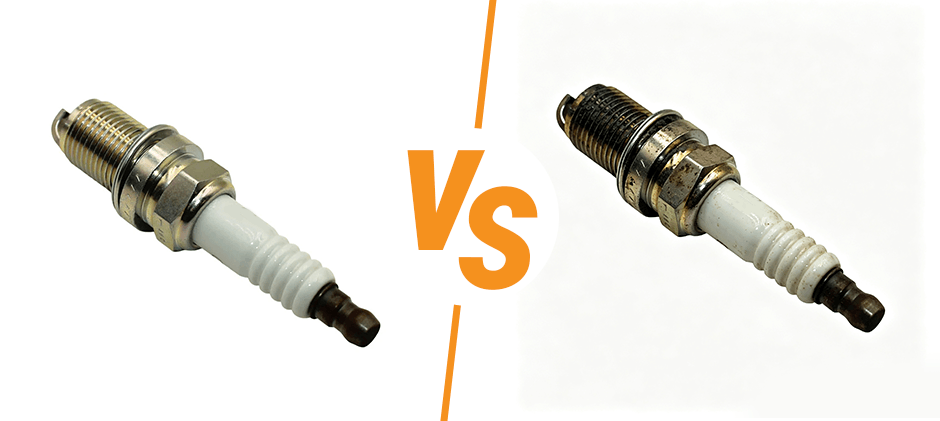
Any John Deere riding mower that sat unused over winter needs a quick check before the first crank. Look at four things: fuel age, spark plug condition, battery charge, and fuel line flexibility.
Old gas and a weak battery cause most spring headaches. If the plug is dark, wet, or worn at the electrode, replace it before you keep cranking — a fouled plug can flood the cylinder and make things worse. Charge the battery fully before the first attempt. If it cranks slowly or drops charge again within a day, it is likely at the end of its service life.
Fuel lines also crack after months of cold weather. A hairline split lets air into the fuel system and creates the same symptoms as a clogged filter. Squeeze the lines gently and look for stiffness, cracks, or wet spots.
Conclusion
Most starting problems on a John Deere riding mower trace back to the same short list: safety switches, battery, or old fuel. Work through those before ordering parts. If you do need replacement parts, FridayParts offers aftermarket options for common wear items such as ignition switches, solenoids, and filters, with wide compatibility across many heavy equipment brands.
