

Testing an intake manifold gasket doesn’t take a lot of equipment. Start with the basics —Listen for a vacuum leak at idle, check for a rough idle, and look around the manifold for coolant loss or residue. If those checks point toward a leak, move on to a scan tool to read fuel trims, and run a smoke test if you’ve got one handy to confirm it. Usually, a failing gasket will let you know early on—rough idle, lean running, or a little coolant seeping out—long before it turns into something major.
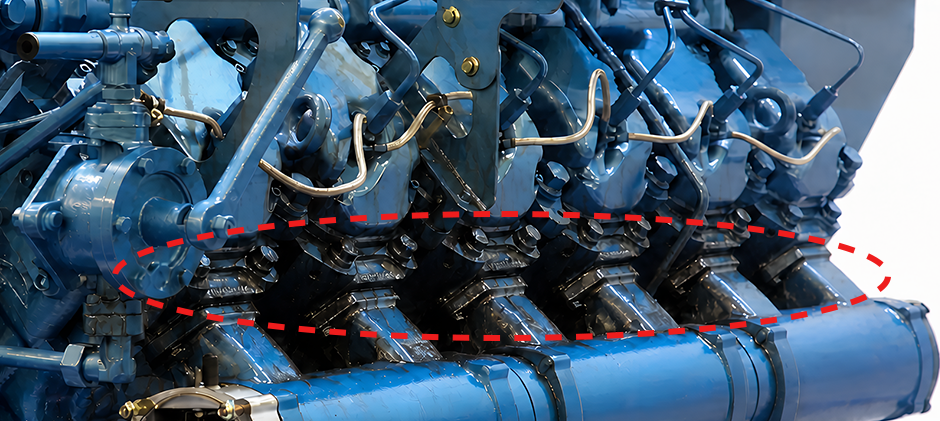
What Symptoms Point to a Bad Intake Manifold Gasket?
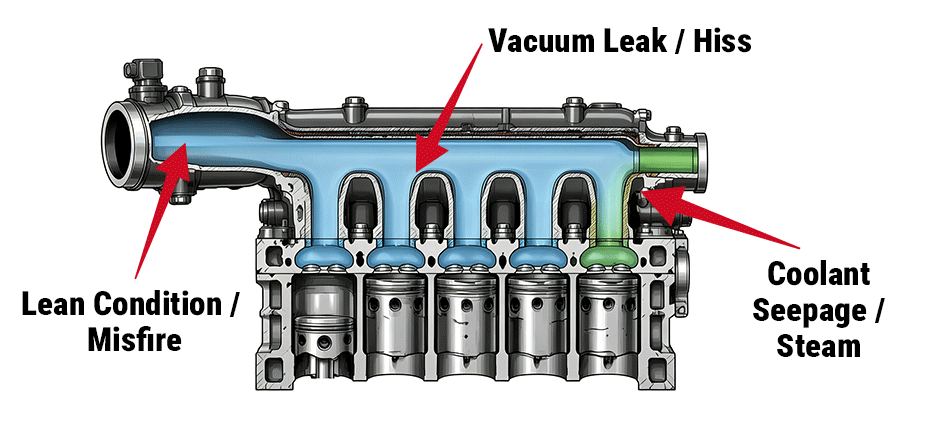
A bad intake manifold gasket usually shows up first at idle or low speed. Even a small leak can upset the air-fuel mixture enough to make the engine run rough.
Common signs include:
- Rough or unstable idle
- Hissing noise from the intake area
- Hard starting
- Lean running condition
- Random or cylinder-specific misfire
- Coolant loss without an obvious external leak
- Sweet coolant smell
- Lower fuel economy
- Check engine light
If the gasket is leaking air, the engine pulls in unmetered air and idle quality often gets worse. If the leak is in a coolant passage, you may notice seepage, overheating, or coolant contamination.
| Symptom | What it may mean | What to inspect first |
|---|---|---|
| Rough idle | Vacuum leak | Intake sealing surfaces |
| Hissing noise | Air leak | Manifold edges and ports |
| Lean code | Extra air entering system | Fuel trims and leak points |
| Coolant loss | Coolant passage leak | Intake corners and sealing areas |
| Misfire | Uneven air-fuel distribution | Spark plugs and cylinder data |
| Sweet smell | Coolant seepage | Warm-engine visual inspection |
Most intake manifold gasket problems are easiest to notice at idle, because that is when the engine reacts most strongly to a small air leak.
How to Test without Tools?
Start with the easy stuff. It won’t catch every problem, but it’ll tell you fast whether the intake manifold gasket is worth your time.
Listen for intake-side leakage
Fire up the engine and let it idle. If the gasket is leaking, you’ll often hear a hissing or sucking sound around where the manifold bolts up to the engine. Small leaks can be quiet, so listen closely.
Watch how the engine idles
Pay attention to:
- Surging RPM
- Shaking or vibration
- Stall tendency
- Weak throttle response just off idle
This kind of behavior is common when the mixture is being thrown off by a vacuum leak.
Check for coolant traces
Some intake manifold gaskets also seal coolant passages, so look for:
- Damp spots near the manifold
- Crusty residue around the sealing area
- Coolant smell after warm-up
- Slow but repeated coolant loss
If you’ve already got the engine opened up, or you’re getting close to a repair, it’s a good time to check related items like the thermostat gasket, radiator hose, and air filter.
Inspect the oil
If coolant is ending up where it doesn’t belong, the oil can take on a milky or frothy appearance. That doesn’t necessarily point straight to the intake manifold gasket, but it’s a red flag—stop running the engine until you figure out where the coolant is actually going.
Notice when the problem is worst
A bad intake manifold gasket often causes the most trouble:
- At cold start
- At idle
- At light throttle
- During low-speed operation
That pattern helps. If the engine smooths out as RPM rises, an intake leak becomes more likely.
How to Use Diagnostic Tools for Precise Testing?
If the basic signs point toward the intake manifold gasket but you want a clearer answer, use tools to confirm it.
Use a scan tool
A scan tool can help you spot signs commonly linked to intake leaks, such as:
- Lean fault codes
- Random misfire codes
- Cylinder-specific misfires
- Positive fuel trims at idle
Fuel trims matter here. If they are high at idle and improve as RPM increases, that often points to an intake-side air leak.
Perform a smoke test
A smoke test is one of the best ways to confirm a small leak. Once smoke is introduced into the intake system, it will usually escape from the weak sealing point.
Check for smoke around:
- Intake manifold gasket edges
- Vacuum fittings
- Throttle body area
- Related hoses and ports
If the leak is too small to see or hear during a basic inspection, smoke testing is often the fastest way to find it.
Use a controlled pressure test if needed
Some leaks only show up clearly when the system is under light pressure. If a visual check and smoke test are not enough, a careful pressure test may help confirm the problem.
A practical testing order looks like this:
- Read codes and live data
- Inspect the intake area
- Run a smoke test
- Use a pressure test if needed
If the manifold has to come off, it helps to have gasket kits, manifold bolts, and related sealing parts ready before you start.
What Can Give You False Results and How to Tell?
Not every rough idle, misfire, or coolant loss problem means the intake manifold gasket is bad. A few other issues can look almost the same.
Common false leads include:
- Cracked vacuum hoses
- PCV system leaks
- Throttle body gasket leaks
- Injector issues
- Sensor faults
- Nearby external coolant leaks
- Head gasket failure
A lean code alone is not enough to blame the intake manifold gasket. It only tells you the mixture is off. You still need to confirm where the leak is coming from.
How do I tell if my intake manifold gasket is bad?
Don’t rely on just one thing—look for the whole picture. Rough idle, a hissing sound, lean codes popping up, and visible seepage or smoke around the manifold all point in the same direction. When you’ve got a few of those together, the gasket is almost certainly the problem.
How to tell the difference between a blown head gasket and a blown intake gasket?
This matters because the symptoms can overlap.
A bad intake manifold gasket is more likely when you notice:
- Rough idle
- Hissing noise
- Lean condition
- Leakage around the intake
- Symptoms strongest at idle or light throttle
A head gasket problem is more likely when you notice:
- Constant overheating
- Heavy white exhaust smoke
- Compression loss
- Combustion gas in coolant
- Strong pressure buildup in the cooling system
- Severe oil and coolant mixing
In short, an intake gasket usually causes mixture and idle problems first. A head gasket failure usually shows deeper combustion or cooling system trouble.
What Should You Do Based on Your Test Results?
Once the testing points to the intake manifold gasket, the next step depends on how bad the leak is.
When the leak is minor and external
- Reduce unnecessary use
- Plan the repair soon
- Inspect manifold flatness
- Check bolt condition and tightening pattern
- Replace nearby worn seals or hoses if needed
If internal coolant leakage
- Stop operating the engine
- Inspect oil and coolant condition
- Repair the leak before further use
- Replace contaminated fluids and damaged sealing parts
In cases where results are still unclear
Go back through the system in order:
- Inspect vacuum hoses again
- Compare idle behavior with higher RPM behavior
- Review fuel trim data
- Repeat the smoke test
- Rule out head gasket symptoms before teardown
That takes more time, but it is still better than replacing parts on a guess.
Final Thoughts
To test an intake manifold gasket, start with idle behavior, intake noise, and coolant loss, then confirm the problem with fuel-trim data or a smoke test if needed. Catching the leak early can save time and prevent bigger engine issues. If you need replacement parts for the repair, FridayParts is one option to consider for aftermarket engine and sealing parts.
