

Need a Husqvarna spark plug chart that matches the service manual on four-stroke equipment? We put this guide together for anyone running riding tractors, zero-turn mowers, walk-behinds, snow blowers, or tillers — not the handheld two-stroke lineup. The right plug for a Husqvarna rider depends on the engine builder stamped on the blower housing, not the chassis label on the deck. Champion RC12YC gapped to 0.030″ covers many Briggs Intek and Kohler Command powerplants, but Kawasaki, Kohler Courage, Honda GXV, and Briggs Vanguard engines each need something slightly different. The tables below sort it out engine by engine so you can order once and install with confidence.
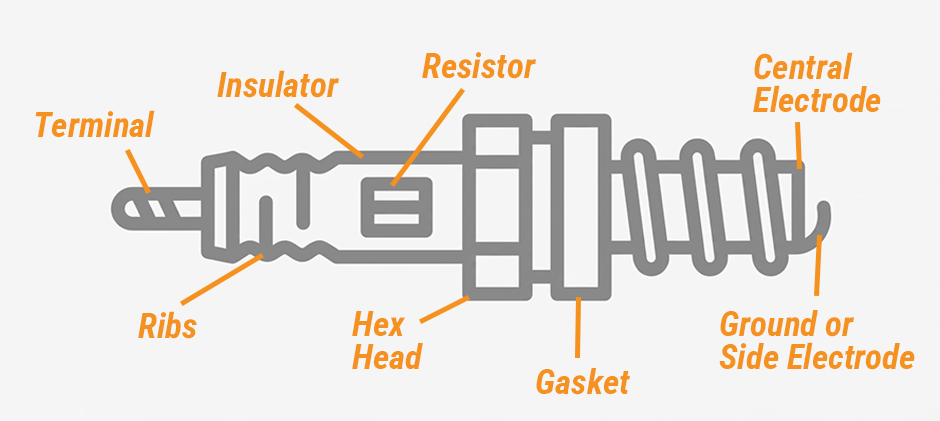
Why the Engine Sticker Matters More Than the Model Number?
On four-stroke Husqvarna equipment, the chassis badge tells you very little about what plug to buy. The same YTH-series tractor shipped with Briggs Intek V-twins in some years and Kohler Courage V-twins in others. The same snow blower frame carried LCT, Briggs, or Husqvarna-branded engines depending on production run.
Before you order anything, pull the engine sticker. On most riders and ZTRs you’ll find it on the blower housing or the valve cover; on snow blowers, it sits on top of the recoil shroud. Write down the engine make, model number, type/spec code, and serial number — that combination tells you the exact plug. The mower model alone won’t.
Core specs to match when cross-shopping four-stroke plugs:
| Specification | Common Four-Stroke Value |
|---|---|
| Thread Diameter | 14 mm |
| Thread Pitch | 1.25 mm |
| Thread Reach | 9.5 mm (3/8″) or 19 mm (3/4″) depending on engine |
| Hex Size | 16 mm or 20.6 mm (5/8″) |
| Seat Type | Gasket (most) or taper (Honda, select Kawasaki) |
| Resistor | Yes on all current engines |
Before you shop by thread size alone, here’s a warning: reach matters as much as diameter does. A plug can thread in nice and easy yet sit too shallow, leaving the ground strap outside the combustion chamber. Go too long, and the piston will meet it at TDC. So match the reach to the engine spec, every single time.
Walk-Behind Lawn Mower Plugs
Walk-behinds follow the engine builder’s spec, not any Husqvarna standard. Identify the engine first, then pick the plug.
| Engine | Plug | Gap |
|---|---|---|
| Briggs & Stratton L-head (classic flathead) | Champion RJ19LM / NGK B2LM | 0.030″ |
| Briggs & Stratton Intek single OHV | Champion RC12YC / NGK BCPR5ES | 0.030″ |
| Briggs & Stratton 550EX, 625EX, 675EXi | Champion RC12YC / NGK BCPR5ES | 0.030″ |
| Honda GCV160 / GCV170 / GCV190 | NGK BPR6ES (or BPR5ES per application) | 0.028″–0.031″ |
| Honda GX series OHV (verify by displacement) | NGK BPR6ES | 0.028″–0.031″ |
| Kawasaki FJ-series walk-behind | NGK BPR5ES or BPR6ES per manual | Per manual |
| Husqvarna-branded 160cc / 190cc walk-behind | Torch F6RTC / NGK BPR6ES | 0.030″ |
Honda’s 0.028″–0.031″ range is engine-specific and takes precedence over the generic 0.035″ gap often printed on NGK BPR6ES retail boxes. Set the gap to the Honda spec, not the plug-box spec.
Riding Tractor and Zero-Turn Plugs
Riders and ZTRs span multiple engine builders. Pull the engine model code from the blower-housing sticker — the Husqvarna chassis number alone is not enough to pick a plug.
| Engine | Plug | Gap |
|---|---|---|
| Briggs & Stratton Intek V-twin | Champion RC12YC / NGK BCPR5ES | Per manual (commonly 0.030″) |
| Briggs & Stratton Vanguard V-twin OHV | Champion RC14YC / NGK FR5 | Per manual (commonly 0.030″) |
| Briggs & Stratton Professional Series single | Champion RC12YC | 0.030″ |
| Kohler Command OHV single | Champion RC12YC / NGK BCPR5ES | Per manual |
| Kohler Command V-twin | Champion RC12YC / NGK BCPR5ES | Per manual |
| Kohler Courage (verify by engine model) | Champion QC12YC | Per manual |
| Kohler Confidant / 7000 Series V-twin | Champion RC14YC / NGK BPR4ES | 0.030″ |
| Kawasaki FR / FS / FX V-twin | NGK BPR4ES or BPR5ES per manual | Per manual |
| Kawasaki FH-series V-twin (e.g., FH661V) | NGK BPR4ES / Champion RC14YC | 0.030″ (verify by manual) |
| Honda GXV V-twin | NGK BPR5ES | 0.028″–0.031″ |
The YTH22V42 and similar chassis designations ship with different engines across model years — some with Briggs Intek V-twin, some with Kohler Courage. Pull the sticker before you order. For spark plugs and other ignition components across these brands, check the lawn mower engine parts category.
Snow Blower Plugs
Husqvarna single-stage and two-stage snow blowers have run through several engine suppliers over the past decade. Match the plug to the actual engine on your machine.
| Engine | Plug | Gap |
|---|---|---|
| LCT Snow Series 208cc / 254cc / 291cc / 369cc | Torch F6RTC / NGK BPR6ES | 0.030″ |
| Briggs & Stratton Snow Series (single) | Champion RC12YC | 0.030″ |
| Briggs & Stratton Polar Force 1150 / 1450 | Champion RC14YC | 0.030″ |
| Husqvarna-branded 208cc / 254cc two-stage | Torch F6RTC / NGK BPR6ES | 0.030″ |
| Husqvarna 414cc large-frame two-stage | NGK BPR6ES / Champion RC12YC | 0.030″ |
Cold-weather starting puts extra load on the ignition system. If your blower cranks hard the first time out each season, pull the plug, inspect for carbon buildup, and reset the gap before you blame the carburetor. A fresh plug makes a measurable difference below freezing.
Tiller Plugs
Husqvarna rear-tine and front-tine tillers typically carry Briggs & Stratton or Honda power. Older DRT and CRT series units sometimes used Tecumseh engines, which take their own plug family.
| Engine | Plug | Gap |
|---|---|---|
| Briggs & Stratton 900 Series / 950 Series OHV | Champion RC12YC / NGK BCPR5ES | 0.030″ |
| Briggs & Stratton CR950 / XR950 (tiller spec) | Champion RC12YC | 0.030″ |
| Honda GX160 / GX200 (rear-tine applications) | NGK BPR6ES | 0.028″–0.031″ |
| Tecumseh HSSK / HMSK (legacy tillers) | Champion RJ19LM / NGK B2LM | 0.030″ |
| Husqvarna-branded 208cc tiller engine | Torch F6RTC / NGK BPR6ES | 0.030″ |
Tillers sit for long stretches between seasons, and ethanol-blended fuel leaves varnish on the plug electrode faster than most people expect. If your tiller fired fine last fall and refuses this spring, pull the plug first — it is the fastest fifteen-minute diagnosis you can run.
How to Check and Set the Gap
A plug that fires in the parts bin may still misfire under compression if the gap is wrong. The gap is the distance between the center electrode and the ground strap. Too tight and the spark is weak; too wide and the coil cannot push voltage across it under load.
First things first: the right spark plug socket for your engine, then pull the plug. Most four-stroke mower plugs are a 13/16″; compact V-twins usually take a 5/8″. Before you clean a thing, read the electrode — carbon fouling, oil wetness, white glazing, or rounded edges, each one a clue about what’s going on inside the engine. For the gap, reach for a wire feeler gauge; the disc or coin type is fine on standard-electrode plugs, but loses accuracy on fine-wire tips. Compare your reading to the spec in your engine manual, because the published gap and the factory shipping preset don’t always agree.
Need to adjust? Pry the ground strap gently outward to widen, or tap it lightly on a hard surface to close — then re-measure after each small change. Never bend the center electrode. On reinstall, torque to the figure specified in the engine manufacturer’s manual. Published torque values and installation-angle instructions supersede any rule of thumb. If the plug and gap check out but ignition problems persist, inspect the coil, kill-switch wiring, and flywheel key next.
Common Cross-Reference Numbers
A plug box labeled with a part number that does not match the manual is a common parts-counter frustration. These mappings keep you from buying the wrong plug twice on four-stroke equipment.
| Reference Number | Spark Plug | Typical Use |
|---|---|---|
| Champion RC12YC (71) | NGK BCPR5ES equivalent | Briggs Intek, Kohler Command, many mid-size V-twins |
| Champion RC14YC (415) | NGK BPR4ES equivalent | Briggs Vanguard, Kohler 7000, Kawasaki FH V-twins |
| Champion RJ19LM (868) | NGK B2LM equivalent | Legacy Briggs L-head flatheads, older Tecumseh |
| Champion QC12YC | NGK BKR5E equivalent | Kohler Courage V-twin applications |
| NGK BPR6ES (7131) | Torch F6RTC equivalent | Honda GCV / GX, LCT Snow Series, several Husqvarna 4-stroke OEM engines |
| NGK BPR5ES (6953) | Honda, Kawasaki FR/FS variants | Various V-twin mower engines |
| Torch F6RTC | NGK BPR6ES equivalent | Husqvarna-branded 160–414cc four-stroke engines |
A box labeled Bosch WR8DC, Denso W16EPR-U, or similar off-brand number is often listed by parts retailers as a cross-reference to RC12YC or BPR6ES. These are aftermarket cross-references rather than engine-maker-published equivalents; always verify thread reach, heat range, resistor spec, and seat type before installing.
When to Replace vs. Clean
A spark plug is a wear item. Even a correctly gapped plug degrades as the electrode erodes from millions of spark events, and no amount of cleaning restores the sharp firing edges once they round off.
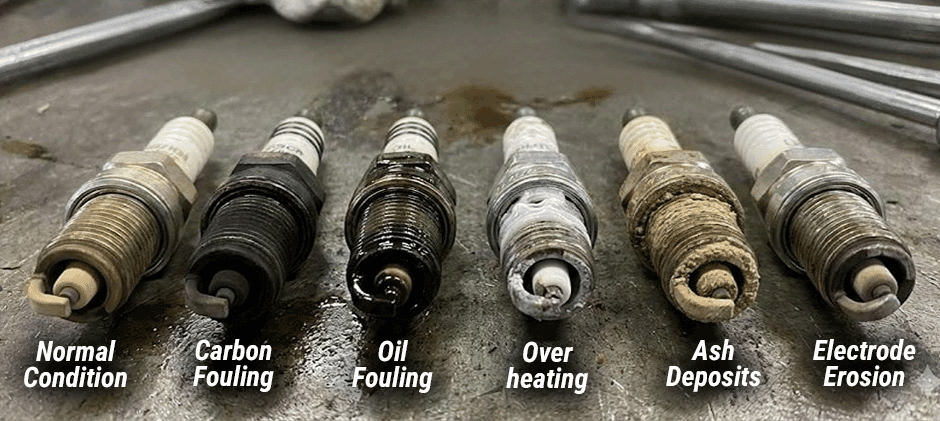
Replace rather than clean when you see any of the following:
- The center electrode has rounded off instead of showing a sharp 90-degree edge
- White or yellow glazing on the insulator (an overheating indicator)
- Heavy black oily deposits that return within a few hours of running
- Visible cracks on the porcelain insulator or around the ceramic nose
- The gap has drifted significantly wider than the manual spec
- Rust or corrosion on the terminal nut or threads from long storage
If the plug still looks serviceable, stick with the cleaning method the plug manufacturer recommends. Abrasive media — sand, grit, bead-blast — can lodge in the shell and work its way into the cylinder on the first fire, so steer clear of shop-built sandblasters unless the plug maker specifically calls for the technique. A soft brass brush and carb cleaner handle most light carbon deposits without risk.
As for replacement intervals, those vary by engine, duty cycle, and fuel quality. Follow the service hours in the engine manufacturer’s manual — Briggs, Kohler, Kawasaki, and Honda each publish their own numbers, and those beat any generic “once a season” rule of thumb. Commercial-duty ZTRs cutting 20 hours a week burn through plugs faster than a homeowner tractor cutting 20 hours a year.
Final Words
We built this chart around three habits that prevent nearly every misfire chased down to ignition: pick the plug by the engine on your machine (not the chassis badge), confirm the gap against the engine manufacturer’s manual, and torque to spec on install. When it is time to restock, FridayParts carries aftermarket spark plugs and ignition components covering Briggs & Stratton, Kohler, Kawasaki, Honda, and Husqvarna-branded small engines at fleet-friendly pricing — useful if you run a mixed shed of riding tractors, ZTRs, snow blowers, and tillers through a full season.
