

You’re driving along when that little orange gas light comes up on your dashboard. But have you ever wondered if you’re harming your car by consistently waiting for the gas light? We’re here to talk about the risks of driving on empty.
What Does the Gas Light Mean?
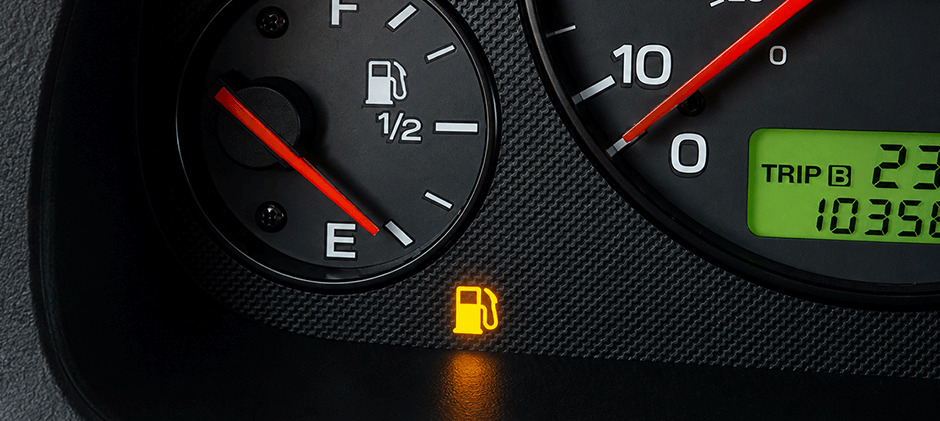
Your low fuel light works with your car’s gas gauge. There’s a float sensor inside the gas tank that tracks how much fuel you’ve got left. Once your gas drops below a certain level, the light on your dashboard turns on.
This light’s just a heads-up for you. Car brands build in extra reserve fuel so you’ve got time to hunt down a gas station. Your car won’t stall right away when it pops on. It only means you’re down to the last 10–15% of your tank, so fill up soon.
Is It Bad to Wait for the Gas Light Before Fueling?
Yep, that’s right. Draining your tank almost dry once or twice won’t wreck your car instantly, but doing this all the time wears out key parts faster and can leave you stuck somewhere dangerous.
The two main problems are a broken fuel pump and engine trouble. On top of mechanical damage, you could end up stranded with no gas. If you want to know why you shouldn’t let your fuel get super low, let’s break down what goes on inside your gas tank when you’re nearly out of fuel.
Low Fuel Affects the Fuel Pump
This is the worst thing about driving with barely any gas left. Every modern car has an electric fuel pump sitting right inside the gas tank, and its whole job is to push gas to the engine nonstop.
Gas doesn’t just run your car — it also cools and lubricates the fuel pump. If you always let your tank run low, the pump sits exposed to air instead of being covered in fuel. It can’t cool down properly anymore and starts overheating. This wears the pump out way faster, and it’ll break much sooner than it should. Swapping out a broken fuel pump costs a lot of money, but you can easily skip this costly fix just by filling up regularly. Always keep enough gas in the tank to keep your fuel pump cool and working well.
How Much Gas Is Left When the Light Comes On?
There’s no universal rule here — it all depends on what car you drive, its model and production year. That said, most newer cars still have 1 to 3 gallons left once the low fuel light pops up.
Your car’s owner’s manual will tell you the exact reserve amount. If you can’t find that info in the manual, you can work out a rough number yourself. Next time your low fuel light turns on, drive straight to a gas station and fill the tank all the way up. Write down how many gallons you add. Take your car’s full tank capacity (you’ll find this number in the manual too), minus the gallons you just pumped, and you’ll get your approximate reserve fuel amount.
How Many Miles Can You Drive on Empty?
Knowing how much reserve gas you’ve got lets you figure out how far you can drive before you run out entirely. How many miles you get after the low fuel light turns on all comes down to your car’s MPG.
Most cars can go 30 to 50 miles on reserve fuel as a rough average, but this number isn’t set in stone. Several things will cut down your actual driving distance:
- Road conditions: Constant stop-and-go city traffic uses way more gas than smooth highway cruising.
- How you drive: Speeding up fast and slamming on the brakes burn fuel quicker.
- Extra weight: Heavy luggage or lots of passengers force the engine to work harder and guzzle more fuel.
It’s useful to know your rough reserve mileage, but don’t push your car to hit that limit. The reserve fuel is just an emergency backup — don’t wait until you’re nearly out to fill up.
Is It Bad to Drive Your Car on Empty?
Don’t risk driving with almost no gas left. The troubles you’ll face are way worse than just getting stranded without fuel.
Let’s clear up a common rumor first: tons of folks think running low on gas makes the fuel pump suck up gunk settled at the tank bottom and clog the engine. This barely applies to newer cars at all. The pump’s intake sits right at the tank floor, so it pulls fuel from that same spot no matter if your tank’s full or nearly empty. Plus, modern plastic gas tanks don’t rust, gas stations have solid filtering systems, and your car comes with its own fuel filter as an extra barrier. Dirt buildup isn’t the real threat here. Running out of fuel mid-drive starves the engine, triggers misfires, and can wreck your pricey catalytic converter.
Safety is another huge worry that hits right away. Picture your engine shutting down on a crowded highway, a lonely dark backroad, or out in a blizzard. Once the engine dies, power steering stops working, and your power brakes fade after you press the pedal a couple times. You’ll also lose heat and AC, which is super risky when temperatures get extreme.
Conclusion
It won’t hurt your car if the low fuel light pops up once in a while, but making a habit out of it is risky. It puts extra unnecessary strain on your fuel pump. Fill up your tank when you’ve still got a quarter of gas left. This easy habit protects your fuel pump from damage. Even if the pump wears out down the line, FridayParts sells high-quality aftermarket replacement parts at much better prices.
FAQs
Will driving with almost no gas ruin your fuel pump?
Yep. Most new cars have the fuel pump sitting underwater in gas to stay cool. If you constantly drive on little fuel, the pump sits exposed to air, overheats, and wears out much faster.
Will low gas pull dirt and gunk into the engine?
That’s mostly just a myth. The pump’s intake sits at the very bottom of the tank, so it pulls fuel from the same spot whether your tank’s full or nearly empty. Still, driving with barely any fuel can starve the engine and lead to misfires.
How empty can I let my tank get before filling up?
Try to refuel once you hit a quarter tank left. Think of 1/4 full as your empty warning line. This extra buffer keeps you from breaking down out of nowhere.
