

The John Deere D140 is a 48-inch mower made for home use. It handles medium-sized yards that see weekly cutting. Regular mowing and light property work are its main jobs. This guide covers what the mower offers and what it takes to maintain it.
John Deere D140 Specs and Performance
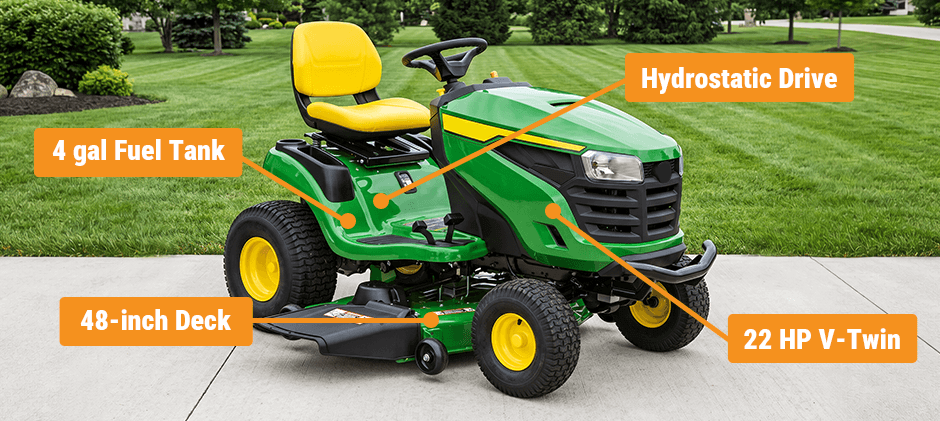
The D140 is a 100 Series residential tractor. It’s not built for heavy jobs. It comes with a 22 HP V-twin engine, hydrostatic drive, and a 48-inch cutting deck. That gives you smooth speed control and solid cutting coverage for routine jobs. Here are the key specs.
| Item | Specification |
|---|---|
| Machine type | Lawn tractor |
| Production years | 2011 to 2017 |
| Engine | Briggs & Stratton V-twin gasoline engine, typically 21–22 hp depending on model year. |
| Deck size | 48 in. |
| Drive type | Tuff Torq T40 belt-driven hydrostatic transmission |
| PTO | Electric |
| Steering | Manual |
| Fuel tank | 2.4 gal (9.0 L) |
| Main use | Residential mowing |
These specs show the D140’s real role. It is meant for mowing grass on a regular schedule. It is not the right machine for rough terrain, frequent towing, or constant high-load work.
John Deere D140 Performance
The John Deere D140 performs best in normal mowing conditions. Open lawn areas, moderate grass height, and level to gently rolling ground are where it usually feels most comfortable.
The hydrostatic transmission is one of the more useful features in daily operation. It allows smooth speed changes without manual shifting. That makes the mower easier to handle around trees, edges, and narrow turns.
The 48-inch deck also helps cover ground faster than smaller lawn tractor decks. On a medium-sized property, this can make weekly mowing more efficient.
The D140 is generally well suited for:
- regular mowing on home properties
- medium-size lawns
- mostly flat terrain
- light seasonal yard tasks
Still, its limits are clear. Performance often drops in the following conditions:
- steep slopes
- rough ground
- very tall grass
- wet, dense clippings
- repeated towing work
That is where expectations need to stay realistic. A lawn tractor can do a lot when used correctly, but this type of machine is not designed to behave like a heavier off-road unit or a commercial mower.
Operating and Maintenance Tips
Routine maintenance is the easiest way to keep the D140 in working order. Small service checks done on time usually prevent larger repair issues later.
The best starting point is the basic service schedule. Focus on the parts and systems that affect starting, cutting, and movement first.
Engine Care
The engine should stay clean and well serviced. If starting becomes harder or power feels uneven, the first checks are usually simple.
Pay attention to:
- engine oil level
- oil condition
- oil filter replacement
- air filter condition
- spark plug wear
- fuel quality
Keeping up with these items helps protect the engine and supports smoother operation through the mowing season.
Deck Care
The deck has a direct effect on cut quality. If the mower leaves uneven strips or clumps of grass, the deck system needs a close look.
Check these areas often:
- blade sharpness
- blade balance
- spindle condition
- deck belt wear
- deck level
- grass buildup under the shell
A clean deck improves airflow. Sharp blades produce a cleaner finish. Worn spindle parts or an aging belt can also reduce cut quality even when the engine still runs well.
Drive Care
The drive system should respond smoothly and consistently. If ground speed drops or the mower struggles more than usual, inspect the drive system early.
Start with these points:
- drive belt condition
- idler pulley wear
- belt alignment
- transmission response after warm-up
Many movement problems begin with belt wear rather than complete transmission failure. Catching those signs early can save time and repair costs.
Seasonal Checks
Seasonal checks help avoid downtime during busy mowing periods. Before the main season starts, inspect the machine from front to back.
A simple pre-season checklist includes:
- battery charge
- battery terminals
- tire pressure
- front wheel condition
- steering linkage
- PTO engagement
- safety switches
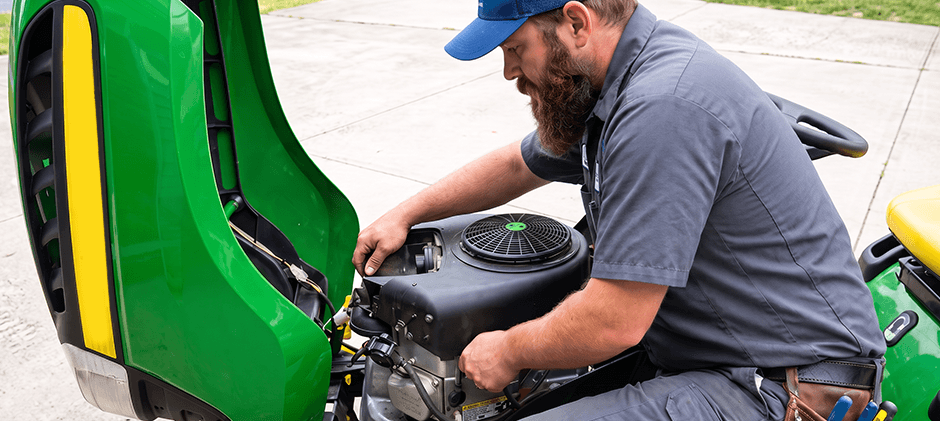
These small checks help reduce surprise failures once the mower goes back into regular service. When worn components need replacement, John Deere tractor parts offer a practical alternative to dealer-only options for keeping the D140 in service.
Common Problems
The D140 has several common trouble spots. Most of them are manageable if the inspection starts with the likely wear points.
Here is a quick problem guide.
| Symptom | Likely Cause | First Check |
|---|---|---|
| The tractor moves slowly | Belt wear or transmission stress | Drive belt and pulleys |
| Belt slips or comes off | Idler wear or alignment problem | Idlers, guides, belt routing |
| Uneven cut | Dull blades or poor deck level | Blades, spindles, deck level |
| Grass clumps | Dirty deck or wet mowing conditions | Deck underside and blade condition |
| Hard starting | Weak battery or tune-up needed | Battery, spark plugs, filters |
| Front wobble | Wheel or steering wear | Front wheels and steering linkage |
| Deck vibration | Bent blade or spindle issue | Blade balance and spindle condition |
The value of this chart is speed. Instead of checking everything at once, it gives a clear place to begin.
Drive Issues
Drive issues often show up as weak forward movement, poor response on a mild incline, or a slipping feel during use.
Inspect these items first:
- cracked or glazed drive belt
- pulley wear
- unusual drive noise
- weak pull after warm-up
If the mower still moves but feels less capable than before, the belt system is often the first place to inspect.
Cutting Issues
Cutting issues are usually easier to see than to diagnose, but the basic causes are often straightforward.
Look for:
- dull blade edges
- bent blades
- spindle looseness
- packed grass under the deck
- uneven deck setting
A mower that cuts poorly does not always have an engine problem. In many cases, the deck simply needs cleaning, leveling, or replacement of worn parts.
Steering Issues
Steering issues become obvious when the front end starts to feel loose or unstable. If the mower wobbles, pulls unevenly, or feels rough in turns, inspect the front end carefully.
Check:
- front wheel bearings
- steering linkage
- axle pivot wear
- tire wear pattern
These parts wear slowly, so the problem often builds up over time instead of appearing all at once.
John Deere D140 Parts Lookup
When service or repair work comes up, the fastest way to narrow down the problem is to start with the parts that most often affect mowing, drive performance, starting, fuel delivery, and steering. For the John Deere D140, the following replacement parts are among the most relevant items to check.
Uneven cuts, weak drive, hard starting, or loose steering? These are the symptoms that point to worn parts. For most D140 owners, this is when routine repairs and replacements begin.
Final Words
The John Deere D140 does a good job on regular mowing as long as you don’t push it past its limits and keep up with service. If replacement parts are needed, we suggest FridayParts as a source for affordable aftermarket products, wide compatibility, and a large inventory for many equipment brands.
