

Adding a liquid or fluid to tires is one of the easiest and most affordable ways to ballast tractors for stability and traction. What fluid should I use? How can I do it myself? In this guide, you will learn the basics of tractor ballast, liquid tire ballast types and a step-by-step guide to fill your tractor tires.
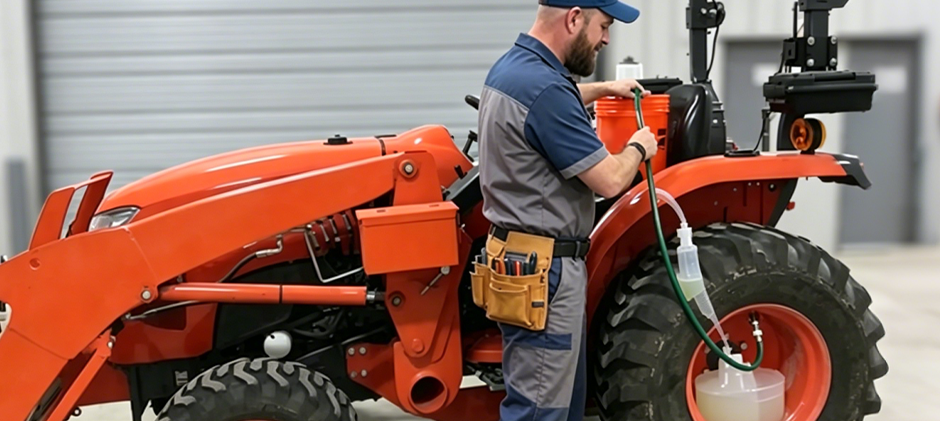
What Is Tractor Tire Ballast
There are many ways of tractor ballast. Either fluid ballast or steel wheel weights, the ballast can give your tractor better traction. It lowers the center of gravity and shifts it back toward the rear. A lower center of gravity makes your tractor less susceptible to tipping over on uneven terrains. It becomes more important to have a good rear ballast with a front-end loader.
The weight of the loader subtracts from the effective weight on the back tires. And it moves the center of gravity a lot further forward. A heavy load in the loader bucket magnifies this effect and in certain situations can cause the tractor to tip forward or possibly roll over, leading to chaos, death and destruction. Ballast in the rear tires helps offset the weight of the loaded loader and moves the center of gravity back to a safer point. But liquid tire ballast alone is not enough. Adding a heavy implement on the three-point hitch, like a ballast box, is a wiser way to ensure your tractor is as stable as possible.
What to Choose as My Ballast Fluid
Choosing the ballast fluid depends on how cold it gets, where you live, how much you’re willing to spend and what is available. The commonly used types of ballast fluid are:
- Water
- Calcium Chloride
- Beet Juice
- Windshield Washer Fluid
- Antifreeze
Liquid Tire Ballast Comparison Table
The table presents a clear comparison of different types of tractor liquid ballast fluid to help you make an informed decision.
| Type | Cost | Freeze Resist | Weight vs. Water | Safe? | Availability | Advantages | Disadvantages |
|---|---|---|---|---|---|---|---|
| Water | free | none | +0% | very safe | wide | readily available with little cost | can freeze in cold |
| Calcium Chloride | low/*high | -50F | +40% | corrosive | wide | very high freeze resistance | corrosion or rust of the rim will occur without installed tubes |
| Ethylene Glycol Antifreeze | medium | -40F | +0% | toxic | wide | safe to mix – non-flammable | hazardous to the environment, animals and people |
| Propylene Glycol Antifreeze | high | -40F | +0% | safe | wide | non-flammable, non-toxic and biodegradable |
more costly than plain old toxic ethylene glycol |
| Windshield Washer Fluid | low | -20F | +0% | toxic | wide | low cost with adequate freeze resistance; no mixing required | hazardous to the environment, animals and people |
| Methanol | medium | -15F | +0% | very flammable | wide | adequate freeze resistance | extremely flammable; mixing required with water hazardous to the environment, animals and people |
| Beet Juice | very high | -30F | +30% | very safe | dealer networks | high weight/volume ratio; very high freeze resistance; anti-rust properties | may not be available in all locations |
| Polyurethane Foam/Flat Fill | very high | / | +20-50% | very safe | dealer networks | high weight/volume ratio; cannot freeze; have it done once, ballasted forever | may not be available in all locations; high prices range around $0.95-1.25 lbs injected, or $300+ per tire; tire must be cut off rim after tread wears out; no air in tires to absorb humps and bumps so you will get a very rough ride |
*Sourced from Orangetractortalks
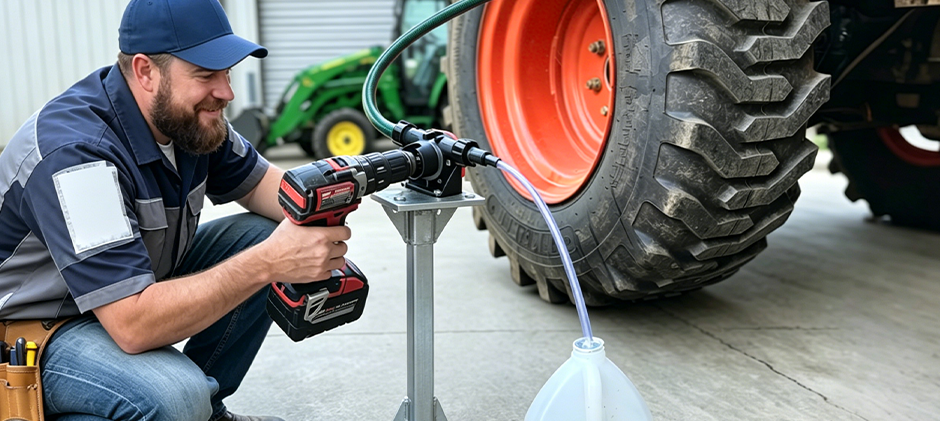
How to Load Tires With Liquid Ballast
Here are the general steps for ballasting your tractor tires with liquid. Always refer to your tractor and tire manufacturer’s requirements, warranty and instruction manuals. See John Deere 1 & 2 Series Ballast & Tire Setup Guideline here.
Step 1: Prepare An Adequate Work Area and the Tools Needed
The first step involves preparing working place and the necessary tools & materials. Park your tractor on level ground, ideally outdoors or in a well-ventilated area. The tools include the correct amount of tire ballast, air-water tire valve adapter, air/liquid tire pressure gauge, valve core remover/valve core tool, heavy-duty garden hoses, drill pump, transfer pump, small submersible or siphon, appropriate jack & jack stands and personal protective equipment.
Step 2: Take Weight off Tires
Raise the tractor with a jack stand to lift the tire you intend to fill and make sure all weight is removed from the tire.
Step 3: Position the Tire Valve at 12 O’Clock
Rotate the tire and make sure the tire stem is at 12 o’clock. You’ll need a tire valve stem tool to remove the valve core slowly, letting out some of the air in the tire to reduce the air pressure. Be prepared for air to escape rapidly.
Step 4: Attach Air/Water Adapter
To fill the tires, you should select the correct adapter fitting for your specific valve stem. Screw the air-water valve adapter securely onto the tire valve stem, ensuring a tight seal.
Step 5: Connect the Hose & Pump
Connect one end of a heavy-duty garden hose to the air-water adapter and the other end of the hose to your drill pump, transfer pump, small submersible pump or siphon.
Step 6: Begin Filling with Chosen Fluid
If you use a pump, make sure the intake hose is in the fluid container and the other hoses are securely connected to the tire valve. If you choose gravity filling, raise the bottom of the container above the tire height and keep it elevated above the tire. Make sure the fluid is continuously feeding into the hose. If choosing the siphon method, make sure the siphon is continually pumping fluid into the volume with minimal air.
Step 7: Fill to 75% Level
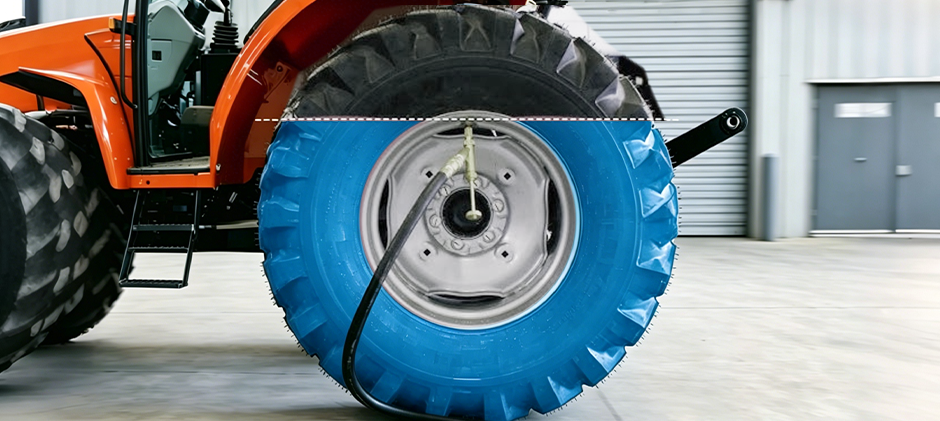
Don’t stop filling your tire before the liquid level reaches approximately 75% of the tire volume. With the valve stem at the 12 o’clock mark, this level is just below the valve stem. Turn off the pump if it achieves 75% level. Carefully disconnect the garden hose and unscrew the air-water adapter from the valve stem.
Step 8: Reinstall Valve Core and Add Pressure
Promptly reinstall the valve core with the valve stem tool. You should inflate the tire to the manufacturer’s recommended air pressure with an air compressor. The air volume should be smaller compared to an empty tire.
Step 9: Check for Leaks & Clean up
Inspect the valve stem and the entire tire for any leaks. Clean up any spilled ballast fluid immediately. Remember to dispose of empty fluid containers responsibly according to local regulations.
Step 10: Lower the Tractor and Check Tire Pressure
Lower your tractor from the jack stands and check the tire pressure again after steps 1-9. Repeat the same process for the other tires. As internal pressure changes with temperature, it is recommended to check your tire pressure regularly.
Related Articles:
Tractor Ballast Everything You Should Know
What Is A Tractor Three-point Hitch and How Does It Work?
How to Check and Adjust Your Lawn Mower Tire Pressure?
Final Words to Say
If you need a liquid tire ballast to improve your tractor’s loading or tillage performance, you can go to a tractor dealer or a tire dealer as a possible source. If you want to DIY your tractor’s liquid tire ballast, you must choose the right ballast fluid, depending on the weather, cost and availability. Always refer to the manufacturer’s requirements to ensure a successful practice. As you can see, there are always more things to learn about ballasting and other aspects of getting the most out of your tractor investment. At FridayParts, we provide high-quality aftermarket tractor parts and helpful expertise on tractor troubleshooting, repairs and maintenance. Follow our blogs and get more about your tractor.
