

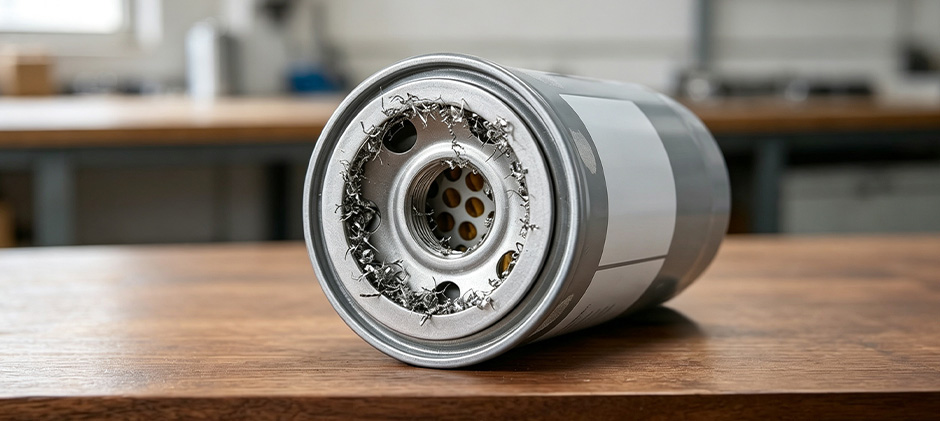
If your excavator is throwing metal in the hydraulic filter, the most likely cause is a failing main hydraulic pump, a damaged swing/travel motor, or a scored hydraulic cylinder. Keep reading to learn how to decode the metal debris, pinpoint exactly which component is shedding, and discover the step-by-step process you need to take right now to save your excavator.
What Happens When Metal Gets into a Hydraulic Filter?
Your excavator’s hydraulics run at really high pressure, often over 5,000 psi. Inside the pumps and valves, the gaps between moving metal parts are super tiny — only 5‑30 microns, thinner than a human hair.
When one component starts going bad, it sheds hard metal bits right into your hydraulic oil. This kicks off a dangerous domino effect called generated contamination. Those metal shavings work just like floating sandpaper. They scratch cylinder walls, stick relief valves, and wreck seal kits. As the particles slam into other good parts, they knock loose even more metal. The gunk keeps building up until your whole hydraulic system locks up.
Your hydraulic return filter is there to trap all that debris before it flows back into the main hydraulic tank. If you find lots of metal caught in the filter, the filter is doing what it’s supposed to do, but it’s also sending you a big warning sign.
What Parts Are Most Likely Shedding?
When you spot metal inside your hydraulic filter, that debris normally comes from one of these four main places:
- Main Hydraulic Pump: This part takes the most beating, so it tends to fail first. Variable‑displacement piston pumps have internal pieces like piston shoes, swash plates and valve plates that see tons of friction. When the pump doesn’t get enough oil (cavitation) or runs too hot, those inside parts grind together and flake off brass, bronze or steel bits.
- Swing or Travel Motors: If your excavator lacks power only when driving ahead, or the cab turns sluggishly, one of these motors could be wearing itself out. Swing and travel motors work much like the main pump. Their rotating assemblies and bearings break down and drop metal particles once they start failing.
- Hydraulic Cylinders: When a cylinder rod gets bent or badly scraped from dirt on‑site, it rips up the rod seals. Once seals are gone, metal grinds directly against metal inside the barrel, making steel flakes. A broken wiper seal also lets dirt and sand from outside get into the cylinder. That grit then scuffs parts and generates metal shavings.
- Old leftover damage from a past breakdown: Did you just swap out a bad hydraulic pump or motor? If the tech skipped a full flush of the hydraulic tank, hoses and oil cooler after fixing it, that “fresh‑looking” metal you’re seeing is leftover gunk from the earlier failure. This mistake happens all the time and can cost you big money.
How to Diagnose Hydraulic Problems from Metal Debris?
You can learn a lot about what component is failing just by looking at the metal in the filter. Grab a strong magnet and a flashlight, and use this chart to narrow down your suspects.
| Metal Appearance | Magnetic? | Likely Source Component |
|---|---|---|
| Yellow, Gold, or Bronze flakes | No | Main pump or motor internals (piston shoes, valve plates, brass bushings). |
| Shiny Silver / Steel flakes | Yes | Bearings, gear teeth, cylinder barrels, or pump shafts. |
| Bright Chrome flakes | Yes | Hydraulic cylinder rods (the chrome plating is flaking off). |
| Fine, dark metallic paste | Yes | Normal long-term wear (if minimal) or severe cavitation damage. |
| Large, jagged chunks | Varies | Catastrophic mechanical failure (a bearing cage or gear tooth has shattered). |
How to Fix Metal Contamination in a Hydraulic System?
Don’t just replace the hydraulic filter, add some oil, and fire the machine back up. Go through these steps to track down what’s really wrong.
Step 1: Shut the Machine Down
Quit running the excavator right away.
Step 2: Inspect and Cut the Filter
Take out the hydraulic return filter and carefully cut open the filter element. Lay it out in sunlight or under a bright work light. Grab a magnet to check if the metal is ferrous (steel/iron) or non‑ferrous (brass/bronze). Make a note if you’ve got fine sparkly dust or big sharp chunks.
Step 3: Take an Oil Sample
Before draining the tank or cleaning anything, collect a hydraulic fluid sample and send it off for oil analysis at a lab. The lab report shows exactly which metals are in the oil (copper, iron, chromium) so you don’t have to guess what’s broken.
Step 4: Check the Case Drain Lines
Here’s an old‑school mechanic trick. Your main hydraulic pump, travel motors and swing motors all have case drain lines. These send internal leakage fluid back to the tank. When a pump or motor is failing inside, it pushes out way more case‑drain fluid, loaded with metal debris. Start by checking the main pump’s case drain filter or inspect its line. If it’s packed full of brass or steel, your main pump is shot.
Step 5: Check the Suction Strainer and Tank
Drain the hydraulic tank and pull out the suction strainer — that’s the screen inside the tank where the pump draws oil from. If the tank bottom is loaded with heavy metallic sludge, you’ve got a big component failure on your hands.
Step 6: Flush the Entire System
After you find and replace the broken part, such as a failed main pump, you have to flush out the whole hydraulic system. Clean the tank, blow through all the hoses, flush the oil cooler, and replace every filter. Skip this step, and leftover hidden metal shavings will wreck your brand‑new pump in just a few hours.
FAQs
Can I just swap the hydraulic oil and filter then get back to work?
Definitely not. If your filter is picking up visible metal flakes, one of your components is already wearing itself apart. Changing the oil only fixes the symptom, not the real problem. That fresh oil will get contaminated all over again, and the failing part will eventually fall to pieces, flinging metal debris all through your whole machine.
What does it mean when my hydraulic pump makes a loud whining noise?
That loud whine or squeal normally points to cavitation or aeration. This happens when the pump isn’t getting enough oil — from a plugged‑up suction strainer, low oil level, or thick cold oil — or it’s pulling in air. The vacuum forms bubbles, and those bubbles pop hard against the pump’s metal inner parts. This blasts metal loose, and all that debris ends up in your filter.
How often do I need to replace my excavator’s hydraulic return filter?
For regular‑duty jobs, swap out the hydraulic return filter every 500 operating hours. But if you’re working in super dusty conditions or running heavy attachments such as hydraulic breakers, cut that service interval shorter.
Why has my hydraulic oil turned milky‑white?
Milky hydraulic oil means water has gotten inside your system. Water ruins the oil’s ability to lubricate. That leads to fast metal‑on‑metal wear plus rust. Track down where the water is getting in — usually a faulty breather cap, broken oil cooler, or worn cylinder wiper seal. Fix that issue right away and flush out all the hydraulic oil.
Need Replacement Parts?
Metal debris in your hydraulic filter is a warning sign that should not be ignored. Identify the source, inspect the hydraulic system, and flush out contamination after replacing the failed component to prevent further damage.
If your diagnosis shows that the main pump or travel motor has failed, or the cylinder wall is badly scored, you may not need to pay dealer prices for a replacement. FridayParts offers compatible replacement parts that can help you get your machine back to work while keeping costs down. Whatever part you need, always double-check the part number before ordering.
