

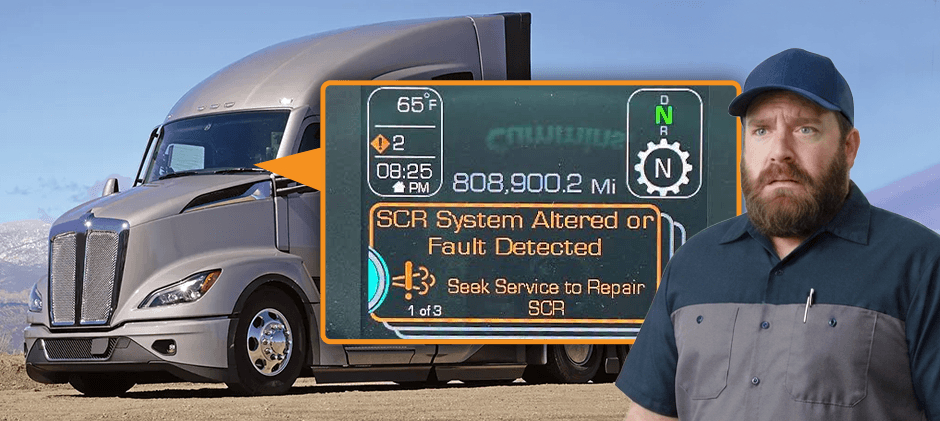
Is your Kenworth T680 threatening an engine derate with the dreaded SCR system altered or fault detected warning on your dash? Before you spend thousands of dollars chasing ghost codes and replacing perfectly good NOx sensors, there is one critical, low-cost culprit you must check first. While many mechanics jump straight to swapping expensive parts, the actual root cause is often surprisingly simple. Read on to discover the exact diagnostic steps to pinpoint the true failure, bypass unnecessary repairs, and keep your truck out of the bay.
What Is the SCR System?
Selective Catalytic Reduction was introduced on diesel trucks in 2010 to meet EPA emission regulations. Your system uses a pump to inject DEF, a mixture of urea and deionized water, into the exhaust stream upstream of the SCR catalyst. The ammonia created through this process reacts with NOx in the catalyst and converts it to harmless nitrogen and water vapor. If any part of this chain breaks down, your ECM detects that the system is no longer performing as it should and triggers the SCR system warning.
Why Does An SCR System Fault Code Matter?
For years, SCR fault codes have been one of the most common reasons a Class 8 truck sits in a bay instead of on a route. A clean DEF, an accurate NOx sensor reading and a functioning ECM are all three things that determine how well the system goes. When any of those drifts, the ECM sets a code and starts a derate timer, and by the time the driver notices, the truck is already crawling at reduced power.
Many DIYers and even repair stores waste the first hour on the wrong component, as they chase the dash light instead of the actual SPN/FMI code. Before touching the wrench, pulling the real code can shorten the diagnostic time by half on most Kenworth platforms. A chronic SCR code frequently traces back to a tired ECM rather than a bad sensor. Once you know which one, the fix is straightforward.
Common Reasons for Kenworth T680 SCR System Altered or Fault Detected
For most SCR system faults, the reasons are quite simple.
- Poor-quality or contaminated DEF fluid: This is the major culprit for an SCR system altered or detected message across all diesel truck brands like Kenworth, Peterbilt or Volvo. Fluid, too diluted or too concentrated, frozen or contaminated with diesel or water can lead to a quality fault through the DEF quality sensor in the tank.
- NOx sensors and the DEF injector: If either the inlet or outlet NOx sensors fail or read outside their normal range, the ECM interprets this as a system failure and records a fault. The DEF injector can clog with crystallized DEF, particularly if the truck sits idle for extended periods. Then, it can produce an SCR system message, as your SCR system cannot confirm the delivery of DEF to the catalyst.
- Faulty DEF pump: A faulty DEF pump is also to blame. If it loses pressure or stops completely, your ECU knows DEF is not being delivered, thus triggering a fault. A weak pump will cause repeated problems until a replacement.
How to Diagnose the SCR System Altered or Fault Detected on Your Kenworth T680?
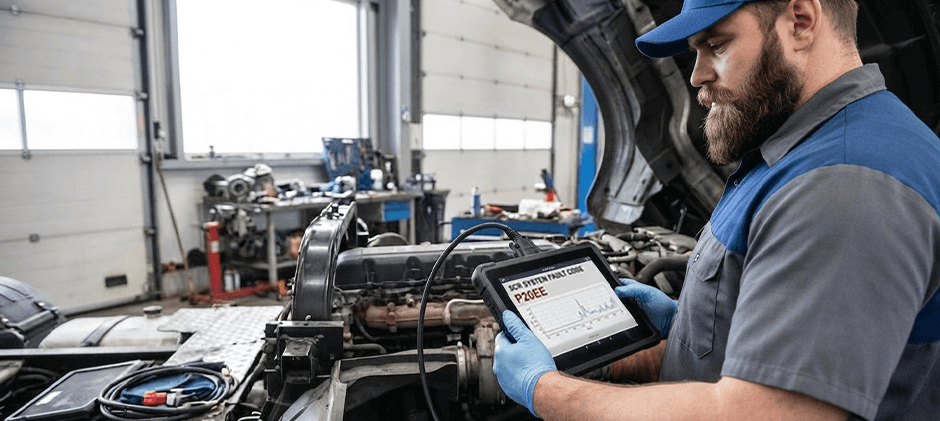
Your dashboard message alone doesn’t tell you which component failed. So, the first step is to pull the diagnostic fault codes with a compatible scan tool.
What You Need for the Diagnosis
- A diesel-capable scan tool that reads J1939 SPN/FMI codes
- A refractometer or DEF quality tester
- A digital multimeter for sensor wiring checks
- The engine-specific fault code chart for your platform
For a basic diagnosis, it usually takes 30 to 90 minutes. But it can take longer if you require a sensor or ECM swap.
Steps for SCR System Diagnosis
Pull the Exact SPN/FMI Code
Your dash light tells you the system detected a problem but fails to tell you what failed. You should connect the scan tool and record the full SPN and FMI codes. Never clear the code before recording it, or you lose the freeze frame data that tells you engine load, coolant temp and DEF level at the moment the fault set.
Test the DEF Quality
Before touching any sensor, draw a sample from the DEF tank and run it through the refractometer. Any reading of urea concentration below 30% or above 35% will trigger quality-related SCR codes even when every sensor and injector is functioning.
Inspect the NOx Sensor Wiring and Connectors
If you clear the DEF as a cause, then check the upstream and downstream NOx sensors for corrosion, looseness or chafed wiring near the exhaust heat shields. If the resistance reading is far beyond the manufacturer’s specs on the multimeter, it is a sensor-side fault rather than a software fault in the ECM.
Check for Exhaust Leaks around the SCR Catalyst
An exhaust leak upstream of the catalyst can throw off the NOx reading even when the sensor is working well, as the ECM compares the inlet and outlet NOx levels to calculate catalyst efficiency. A leak can set an efficiency fault that looks identical to a failing catalyst on the scan tool. So, you should check the gaskets and clamps at every flange between the turbo outlet and the SCR housing.
Verify Dosing Module and Injector Operation
Command a manual DEF dose through the scan tool if your platform supports it, and watch for a clogged injector tip or a dosing module that won’t cycle. A clogged injector can lead to intermittent codes that clear on their own after a regen. You may often dismiss them until they become a permanent fault.
Cross-reference the ECM Fault Log for Repeat Patterns
The fault history is also important. If the same SPN has logged more than three times in the last 30 days despite parts already being replaced, the problem is almost certainly upstream in the ECM’s sensor interpretation logic rather than in the hardware itself.
Clear the Code and Run A Full Regen or Road Test
After any repair, you should clear the code and run a completed regeneration cycle or a road test long enough to hit normal operating temperature for about 30 minutes at highway speed. If the code stays clear through a full heat cycle, that means you’ve solved the problem. If the code returns within the first few miles, you may need to troubleshoot it further.
Escalate to Component Replacement If the Pattern Holds
If the DEF quality, wiring and dosing all check out clean and the code keeps returning, the ECM itself is the problem. In this case, you may need a bench-tested second-use ECM as the solution, as it is far more affordable than a new original one.
Troubleshooting the Problem
Here are situations you may encounter and what to do to troubleshoot it:
- Code clears but returns within a day: Inspect a slow DEF leak at the tank sender or dosing line; for example, aa small leak drops concentration gradually and re-triggers SPN 4364
- NOx sensor reads erratic values with clean wiring: That means the sensor element may have failed due to heat exposure. You need a replacement rather than chasing wiring.
- SCR code appears alongside an active EGR fault: You’d better check EGR valves first, as a stuck EGR valve changes exhaust NOx levels enough to trip the SCR catalyst efficiency monitor.
- Truck derates immediately after a DEF fill-up: You should verify the DEF isn’t contaminated with diesel or water at the pump
- Fault only shows at highway speed, never at idle: This is associated with a marginal wiring connection that only opens under vibration. You can do a wiggle test for the harness at operating RPM.
- Code persists after both sensor and ECM replacement: It’s better to check the catalyst substrate for physical damage or contamination
Conclusion
Most Kenworth trucks that come on with a repeat SCR fault code have already had a sensor replaced once. It didn’t fix anything, as many owners ignore the DEF quality first. It’s wise to run the refractometer before you replace any part. That’s the easiest way to rule out the cheapest, most likely cause before you invest more in the expensive one. At FridayParts, we are dedicated to providing a vast selection of quality replacement parts for your Kenworth truck and many useful tips on truck maintenance and repair through our blogs. Stay tuned to FridayParts and make you easy maitenance and repair.
