

If your tractor is stuck in the mud, stop spinning your tires immediately! To get it out, you can try engaging the differential lock or using your front-end loader to push yourself free. This guide gives you clear, practical solutions. This guide covers how to check the site and use safe ways to get your tractor unstuck, so you can get back to work fast.
Why Does a Tractor Get Stuck in Mud?
Understanding why your tractor gets stuck helps you avoid it.
- Soil type and wetness: Clay soil gets slippery and sticky once soaked, creating strong suction. Silt or loam can turn into deep mud that swallows your machine.
- Tricky ground surface: The top layer often looks dry, but that thin crust covers deep, wet soft mud underneath. You’ll find this in low spots, around natural springs, or newly filled ditches.
- Weight and tire air pressure: Heavy tractors push hard into the ground. Regular high-pressure tires cut right through the dry top layer instead of floating on it. Letting air out of tires for soft ground widens the contact patch, spreads out the weight and helps the tractor stay on top. But this trick won’t help much once you are already stuck.
When wheels spin, they dig deeper ruts. Eventually the tractor’s frame sits on the mud instead of the tires. Then you have almost no traction to move.
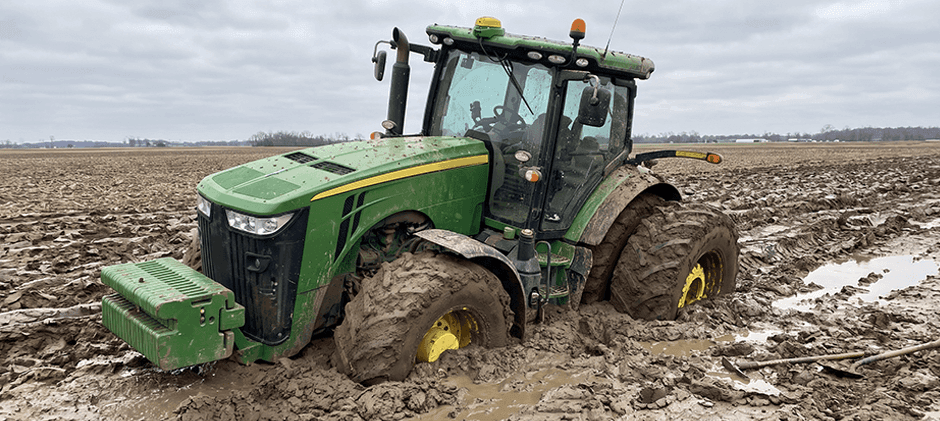
How Do You Know When a Tractor Is Too Stuck to Drive Out?
It’s really important to know when to stop trying and get help. Spinning your wheels will only make things far worse. Here are the signs that your tractor is badly stuck:
- Axles buried in mud: When mud reaches or covers the axles, your tires barely get any grip. The differential and bottom of the machine drag heavily in the muck.
- Frame sitting on mud: If the tractor’s frame or belly rests right on the mud, you’re high-centered. The tires might even lift a little and carry almost no weight, so they just spin uselessly.
- Sinking right away: If every try to move forward or back makes the tractor sink deeper, stop at once. You’re just digging a bigger hole for yourself.
- Strong mud suction: With wet clay mud, you can see the mud pulling tight around tires when you try to move. This suction force is usually too strong for the tractor to break free by itself.
If you spot any of these signs, don’t keep trying to drive out. Start planning a proper tractor recovery instead.
How to Get a Tractor Out of Mud?
Before you get a bigger tractor to help, there are a few ways you can try to get free yourself, if you’re not too badly stuck. Turn on your tractor’s differential lock so both drive wheels spin together. Sometimes that small change gives you just enough traction to move.
If your tractor has a front-end loader, you can use it too. This simple trick uses the loader bucket to lift or push the machine. Push the bucket down on firm ground to lift the front tires, then back up slowly. You can put heavy mats or thick boards under the bucket to create a solid base. It takes time, but it works sometimes. If these tricks don’t work, you’ll need another machine to pull you out.
Use a Winch or Recovery Vehicle
Using a dedicated recovery vehicle with a winch is one of the safest methods.
- Assess the Anchor Point: The winch needs a solid anchor. This can be a large, healthy tree or another heavy vehicle that is on stable ground. If anchoring to a tree, always use a wide tree-saver strap to avoid damaging the tree and the winch line.
- Rigging Safely: Attach the winch line only to a rated recovery point on the stuck tractor’s frame. Never hook it to an axle, steering component, or the loader arms. If you need to increase pulling power, use a recovery snatch block. This pulley system can effectively double the winch’s capacity.
- The Pull: Maintain a clear line of communication between the winch operator and the person in the tractor. Keep all bystanders far away from the recovery area. The pull should be slow and steady. The operator in the stuck tractor can assist by slowly turning the wheels in the direction of the pull once the machine starts to move.
Can You Pull a Stuck Tractor Out With Another Tractor?
This is the most common method for getting a tractor unstuck from mud. However, it also carries significant risks if not done correctly, especially when dealing with a 4wd tractor stuck in a wet field.
- First, the recovery tractor should be significantly heavier and more powerful than the stuck one. It must also be on solid, dry ground with excellent traction.
- Second, the connection between the two tractors is critical. Never use a chain for a “running start” pull. Chains have no stretch. If they are jerked, they can snap and become a deadly projectile. A snapped chain can easily go through the cab of a tractor.
- The right tool is a high-quality, rated tow strap or, even better, a kinetic recovery rope for a tractor. A kinetic rope is designed to stretch, storing energy and then releasing it to deliver a smoother, more effective pull that won’t shock-load the equipment.
Steps for a Tractor-to-Tractor Pull:
- Attach to Rated Points: Connect the strap or rope only to the designated tow points or drawbars on both tractors.
- Clear the Area: Ensure no one is standing near the tow rope. The “snap-back” zone is anywhere the rope could fly if it breaks.
- Slow and Steady: The recovery tractor should take up the slack slowly. Once the rope is taut, apply steady power in a low gear. Avoid jerky movements.
- Assist with the Stuck Tractor: The operator of the stuck tractor should try to assist by gently applying power in reverse (if pulling from the rear) or forward (if pulling from the front) once the machine begins to move.
What Not to Do When Your Tractor Is Stuck in Mud?
When stuck, here are the things you must avoid.
- Don’t Keep Spinning: You will only dig deeper, pack mud into the tire treads, and risk overheating your transmission or hydraulics.
- Don’t Use Unrated Gear: Never use old, rusty chains or frayed straps. Do not attach hooks to points not designed for recovery. The drawbar or frame-mounted tow hooks are the only safe points.
- Don’t Stand in the Danger Zone: As mentioned, a snapping chain or rope carries lethal force. Anyone not operating a vehicle should be at a very safe distance.
- Don’t Risk a Rollover: Be mindful of your tractor’s stability. If you are on a slope or the mud is causing the machine to list heavily to one side, be extremely careful. This is where tractor ROPS safety is paramount—the Rollover Protection Structure is there to save your life. Do not attempt a recovery that could further destabilize the tractor.
What to Check After Getting Your Tractor Out of Mud?
Before you start working again, do a full check to avoid extra damage.
- Clean and check the undercarriage: Mud and trash get stuck around axles, drive shafts and hydraulic lines. Use a pressure washer to wash everything clean. While cleaning, look for bent tie rods, broken hydraulic hoses or ripped wiring.
- Check the radiator and air intake: Mud clogs radiator fins and makes the engine overheat. Clear the grille and radiator completely. Also check the engine air filter — mud and water can get into the air intake.
- Inspect tires and rims: Look for damage from the recovery work. Double-check your tire pressure.
- Test everything: Before you put heavy loads on the tractor, test steering, brakes, hydraulics and PTO. Make sure all parts work properly.
Conclusion
It’s frustrating but pretty common for tractors to get stuck in mud when working on soft ground. The main thing is to stay calm, check the situation carefully, and always put safety first. Use the right steps and proper recovery gear. If parts break during this tough recovery work, FridayParts supplies dependable replacement parts. They fit most major tractor brands.
