

A leaf blower that won’t start usually has a fuel, spark, or airflow problem. Check the starting routine before removing any parts, then use the symptoms below to narrow down the cause. After checking those systems, you can test the engine mechanically and decide whether the blower is worth repairing. Most checks require only basic hand tools and less than an hour.
How Do You Start a Gas Leaf Blower?
A blower that has sat for a few weeks, or was last used by someone else, may only need the correct starting procedure.
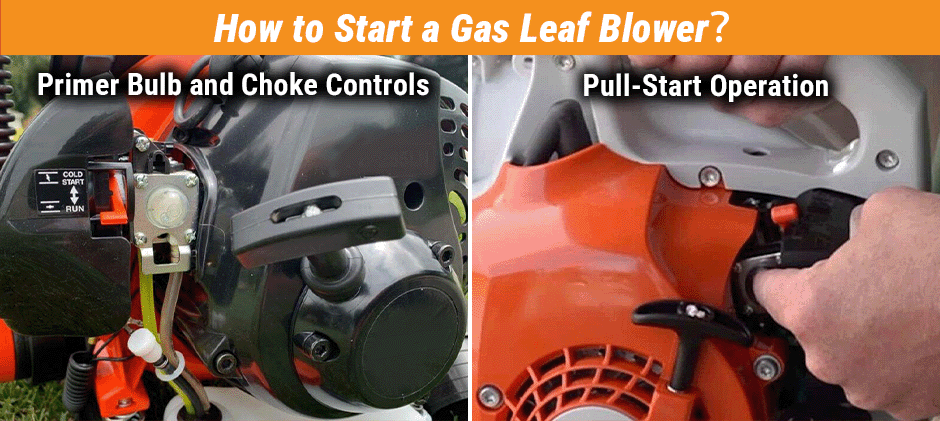
Six steps for a cold start
- Set the stop switch to “on” or “run.” The switch may have been bumped off.
- Press the primer bulb 6 to 10 times, stopping when you see fuel moving through it.
- Close the choke fully. This is usually marked as the “cold start” position.
- Pull the cord until the engine fires briefly. You should hear a short pop or sputter.
- Move the choke to half or “run,” then pull again until the engine keeps running.
- Let the engine warm up for about 30 seconds before opening the choke fully.
For an engine that is already warm, leave the choke open. Using the choke on a hot engine can supply too much fuel and flood it.
Is the engine flooded?
A strong gasoline smell and a wet spark plug tip usually mean the engine is flooded. Open the choke fully, hold the throttle wide open, and pull the cord 5 to 10 times.
If the engine still does not start, remove the spark plug and dry it. With the plug still out, pull the cord several times to clear fuel from the cylinder. Reinstall the plug and try again without using the choke.
What if a battery blower won’t turn on?
A cordless blower has no fuel system or spark plug to inspect. Test its battery in another compatible tool and check the lights on the charger. Inspect the battery contacts for dirt or corrosion. Some models also have a safety lock that must be pressed before the trigger will operate.
6 Symptoms That Point to the Cause
If the starting procedure is correct, the way the engine fails can tell you where to look next.
| Symptom | Most likely cause | What to check first |
|---|---|---|
| No pop or sputter at all | No spark or no fuel | Spark plug, stop switch, primer bulb |
| Runs on starting fluid, then dies | Fuel is not reaching the engine | Fuel filter, fuel lines, carburetor |
| Runs only with the choke closed | Partly clogged carburetor | Carburetor jets, fuel filter |
| Dies when you open the throttle | Lean fuel mixture or air leak | Carburetor, fuel lines, intake gasket |
| Starts, then dies after a few minutes | Blocked exhaust | Spark arrestor screen, muffler |
| Cord won’t pull or won’t rewind | Starter or engine problem | Recoil starter, compression |
Several of these symptoms can result from fuel problems, which are the most common reason a leaf blower won’t start. Unless another symptom clearly points elsewhere, begin with the fuel system.
How to Fix Leaf Blower Fuel Problems?
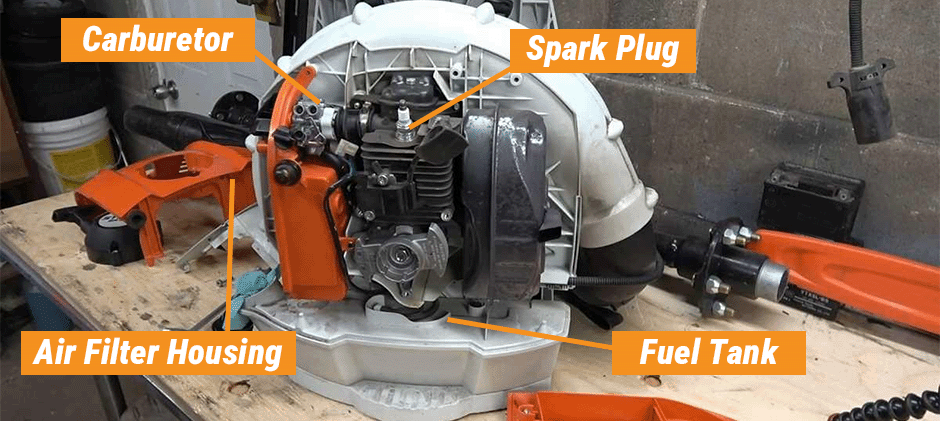
Fuel problems often develop gradually. Old gasoline leaves varnish in small passages, so work from the tank toward the engine.
Old or ethanol-blended fuel
Gasoline begins to break down after about 30 days. Ethanol blends also absorb moisture from the air, which can cause the fuel to separate inside the tank. After a few months, old fuel may become gummy and leave a sticky film on the parts it touches.
Drain the tank and refill it with fresh fuel. If the blower spends long periods sitting in a truck box or shop corner, ethanol-free gasoline or canned premix will keep longer.
Wrong oil-to-gas ratio
Two-stroke engines rely on oil mixed with gasoline for lubrication. An incorrect mixture can foul the spark plug, leave carbon deposits, or prevent the engine from starting.
- Many blowers use a 50:1 ratio, or about 2.6 ounces of oil per gallon of gasoline.
- Some older and commercial models require 40:1 or another ratio.
- Some four-stroke blowers, including Stihl 4-MIX models, still use mixed fuel.
Check the manual or the label on the fuel cap for the correct ratio rather than guessing.
Fuel filter, lines, and primer bulb
The fuel filter is a small weighted pickup inside the tank. Bend a wire into a hook, catch the fuel line, and draw the filter out through the fill opening. Replace the fuel filter if it looks dark or slimy.
Inspect the rest of the fuel path while you have access to the tank. Replace fuel lines that feel stiff, cracked, or sticky. A primer bulb that is cracked or will not fill with fuel can let air into the system and prevent the engine from drawing fuel.
The same checks apply when a Craftsman leaf blower won’t start. Fuel lines and primer bulbs vary between models, so use the model number on the housing label to choose the correct parts.
Carburetor: clean, rebuild, or replace
Once clean fuel is reaching the carburetor, choose the repair according to its condition.
| Condition | Best fix | Cost |
|---|---|---|
| Light varnish; engine runs only on choke | Spray-clean the jets and passages | Low |
| Stiff or torn diaphragms; leaking gaskets | Install a rebuild kit | Low |
| Corroded body or stripped adjustment screws | Replace the carburetor | Moderate |
A rebuild kit replaces soft components that deteriorate with age. If the carburetor body is damaged, installing one of FridayParts’ affordable replacement carburetors may be quicker than rebuilding the old unit.
How to Check Spark and Airflow?
If the fuel system is working, check ignition and airflow. The engine needs both, and neither takes long to inspect.
Test and inspect the spark plug
Remove the plug and examine its tip. Replace it if you find heavy black carbon or oily deposits, a worn or rounded electrode, or cracks in the white porcelain.
To test the spark, connect an inline spark tester between the plug wire and the plug. Pull the starter cord and watch the tester. A bright blue spark is good. A weak orange spark or no spark points to the plug or ignition coil. Before installing a replacement spark plug, set its gap to the measurement listed in the manual.
Check the ignition coil
If a new plug still produces no spark, inspect the ignition coil. First, make sure the stop switch wire is not shorting against the housing. Then check the small air gap between the coil and the flywheel magnets against the specification in your manual. If the gap is correct and there is still no spark, replace the coil with a compatible ignition coil.
Clean or replace the air filter
A clogged air filter makes the fuel mixture too rich, which can flood the engine or prevent it from firing. Dusty job sites clog filters much faster than ordinary yard work, so inspect the filter daily under those conditions.
Wash foam filters in warm, soapy water and let them dry completely. If the manual calls for oil, apply a light coat after drying. Paper and felt filters should be replaced because washing damages the material. Keeping spare air filters on hand makes routine replacement easier.
Clear the spark arrestor screen
A blocked spark arrestor can cause an engine to start and then die. This small metal screen sits inside the muffler outlet, where carbon gradually builds up until exhaust can no longer escape.
Remove the muffler cover, take out the screen, and scrub it with a wire brush. Replace the screen if its holes remain blocked or if it is torn. Because a rich fuel mixture can cause the blockage, check the oil-to-gas ratio as well.
When Is a Leaf Blower Worth Repairing?
If fuel, spark, and airflow all check out but the blower still won’t start, the cause is probably mechanical. The following checks can also help you decide between repairing and replacing it.
Replace a broken recoil starter
If the cord pulls out but does not rewind, the recoil spring or pulley has probably failed. You can replace the spring separately, or installing a complete recoil starter assembly is faster and safer.
When the cord will not pull at all, remove the spark plug and try again. Free movement with the plug removed means the cylinder was full of fuel. If the cord remains stuck, the engine may be seized.
Test engine compression
Screw a compression gauge into the spark plug hole. Open the choke and throttle fully, then pull the cord several times until the needle stops rising. Compare the reading with the specification in your manual. As a general rule, many small two-stroke engines have difficulty starting below about 90 psi. A low reading usually indicates worn piston rings or a scored cylinder.
Repair or replace?
Compare the cost of the parts with the value of the blower.
| Problem | Typical choice |
|---|---|
| Spark plug, filters, fuel lines, or primer bulb | Repair; these are inexpensive wear parts |
| Carburetor, ignition coil, or recoil starter | Repair on most mid-range and commercial blowers |
| Low compression or seized engine | Replace, unless it is a high-end commercial unit |
A common guideline is to replace the blower when repairs cost more than half the price of a new one.
5 Tips to Keep It Starting Easily
- Use fresh fuel and mix only what you expect to use within about a month.
- Add fuel stabilizer whenever the blower will sit for more than a few weeks.
- Drain the tank before storage, then run the engine until it stops so the carburetor is dry.
- Check the air filter daily in dusty conditions and weekly during light use.
- Inspect the spark plug and spark arrestor each season, cleaning or replacing them before they cause starting problems.
Summary
Check the starting routine first, then work through fuel, spark, air, and compression in that order. Once you identify the cause, many repairs are inexpensive and quick. FridayParts carries a large inventory of aftermarket parts at affordable prices, with fitments for a wide range of equipment brands and the machines used across your site.
