

When to Replace Fuel Injectors? Kubota diesel engines don’t have a set replacement interval for injectors. Most Kubota manuals call for an injection nozzle check every 1,500 hours. A nozzle only gets replaced when it fails a test, or the engine shows clear symptoms. Here’s how to judge that point from your hour meter, your test results, and how the engine runs.
How Often Do Kubota Fuel Injectors Need Service?
Kubota engines track wear in service hours, not miles. A tractor that idles for an hour still logs a full hour on the meter.
Check every 1,500 hours
Most Kubota engine and tractor manuals list two fuel system checks. Nozzle condition every 1,500 hours, and the injection pump every 3,000.
Note the wording. The schedule says check, not replace. At 1,500 hours, a shop or a skilled owner pulls the nozzles and tests their opening pressure and spray pattern. A nozzle that passes goes back in. A machine that runs 400 to 500 hours a year hits this point about every three years. But how you check depends on which type of injector your engine uses.
IDI Nozzles vs Common Rail Injectors
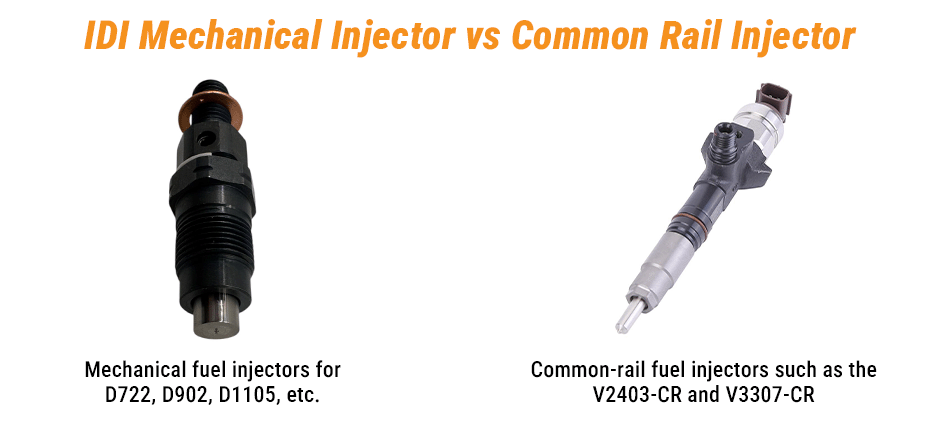
| Feature | IDI mechanical nozzle | Common rail injector |
|---|---|---|
| Typical engines | D722, D902, D1105, V1505, V2203 | V2403-CR, V3307-CR, V3800-CR |
| How it opens | Spring pressure | ECU signal |
| How to test | Bench pop tester | Fault codes, return flow test |
| Repair option | Replace nozzle tip, adjust shims | Usually replace the full injector |
| Install needs | Basic hand tools | Correction code entered into the ECU |
Check the engine model plate before you buy parts or plan a test. On a CR engine, the IDI steps here don’t apply.
What Shortens Injector Life
Injectors seldom wear out from age alone. Most failures come from what goes through them or how the machine is run. Water rusts the needle and seat; dirt from cans and tanks scratches the precision surfaces. Long idling at low load builds carbon on the tip, and skipped filter changes let more fine particles through. Fuel left sitting over a season turns to varnish. If your machine sits for months or idles all day, plan to check the nozzles before you hit 1,500 hours.
What Signs Mean It’s Time to Replace Fuel Injectors?
Symptoms often show up before the scheduled check. In practice, when to replace fuel injectors depends less on the hour meter and more on what the engine is telling you. Several other parts cause the same problems, so each row lists the lookalikes:
| Symptom | Possible injector cause | Other causes to check |
|---|---|---|
| Hard starting | Poor spray, low opening pressure | Weak glow plugs, air in lines |
| White smoke at startup | Dripping nozzle, poor atomization | Cold glow plugs, low compression |
| Black smoke under load | Leaking or stuck-open nozzle | Clogged air filter, overfueling pump |
| Rough idle or knocking | Uneven fuel between cylinders | Valve clearance, worn pump |
| Loss of power | Clogged nozzle tip | Dirty fuel filter, restricted fuel lines |
| Higher fuel use | Leaking or worn nozzle | Dragging brakes, heavy loads |
| Diesel smell in oil | Nozzle dripping into cylinder | Pump seal leak |
A rising oil level with a fuel smell needs quick attention. Diesel thins the oil and can harm the bearings.
Rule Out Simple Causes First
Before you buy new nozzles, spend a few minutes on the cheaper suspects:
- Check the glow plugs. Test each one with a multimeter. Fresh glow plugs fix many cold start and white smoke problems.
- Change the filters. New fuel filters and a clean air filter fix many power loss complaints.
- Drain the water separator and look for water or sludge in the bowl.
- Bleed the fuel system. Air in the lines causes hard starts and rough running.
- Do a crack test. With the engine idling, loosen one injector line nut at a time. If the idle drops, that cylinder is working. If nothing changes, that nozzle or line is the likely problem.
If the symptoms survive these checks, test the injectors themselves.
How Do You Test a Kubota Injector?
IDI and common rail engines need different methods.
Pop Test for IDI Nozzles
A hand-operated nozzle tester with a pressure gauge does the job. Wear safety glasses and keep your hands away from the tip, because high-pressure diesel spray can go through skin.
- Bleed the tester by pumping slowly until the air is out.
- Pump until the nozzle pops and note the gauge reading. Many Kubota IDI nozzles open at about 13.73 to 14.71 MPa, roughly 1,990 to 2,130 psi. Confirm the value for your model in the workshop manual.
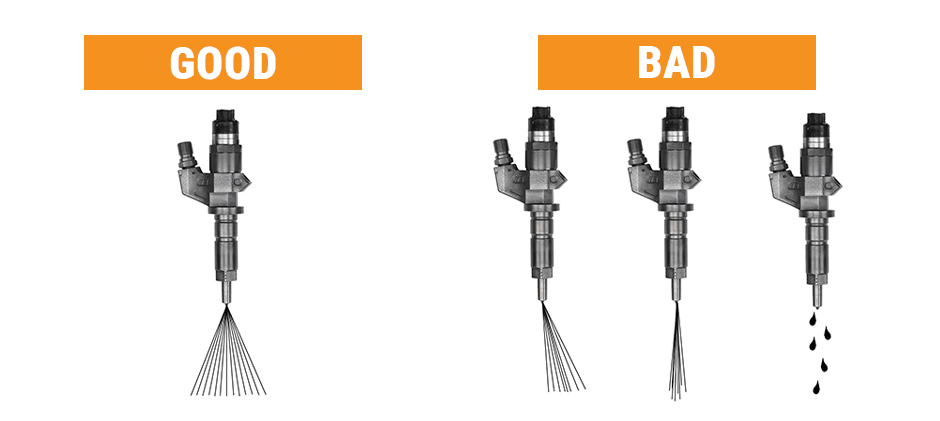
- Check the spray pattern at a steady pumping pace. You want a fine, even mist with no streams or side spray.
- Test seat tightness. Hold the pressure just below the opening point for about 10 seconds. The tip should stay dry.
- Adjust if needed. Adding shim thickness raises the opening pressure; removing it lowers the pressure.
A nozzle that fails only on pressure can often be fixed with shims. One that drips or sprays unevenly usually needs a new tip.
Checks for Common Rail Engines
Common rail injectors can’t be pop tested in a shop vise. A technician works from the fault codes the ECU logs for injector circuits and rail pressure, then runs a return-flow test that compares what each injector sends back. A high-return injector is leaking inside. A cylinder balance test shows which cylinder is doing less work, and a resistance check on each coil confirms the electrical side against spec.
Every new CR injector has a correction code printed on its body. Enter that code into the ECU with a dealer-level tool, or the engine may run rough.
Clean or Replace?
| Test result | Best action |
|---|---|
| Light carbon, good spray after cleaning | Clean and reinstall |
| Opening pressure slightly low | Adjust shims |
| Dripping tip, poor seat seal | Replace nozzle tip |
| Rust or scoring on the needle | Replace nozzle tip or full injector |
| Cracked body or damaged threads | Replace full injector |
| CR injector with high return flow | Replace full injector |
| CR injector with electrical fault | Replace full injector |
How Do You Choose and Fit Replacement Injectors?
Matching and fitting matter as much as the part itself.
Match Parts to Your Engine Serial
The same engine model can use different nozzles depending on build year and emission tier. To get the right fit:
- Read the engine plate and note the full model name and serial number.
- Check the old part number, often stamped on the nozzle holder.
- Cross-reference before ordering. A supplier should be able to confirm the fit from your serial number.
- Ask for the stated opening pressure before you buy.
Replace One Injector or the Full Set?
Replacing a single nozzle works when only one failed, and the others test well. Consider a full set if the engine has 3,000 or more hours, if several nozzles test near the low limit, or if the engine is common rail, where balanced injectors help the ECU meter fuel evenly. A full set gives every cylinder the same amount of fuel, which means a smoother idle and less smoke.
Parts to Replace at the Same Time
| Part | Why replace it |
|---|---|
| Copper nozzle gaskets | They crush once and won’t seal again |
| Heat seals | They protect the nozzle from combustion heat |
| Leak-off pipe and seals | Old rubber cracks and leaks air |
| Fuel lines | Damaged flares cause leaks and air entry |
| Fuel filters | Keep dirt away from new nozzles |
| Engine gasket kits | Needed if the head comes off |
Tighten the nozzle holders to the torque in the manual, then bleed the system before starting the engine.
Keep New Injectors Working Longer
Drain the water separator every week in humid weather and change the filters on schedule. Refuel from sealed cans. In the off-season, add a stabilizer and shut the engine down instead of letting it idle. Test the nozzles at 1,500 hours even when the engine seems to run fine.
Final Words
When to Replace Fuel Injectors? Manuals call for a nozzle check every 1,500 hours. Not sure which nozzle your serial calls for? Send us the number from the engine plate. FridayParts is an aftermarket supplier for Kubota and other heavy equipment brands, and we’ll confirm the injectors that fit.
