

A hot cabin is every excavator operator’s nightmare during scorching summers. When the excavator AC fan stops spinning, the cab heats up fast and productivity drops. In this guide, you’ll learn the causes of the AC fan not spinning and how to troubleshoot it yourself. Let’s get started!

Common Causes of AC Fan Not Spinning
Unlike an excavator blowing weak airflow, the AC fan not spinning at all usually points to an electrical failure, a mechanical seizure or a control system fault. Understanding these causes can help you diagnose the problem without replacing parts that are still working. Let’s look at them one by one.
Clogged Air Filter
A blocked cabin air filter is one of the most overlooked reasons for an excavator AC fan not spinning properly. In dusty jobsite conditions, the filter can become completely clogged within weeks. It restricts airflow, so the system overheats and shuts the blower down as a safety response.
Common signs include:
- Weak or no airflow even when the fan switch is on
- Musty or dusty smell from the vents
- The blower motor runs, but the air output is minimal
- The system cools poorly before the fan stops completely
If the filter is visibly grey or blocked, replacing it is the first step before checking any electrical components.
Blown Fuse
A blown fuse often comes first to be blamed when the excavator AC fan is not working. A short, a voltage spike or an overloaded circuit can blow it without warning.
Common signs include:
- The fan does not respond at any set speed
- No noise from the blower housing
- Visible broken element on the fuse
- Other electrical components in the cab may also be affected
Replacing a blown fuse takes only minutes. However, if the new fuse blows again quickly, the underlying short must be found before replacing more fuses.
Faulty Blower Relay
The blower relay controls the power supply to the blower motor. If the relay sticks open or burns out, the motor receives no power, leading to the fan not spinning.
Common signs include:
- The fan does not run on any setting
- Other cab functions work normally
- Swapping with a matching relay temporarily restores operation
- No response when the fan speed dial is adjusted
Replacing the relays is a low-cost solution as part of an early diagnosis step.
Failed Blower Motor
The blower motor can fail completely after extended hours of use in dusty off-road conditions. As a result, the fan stops entirely.
Common signs include:
- No fan movement at any speed
- No sound from the blower area
- Burning smell near the HVAC housing
- Motor is warm or hot to the touch with no airflow
In many cases, the motor windings have shorted internally or the brushes have worn completely. Replacing the blower motor restores full airflow, though the job may require partial disassembly of the HVAC housing.
Seized Blower Motor/Wheel
Even if the motor still receives power, a seized bearing or a jammed blower wheel can prevent the fan from turning on. A foreign object, dirt or corrosion can lock the wheel in place.
Common signs include:
- A humming or buzzing sound from the housing, but no airflow
- A burning smell shortly after the blower is switched on
- The wheel does not turn freely
- The motor draws high current before shutting down
Removing the blower assembly and inspecting the wheel for obstructions or bearing damage can confirm this cause.
Failed Run Capacitor
The run capacitor stores and releases energy to start and keep the blower motor running. When it fails, the motor cannot generate enough torque to spin the fan, even though power is still reaching the motor.
Common signs include:
- A humming or buzzing sound from the blower housing with no fan movement
- The fan starts slowly or takes several attempts before spinning
- The fan stops shortly after starting.
- No airflow despite the fan switch being on
Capacitors hold a high-voltage charge even after the system is powered off. Do not handle the capacitor without discharging it first. Replacement should be carried out by a qualified technician.
Bad Blower Motor Resistor or Speed Control Module
Many excavator HVAC systems use a resistor block or electronic speed control module to manage fan speeds. If this component fails, the blower may stop working on some or all speed settings.
Common signs include:
- The fan only works on the highest speed setting
- The fan works on low speeds but not high, or the reverse
- The fan stops working on all speeds after the resistor burns out
- Speed dial changes have no effect
The resistor or module is usually mounted close to the blower housing and is replaceable without removing the full HVAC unit.
Wiring Faults, Corroded Connectors, or Poor Ground
Off-road machinery operates in conditions that are hard on electrical connections. Vibration, moisture, and dust can cause connector corrosion, broken wires, or ground faults that cut power to the blower circuit entirely.
Common signs include:
- Intermittent fan operation that comes and goes
- The fan stops working after heavy vibration or rough terrain
- The fan resumes after the cab cools down or the machine sits overnight
- Visible corrosion or damaged insulation near the HVAC wiring harness
Cleaning and reseating connectors, or repairing broken wires, often resolves intermittent fan failures without replacing major components.
Faulty HVAC Control Switch or Panel
If the control switch that operates the fan speed selector fails internally, the signal never reaches the blower circuit and the fan does not respond.
Common signs include:
- The switch feels loose, sticky, or unresponsive
- The fan does not react to any position on the speed dial
- Other HVAC functions, such as temperature control still respond
- Cab display or indicator lights behave abnormally
- Testing voltage at the switch output can help confirm whether the control panel is sending a proper signal.
Frozen Evaporator Coil
A frozen evaporator coil can block airflow and cause the blower motor to seize. This typically happens when refrigerant is low or airflow through the system is restricted for an extended period.
Common signs include:
- Little or no airflow from the vents despite the fan running
- Ice or frost visible on the HVAC unit or refrigerant lines
- The system blows warm air before the fan stops completely
- A gurgling or hissing sound from the refrigerant lines
Do not continue running the AC if a frozen coil is suspected. Turn the system off and allow it to defrost naturally. Diagnosing the root cause, whether a refrigerant leak or airflow restriction, requires a qualified HVAC technician.
Step-by-Step Guide on Troubleshooting
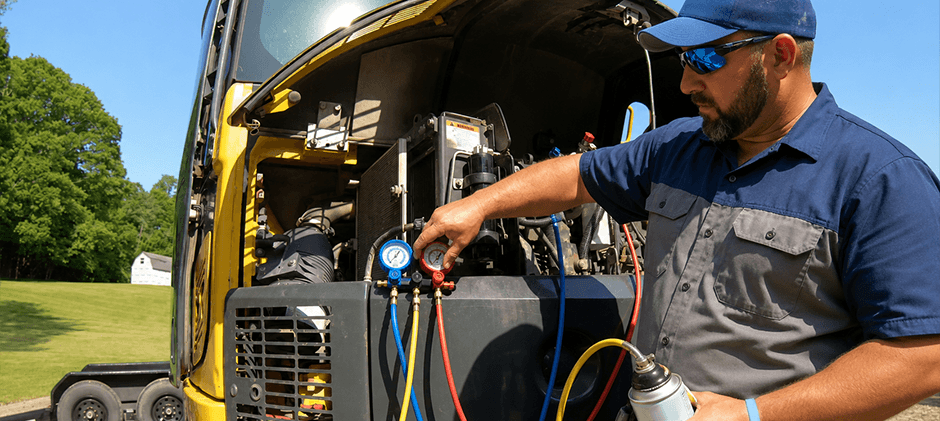
A straightforward inspection order can help isolate the cause.
- Check the cabin air filter: A clogged filter is the easiest issue to rule out and takes only minutes to inspect.
- Check all fan speed settings: If the fan works on one speed but not others, the resistor or control module is a likely cause. If it fails on all speeds, the issue is more likely in the power supply or motor.
- Inspect the fuse: Pull the blower fuse and check for a broken element. Replace and retest.
- Test or swap the relay: Swap the blower relay with a matching one and see if the fan responds.
- Listen to the HVAC housing: A hum with no airflow suggests a seized motor or jammed wheel. Silence suggests no power is reaching the motor.
- Check the blower motor connector: Inspect for corrosion, looseness, or damaged pins.
- Inspect the blower wheel by hand: Remove the motor access panel and turn the wheel manually to check for obstructions or bearing stiffness.
- Test voltage at the motor connector: Use a multimeter to confirm whether the motor is receiving the correct supply voltage when the fan switch is on.
- Check the HVAC control switch: If all other components test good, the switch or control panel may not be sending the correct output signal.
- Inspect the evaporator coil: If ice or frost is visible on the unit or refrigerant lines, turn the system off and allow it to defrost before further diagnosis.
DIY vs. Professional Repair
Whether to choose a DIY repair or go to a professional mechanic depends on your comfort level with excavator repairs, available tools and the complexity of the tasks. Simple problems, such as replacing a blown fuse or a faulty resistor, can often be handled at home. However, for more complex issues like replacing the blower motor or electrical problems, you might require professional assistance.
If you’re not comfortable working with electrical components or if you’re unsure about the diagnosis, it’s always best to consult a qualified mechanic. They have the professional experience, tools and expertise to diagnose and repair any AC fan efficiently. Additionally, professional repair will give you peace of mind that your excavator’s AC system is properly repaired. However, if you have some expertises on eletrical systems and enjoy DIY projects, you can save money by doing the repairs yourself.
Maintaining Your Excavator’s AC System
Regular maintenance can help prevent AC fan failure and keep your excavator’s AC system running smoothly. Here are a few tips to keep in mind.
- Schedule AC system checks by a mechanic periodically: This can help identify and address any potential issues before they become major problems.
- Replace your cabin air filter regularly: The cabin air filter helps keep the blower motor clean and free of debris. Shop high-quality cabin air filters here.
- Run your AC periodically, even in the winter: This can help keep the components lubricated and prevent them from drying out.
- Keep the condenser clean: Make sure the condenser is free of debris.
All of these tips can help extend the life of your AC system and prevent AC fan failure.
Conclusion
So there you have it, guys! We’ve covered the common causes of the AC fan not working in your excavator, a step-by-step troubleshooting guide, and whether you should DIY or call a pro. By following these steps, you can diagnose and fix the issue, saving you money and ensuring you stay cool as the summer wave hits in your region. Remember to make sure you have a well-conditioned AC system and turn to a mechanic when necessary. At FridayParts, you can source an extensive selection of air conditioning parts, including AC fans, AC compressors, AC condensers, AC evaporators and more. With us, you can conquer this common problem and enjoy a comfortable ride in each scorching summer.
Related Articles You Might Also Enjoy
Excavator Maintenance 101: Is Your Excavator Ready for the Summer Heat?
