

When you need a new tractor battery, you’ll mainly pick between two types: AGM vs flooded batteries. Both can start your tractor and power your electrical system, but they differ in maintenance, lifespan, performance, and price. I’ll compare AGM vs flooded tractor batteries here, and their upsides and downsides.
What Is a Flooded Battery?
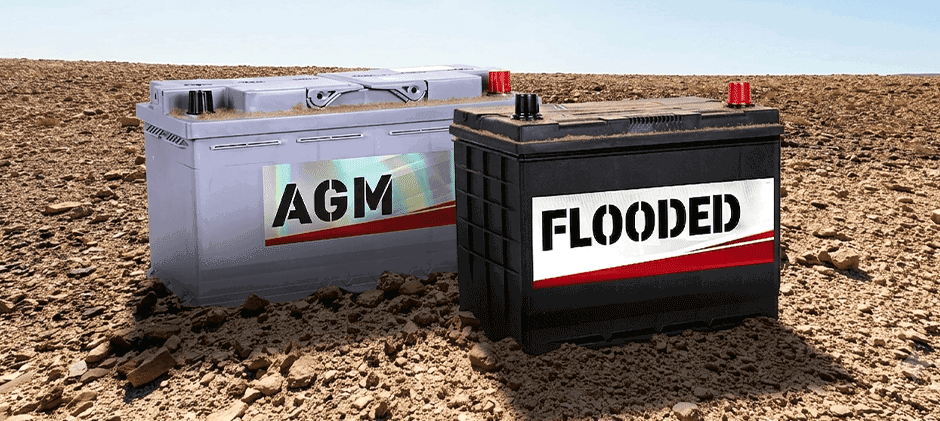
A flooded battery, also called a wet cell battery, is the traditional type of lead-acid battery used in many tractors and other equipment. Inside, lead plates are covered by a liquid mixture of sulfuric acid and water (called the electrolyte). Because the liquid can evaporate over time, you’ll need to check the fluid level regularly and add distilled water when needed. These batteries are affordable and reliable, but they do require routine maintenance.
What Is an AGM (Absorbent Glass Mat) Battery?
AGM stands for Absorbent Glass Mat, and it’s a sealed lead-acid battery. Instead of free-flowing liquid electrolyte, thin fiberglass mats between the lead plates soak up all the fluid. Since it’s fully sealed, nothing spills out, and you’ll never need to add water. AGM batteries handle rough vibrations way better and deliver more powerful cranking power. They work great for tractors that run in harsh terrain or sit idle for weeks on end.
What Is the Difference Between AGM and Flooded Batteries?
Farm conditions are really tough on all electrical parts. Tractors shake nonstop when you’re tilling soil, plus fertilizer dust eats away at metal. The way your battery’s built directly affects how long it lasts and whether it’s worth your money.
Vibration Resistance
Farm equipment rolls over bumpy ground and pulls heavy tools like disc harrows, which send constant strong vibrations through the machine.
- In flooded batteries, all that shaking sloshes the liquid acid around. This wears down the battery plates and can even cause internal short circuits.
- AGM batteries handle vibration far better. Fiberglass mats press tight against the lead plates inside, holding everything steady against jolts and bumps.
No Leaks & Less Corrosion
- Flooded batteries can spill acid if you drive up steep slopes, or if rocks and debris crack the battery casing. That liquid acid eats through metal fast—it ruins tractor frames, battery mounts and wiring.
- AGM batteries trap all acid inside fiber mats. Even if the casing cracks, no acid leaks out, so your tractor stays safe from corrosive damage.
Maintenance
- Flooded batteries need regular care. You can’t just add water every now and then—you also have to run equalization charging. This special controlled extra charge mixes up the electrolyte and stops acid from sinking to the bottom of the cell. Skip this time-consuming work, and your battery will die early.
- AGM batteries need zero maintenance. You never have to add water or run equalization charges at all.
Starting Power and Electrical Performance
AGM and flooded batteries both get your tractor started, but they act very differently when running all your onboard electronics.
AGM batteries: They normally have higher cold cranking amps (CCA), so they fire up tractors easily even when it’s freezing outside. They’re also a much better fit for tractors loaded with extra gear: GPS, display monitors, bright LED work lights and other electric add-ons. Plus, AGMs charge back up quicker than flooded batteries.
One downside: these batteries hate being run nearly dead repeatedly. If you regularly drain them past half their total capacity, they won’t last nearly as long.
Flooded batteries: They crank reliably for most tractors, especially older rigs without lots of extra electronics. They hold up fine for basic daily work, but they take way longer to recharge. They also can’t handle repeated deep draining nearly as well as dedicated deep-cycle batteries.
Self-Discharge Rate
Tractors often sit unused for months, especially all winter long. How fast batteries lose power on their own is a huge thing to think about when buying one.
- AGM batteries lose charge way slower than flooded ones. They hold power much better when machines sit idle, so they’re perfect for seasonal gear like combines and sprayers.
- Flooded batteries are easily affected by weather. The liquid electrolyte inside evaporates when it gets hot. If the battery’s power runs low in freezing weather, the liquid can even freeze solid. Once a flooded battery freezes, its internal plates bend and the casing cracks.
Cost
- Flooded batteries cost less upfront, making them a good choice if you’re on a budget. For older tractors with basic electrical systems, they offer reliable performance at a lower price.
- AGM batteries cost more, but they also offer some long-term benefits. They require no watering, are more resistant to vibration, and usually last longer when properly maintained. If your tractor is used frequently, has lots of electrical accessories, or the battery is difficult to access, paying more for an AGM battery may be worth it.
Can You Switch Between AGM and Flooded Batteries? Charging Requirements
Don’t just switch battery types without checking if your tractor’s charging system matches first.
AGM and flooded batteries charge best at different voltages. A standard 12V flooded battery charges optimally at roughly 14.2V, while a 12V AGM needs a higher 14.7V main charging voltage. AGMs also handle faster charging currents, so they power back up quicker.
Most newer tractors have charging systems calibrated for one specific battery type only. If your tractor is built for AGM but you fit a flooded battery instead, the high charging voltage will wear the flooded battery out fast. If you put an AGM into a system made for flooded batteries, the battery never gets fully charged. Over time, this hurts its power and cuts its service life short.
Always check your tractor owner’s or service manual to see which battery the manufacturer suggests before swapping types. Sticking with the right battery keeps your charging system running right and saves you cash down the line.
Which One Is Right for You?
Based on real-world field use and technical specs, here’s a simple breakdown to help you pick the right battery:
Choose a Flooded Battery if:
- You’re on a tight budget and own an older tractor model
- Tractor only has basic electric parts — no GPS, telemetry systems, or round-the-clock monitoring devices
- The battery is easy to reach, so you can regularly check fluid levels and top up water with no hassle
- You use the tractor every day, not just seasonally. Frequent use keeps the battery plates working properly
Choose an AGM Battery if:
- You work with rough tillage equipment or operate the tractor on bumpy, uneven ground with lots of vibration
- The tractor is fitted with modern electronics, heavy-duty LED lights, GPS systems, and other extra accessories
- Use the tractor seasonally, and it sits idle for months at a time
- The battery is installed in a hard-to-reach spot that makes regular maintenance a hassle
- Your tractor’s original factory specs specifically require an AGM battery
Conclusion
AGM batteries stand up to heavy shaking better, charge faster, and need zero upkeep. Flooded batteries are solid and cheaper for most tractors. Always check your tractor’s owner manual before buying a new battery to get the type the manufacturer recommends. The right battery will fire up your tractor every time and last much longer. If you need dependable replacement tractor parts, FridayParts carries plenty of options for all major tractor brands.
