

Hydraulic systems work like your machine’s muscles for fast, powerful movement. When you pull a lever, you expect the machine to respond instantly. This performance mainly relies on the hydraulic fluid inside, with viscosity being its key feature. Choose between AW32 vs AW46 hydraulic oil? This guide talks about their differences and how to choose the proper hydraulic oil for your machine.
What Does “AW” Mean in Hydraulic Oil?
“AW” in AW32 and AW46 means Anti‑Wear. It indicates that this hydraulic oil has special additives that protect high-pressure components of the hydraulic system.
Vane pumps and piston pumps run under heavy pressure inside hydraulics. Their metal parts fit extremely close together. Regular oil gets pushed out between the metal surfaces. The metal then rubs against the other, which causes friction and speeds up part wear.
Most anti‑wear additives use zinc‑based compounds like ZDDP (Zinc Dialkyldithiophosphate). They form a thin protective layer over metal components. When high pressure and heat build up, this coating wears off first rather than the metal. It prevents pumps, motors and valves from getting damaged quickly.
Both AW32 and AW46 hydraulic oil include these anti‑wear additives. They work well for today’s high‑pressure hydraulic machinery. The main job of AW‑grade oil is to make your costly hydraulic parts last longer.
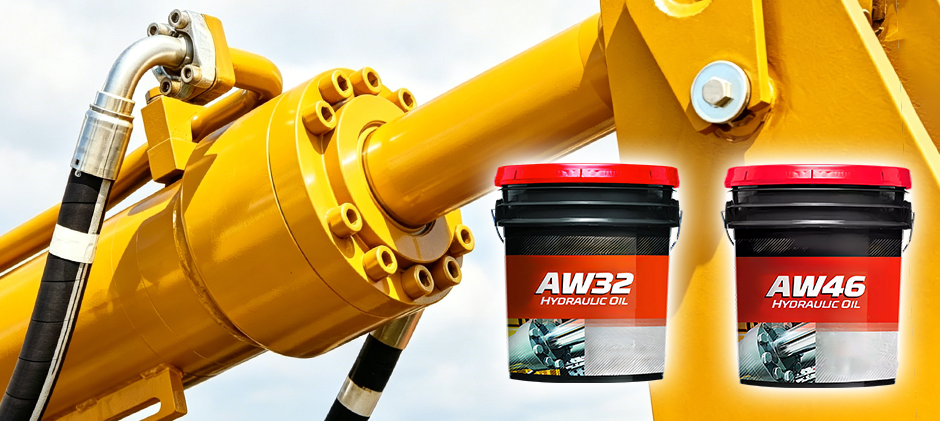
Difference Between AW32 and AW46?
The biggest difference between AW32 and AW46 hydraulic oil is viscosity. The numbers “32” and “46” refer to the oil’s grade according to the ISO Viscosity Grade (VG) system. The grade measures the oil’s kinematic viscosity in centistokes (cSt) at 40°C (104 °F).
- AW32 hydraulic oil hits a 32 cSt viscosity at 40°C. It’s thinner and flows faster.
- AW46 hydraulic oil has a 46 cSt rating under the same temperature. It’s thicker and moves more slowly.
This thickness (how easily the oil flows) decides whether the oil works well for your machine. If the oil is too thin, it cannot form a sturdy protective layer between metal components. Parts will wear down faster. If the oil is overly thick, it cannot circulate smoothly. Your pump has to run harder, with extra heat, and your machine will feel slow and unresponsive. Neither oil is universally superior. You only need to pick one that fits your machine’s working environment.
Which One Is Better in Different Temperatures?
Temperature is the biggest factor that affects a hydraulic fluid’s viscosity. Oil turns thinner when heated and thickens when cooled. That’s why you need to choose the right‑grade oil based on your local weather and working‑temperature range, to keep parts lubricated efficiently.
AW32 works best for machines used in cold‑weather areas. When you start up equipment in cold conditions, thicker AW46 oil flows poorly. The hydraulic pump cannot draw oil out of the tank properly. This issue is called pump cavitation. The hydraulic system lacks lubrication, makes a high‑pitched whine, and the pump can break down rapidly. AW32 has lower viscosity. It flows freely even in freezing weather, letting the system start smoothly and lubricate all components right away.
AW46 is better for moderate‑to‑hot working environments. Heavy‑duty operation and high outside temperatures heat the hydraulic system. AW32 gets overly thin once it warms up. Its protective oil layer breaks down, which causes metal‑to‑metal rubbing and speeds up component wear. AW46 starts out thicker. It holds up a strong lubricating film at high temperatures and shields hydraulic parts while the machine works under heavy loads.
AW32 and AW46 Application
The choice between AW32 vs AW46 often comes down to the machine’s job and its typical working environment.
AW32 is the go-to hydraulic oil for applications where good cold-weather performance is important.
- Snowplows and salt spreaders: They have to run consistently through freezing winter weather.
- Log splitters: People mostly use these in cooler fall and winter seasons.
- Forklifts: Most indoor or cool‑climate forklifts run on AW32. It keeps hydraulics responsive and running smoothly.
AW46 is the standard for most off-road heavy equipment operating in temperate or warm conditions.
- Excavators, bulldozers and dump trucks: These run long shifts and produce lots of heat inside their hydraulic systems. AW46 keeps a strong lubrication layer to safeguard pumps and motors under heavy use.
- Farm tractors and harvesters: They work non‑stop through warm‑weather planting and harvesting seasons. AW46 delivers the durable lubrication these pieces of equipment need.
AW46 for Old‑equipment
As hydraulic equipment gets older, its inner parts wear out over time. Gaps inside pumps, motors and valve spools become wider. Thinner oil, such as AW32 easily leaks through those enlarged gaps. This internal oil leakage (also called blow‑by) reduces hydraulic performance. Pressure bleeds internally, so your machine loses power and reacts more slowly.
- Switching to thicker AW46 oil can offset this wear. It forms a sturdier lubrication layer that seals up those wider gaps better. This brings back some of the machine’s original power and response.
- Old machines often have tiny leaks from worn‑out gaskets and seals. The thicker AW46 oil does not seep out as quickly. It helps slow down small‑scale leaks before you get proper repairs done.
How to Choose Between AW32 and AW46?
- Check your equipment owner’s manual: Equipment brands test their hydraulic systems and list out the best‑suited oil viscosity for their design. Always follow their official suggestion first.
- Consider your working‑area temperature: If you regularly operate below 0°C (32°F), go with AW32. If your workspace stays above 30°C (85°F) or the machine tends to overheat, AW46 is the better pick. Temperatures in between work with either oil, though AW46 is the usual go‑to for outdoor‑run equipment.
- Machine’s age: Keep using the manufacturer‑suggested oil on newer, low‑hour units. If your older, high‑hour machine starts running slow, upgrading from AW32 to AW46 is a practical fix.
- Climate changes: If you relocate the machine from a hot‑weather region to a cold one, change AW46 hydraulic oil over to AW32. That way, the machine can start up reliably every time.
Can They Be Mixed?
No, you should not mix different hydraulic oils. Different brands may use incompatible additive packages. Even when two oils are both “AW”, chemical compositions can differ. Mixing them can cause the additives to react, fall out of suspension, or become ineffective.
There is one narrow exception. If both AW32 and AW46 come from the exact same brand and product line, they use matching additives. You can blend them to get a middle‑range viscosity. Anyway, draining all the old oil and refilling with one single‑grade hydraulic oil is still the best method. It removes any risk and guarantees clean, fully‑functional oil for your hydraulic system.
Conclusion
Choosing between AW32 and AW46 comes down to your equipment and the temperatures it works in. AW32 works better in cold environments, while AW46 protects machinery best in mild‑temperature areas. If you’re replacing hydraulic pumps, filters, cylinders, or other hydraulic parts, FridayParts offers a wide selection of quality replacement parts.
