

The best 36-inch riding lawn mower is not always the one with the strongest name recognition. In this price range, it makes more sense to judge the exact engine, the mower’s condition, and how easy it will be to keep running. That changes the buying process more than most people expect. Once you see where the real differences are, the right choice becomes much easier to spot in the sections below.
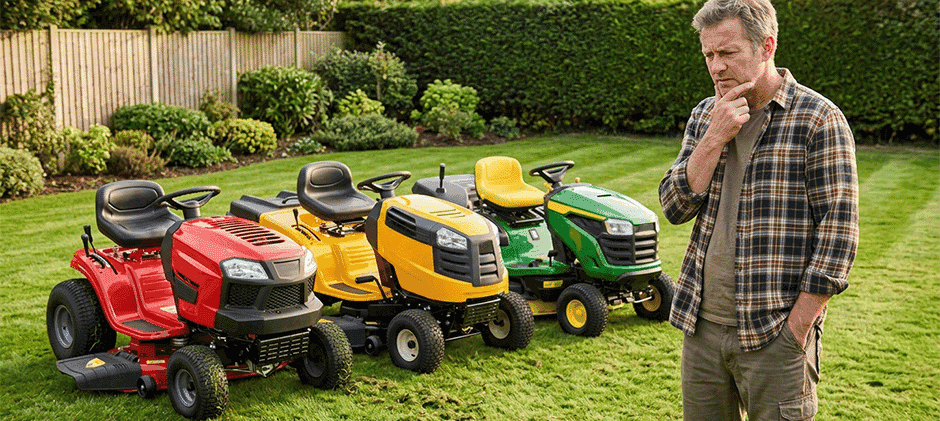
Why Brand Elimination Fails
Removing Kohler, Briggs, and Kawasaki from your list at the same time makes the search for the best engine for a 36-inch riding mower far more difficult. It seems cautious, but it eliminates most of the market before you’ve looked at real options.
The better filter is this:
- Skip weak engine series, not full brands
- Check deck size against yard size
- Match budget to new or used equipment
- Judge the whole mower, not just the valve cover
For a 36-inch class machine, budget matters as much as engine name. New riders in this size are not common. Many mainstream lawn tractors start at 42 inches. That means you may be choosing between:
- A used riding mower
- A 42-inch entry tractor
- A wide-area walk-behind
That is where engine tune-up kits, air filters, and mower blades also matter. A mower with a decent engine and easy access to quality replacement parts can serve longer than a “better” engine in a weak machine.
What To Know About Each Engine Brand?
Kohler Is Not One Simple Yes Or No
Kohler gets mixed reactions because people often group very different engines together. Some of that criticism came from older single-cylinder Courage models. Those engines hurt the brand’s image. Still, that does not mean every Kohler should be ruled out.
A more useful view:
- Older Courage single-cylinder engines deserve extra caution
- Kohler twin-cylinder engines are a different discussion
- 7000 Series engines are often judged more favorably than the older problem units
So if you are shopping for the best 36-inch riding lawn mower, the smart move is not “avoid Kohler.” It is “check the exact series and service history.”
Also look beyond the engine badge. A mower with clean oil, a good fuel filter, solid deck spindle assemblies, and easy-to-find maintenance parts is usually a safer buy than a neglected unit with a more popular engine.
Briggs Depends Heavily On The Series
Many people lost trust in Briggs years ago, often because of lower-end single-cylinder engines on basic residential tractors. That history is real. Even so, Briggs covers a wide range. One poor entry engine does not define every V-twin or every later design.
Here is the practical way to view Briggs:
- Low-end residential engines are the main concern
- Better-equipped Briggs V-twins can be perfectly serviceable
- Long life depends heavily on oil changes, cooling fin cleaning, and fuel quality
If you’re comparing machines in the $2,500 range, you may see a Briggs engine more often than anything else. That alone shouldn’t scare you away. A mower with an hour meter, clean ignition parts, fresh engine oil filters, and a well-kept transmission can be a better buy than a neglected alternative from a stronger brand.
Kawasaki Is Usually A Budget Question
Kawasaki often has the strongest reputation in this group. If your only goal is engine reputation, Kawasaki will stay near the top of many short lists. The catch is price.
In this size and budget range, Kawasaki usually means one of two things:
- A used mower
- A more expensive mower than planned
So the issue is not whether Kawasaki is good. The issue is whether your budget fits it. Want the best 36-inch riding lawn mower with a cap of about $2,500? Kawasaki is still within reach, but usually on a clean used mower instead of a new one.
That’s also where starter motors, carburetor parts, and drive belts become important. A used Kawasaki machine can be a strong value if the wear items are easy to replace and the mower hasn’t been abused.
Match Engine Choice To Your Yard
For about 0.7 acres with a mostly flat yard, you do not need a large garden tractor. You need a machine that starts easily, cuts evenly, and does not become expensive to maintain.
A practical fit usually looks like this:
| Yard Need | Best Fit | Why |
|---|---|---|
| 0.5 to 1 acre, mostly flat | 36 to 42 inch mower | Fast enough without being bulky |
| Tight spaces and obstacles | Smaller rider or wide-area walk-behind | Easier to turn and store |
| Bagging option needed | 36 to 42 inch deck | More common bagger support |
| Budget near $2,500 | Used rider or wide-area walk-behind | New small riders are limited |
A 36-inch deck sounds appealing, but the market may not make it easy. A 42-inch mower is usually more available and simpler to support with deck belts, idler pulleys, and bagger parts. And the best 36-inch riding lawn mower is just one part of ownership. The machine still has to match your yard, your storage, and how you maintain it.
A Smart Budget Reality Check
At about $2,500, your choices tighten fast. A brand-new rider with a small deck and a premium engine is rare at that price. This is where many buyers waste time chasing a perfect spec sheet that does not exist in the real market.
You will usually get more value from one of these paths:
Path 1: Buy A Clean Used Rider
This is often the best path if you want:
- Better frame quality
- Better transmission
- A stronger engine line
- Room in the budget for service
Check these points first:
- Cold start behavior
- Smoke at startup or under load
- Oil leaks around gaskets and covers
- Deck rust and spindle noise
- Tire wear and steering play
- Service records if available
A used mower with healthy air intake parts, fresh spark plugs, and sound cutting deck parts may outlast a cheaper new machine.
Path 2: Buy A 42-Inch Entry Tractor
If you want new equipment, 42 inches may be easier to buy than 36 inches. You may need to give up the narrow deck target to stay in budget.
This path works best if you want:
- Dealer support
- Easier parts access
- Simple yearly maintenance
- Optional bagging system
It helps to compare not just engines, but also:
- Transmission type
- Deck thickness
- Front axle strength
- Seat and control layout
- Price of normal service items
Path 3: Consider A Wide-Area Walk-Behind
This is the option many buyers overlook. A wide-area walk-behind can make sense when you want riding-mower cut width without stepping up to a larger, pricier tractor.
One example in this class uses:
- A 344cc Briggs & Stratton engine
- Electric key start
- A 33-inch steel deck
- Multiple forward speeds and reverse
- A blade clutch that lets you stop blades while moving
This setup shows why the best 36-inch riding lawn mower isn’t always found in a riding mower. If the job is simply cutting 0.7 acres, a wide-area walk-behind gets it done and stays closer to budget. Upkeep stays simple too, with common filters, blade sets, and drive parts.
What To Inspect Before You Buy?
A mower should be judged as a system. Even a respected engine can sit in a weak chassis. Before you buy, inspect these items in order.
Engine Health
Look for:
- Easy cold starting
- Smooth idle
- No heavy smoke
- No knocking
- Clean oil condition
Useful service signs include recent oil filters, fuel system parts, and clean cooling shrouds.
Deck And Cut Quality
Check:
- Deck shell rust
- Spindle bearing noise
- Blade vibration
- Height adjustment function
- Even cut across the deck
Healthy spindle housings, mulching blades, and deck lift parts save trouble later.
Transmission And Chassis
Check:
- Smooth forward and reverse
- No slipping under load
- Tight steering feel
- No major frame cracks
- Sound tire condition
A mediocre engine in a solid mower often beats a strong engine in a worn-out chassis.
Best Buying Rule For This Size
If you remember one thing, make it this: the best 36-inch riding lawn mower is not always the engine with the best reputation. It is the engine that fits a mower with solid build quality, fits your budget, and has a clear path for service.
Use this short filter:
- Prefer engine series with a decent service record
- Avoid known weak lines when possible
- Do not overpay for brand name alone
- Give extra value to clean used machines
- Keep parts support in mind from day one
For a yard under one acre, the real win is not chasing status. It is buying a mower you can keep running with normal service and affordable aftermarket parts.
Final Words
What works best usually isn’t complicated. The best 36-inch riding lawn mower comes down to your yard, your budget, and the mower itself. A sound machine with easy parts availability already puts you ahead. For affordable aftermarket parts with wide compatibility and a strong inventory, FridayParts is a useful option to have on your list.
