

If you’re looking for the best diesel injector cleaner, Red Line, Amsoil, BG, Chevron Techron D, and Liqui Moly are among the products worth considering. But the most expensive or most popular cleaner isn’t always the right choice for your engine. The real difference comes down to the ingredients, cleaning strength, and how you plan to use it. We’ll compare popular options and explain what to look for before you add one to your fuel tank.
What Does a Diesel Injector Cleaner Do?
A diesel engine uses really high pressure to light the fuel. For this to work, fuel has to shoot into the combustion chamber as a super‑fine spray. This is called atomization. After running for a while, all that intense heat and pressure inside the engine cooks leftover fuel and oil right onto your injector nozzles. Hard carbon gunk builds up and clogs those tiny little holes. Instead of that fine mist, fuel starts dripping or shooting out unevenly.
When you add cleaner to your fuel tank, the working chemicals flow with the fuel all the way to your engine. These are strong‑acting solvents. They eat away that tough carbon, sticky gunk, and varnish. Once the gunk breaks loose, it burns inside the combustion chamber and goes out your exhaust.
“Keeping your fuel system clean isn’t only about better gas mileage. It also helps stop key engine parts from wearing out too soon and keeps your exhaust emissions under control.”
Fuel cleaners don’t all use the same active stuff. Some just have simple solvents like naphtha or pale oil; these mostly just lubricate the upper cylinders. But the cleaners that work best use a nitrogen‑based detergent called Polyether‑amine, or PEA. PEA holds up really well under the extreme heat inside the combustion chamber. That means it can fully clean piston tops, valves, and injector nozzles. Older‑style cleaners use Mannich detergents. They cost less and clean intake valves decently, yet they can’t handle high heat nearly as well as PEA.
Best Diesel Injector Cleaners
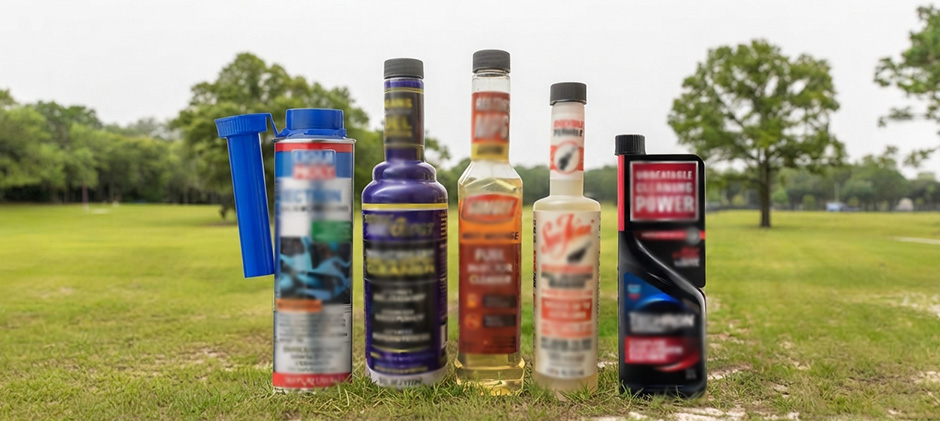
When you’re shopping for the best diesel injector cleaners, don’t just fall for the marketing hype. Check the actual chemical load, real‑life results, and how easy it is to buy. Using ingredient specs plus lots of feedback from diesel truck owners and car forums, here are the top products worth checking out:
Red Line 85 Plus / Diesel Fuel Catalyst
Red Line SI‑1 is the well‑known pick for gas engines thanks to its strong 28‑34% PEA content. Their diesel additive gets tons of love from hobby forums for the same reason: plenty of powerful cleaning detergents. It clears injector carbon buildup and also raises your cetane number. Red Line’s best point is that it hits a sweet spot. The formula works really well, and you can grab it easily at most auto‑parts shops or order it online.
Amsoil Diesel Injector Clean
If you want the strongest possible cleaning dose, go with Amsoil. Just like their P.I. Performance Improver for gas motors, this diesel cleaner is packed with premium detergents meant to break up tough internal diesel injector deposits (IDID). The downside is that buying it can be a pain. You won’t usually find it sitting on regular store shelves. You’ll need to order from an official Amsoil dealer or their website.
BG 245 Premium Diesel Fuel System Cleaner
BG 245 is the diesel version of the famous BG 44K. Folks in the industry see it as that heavy‑duty go‑to cleaner. Repair shops commonly use it to fix badly clogged fuel systems and get your injector spray pattern back to normal without pulling the injectors out. The downside is the price. It costs way more than off‑the‑shelf options. Use it for a deep clean every few tens of thousands of miles, not for routine upkeep.
Chevron Techron D Concentrate
Chevron is a huge name in fuel additives, and Techron D (the diesel counterpart to TCP) is super easy to find. But remember what forum users found for the gas‑form TCP. It only runs around 1‑5% PEA. This diesel version is also pretty mild. It doesn’t have as much cleaning agent as Red Line or Amsoil. It works fine for newer trucks as basic preventative maintenance. Don’t count on it to fix injectors with thick, heavy carbon buildup.
Liqui Moly Super Diesel Additive
Liqui Moly is really popular, but serious diesel fans argue about this one a lot. Its public Safety Data Sheet (SDS) lists naphtha, a basic petroleum solvent, as the main ingredient. At first glance, it looks like there aren’t strong high‑end detergents inside. Still, plenty of users and industry people point out that SDS documents don’t always show every single ingredient. Brands can lock away their special micro‑additives as protected trade secrets. Whatever the SDS says, real‑world drivers keep saying it cuts down loud diesel knock and makes a rough idle run much smoother.
What to Look for in a Diesel Injector Cleaner?
When shopping for the best diesel injector cleaner, you must look past the flashy marketing claims on the front of the bottle. Turn the bottle over and read the fine print, or better yet, look up the product’s SDS online.
- Active Ingredients: If the SDS lists 80% to 90% pale oil or naphtha, you are mostly buying a lubricant, not a heavy-duty cleaner. Look for products that list Polyether-amine (PEA) or list a “trade secret” nitrogen-based detergent. These are the chemicals that actually dissolve hard carbon.
- Concentration and Treat Rate: A small bottle that treats 30 gallons of fuel is highly concentrated. A large bottle that only treats 15 gallons contains a lot of filler liquid. Always check how many gallons the bottle treats to determine the true value of the product.
- Specific Engine: If your machinery has a DPF or a catalytic converter, the bottle must clearly state that it is “DPF safe” or “exhaust aftertreatment safe.” Using the wrong chemical can melt the sensitive metals inside your emissions equipment, leading to massive repair bills.
- Machine usage: If you operate heavy machinery from various brands, you want a versatile cleaner that offers wide compatibility. As a supplier with a vast inventory of aftermarket parts, we always advise our customers to use top-tier fuel whenever possible. High-quality fuel already contains a baseline level of detergents, which makes your bottled additives work even better.
“Always match the additive to your exact problem. A lubricant won’t fix hard carbon, and a harsh solvent might not be the best choice for daily preventative maintenance.”
How to Use a Diesel Injector Cleaner?
Using these products is very simple, but following the correct steps ensures you get the maximum benefit.
- Read the Instructions: Every formula has a specific ratio. Pouring too much cleaner into a small tank can cause the engine to run hot or idle poorly. Pouring too little will not clean the parts properly. Find out exactly how many gallons of fuel your tank holds.
- Pour Before You Pump: Drive your vehicle until the fuel tank is almost empty (about a quarter tank left). Open the bottle of cleaner and pour the correct amount directly into the fuel tank.
- Fill the Tank: Fill your tank with fresh diesel. Pumping the fuel on top of the cleaner mixes the chemicals thoroughly into the fuel.
- Drive the Vehicle: The cleaner only works when the engine is running. Take the vehicle for a drive that lasts at least 20 to 30 minutes. Highway driving is best because the engine gets fully up to temperature, allowing the chemicals to react with the carbon deposits.
- Repeat if Necessary: If your engine was heavily clogged, you might need to run a second bottle through the next tank of fuel.
Keep in mind that liquid additives have limits. If an injector is completely dead or clogged solid with debris, no liquid additive will fix it. In those cases, you must remove the part and use an ultrasonic cleaning machine, or simply replace it with a high-quality aftermarket part.
Summary
Finding the best diesel injector cleaner comes down to picking chemicals that match exactly what your engine needs. Formulas packed with PEA dig deep into tough, hard‑baked carbon, while all‑in‑one fuel additives help keep your DPF and EGR valves from gumming up. Use these fuel treatments on a regular maintenance schedule. And when cleaning alone isn’t enough to fix worn‑out injectors or fuel components, turn to FridayParts for dependable aftermarket replacement parts.
