

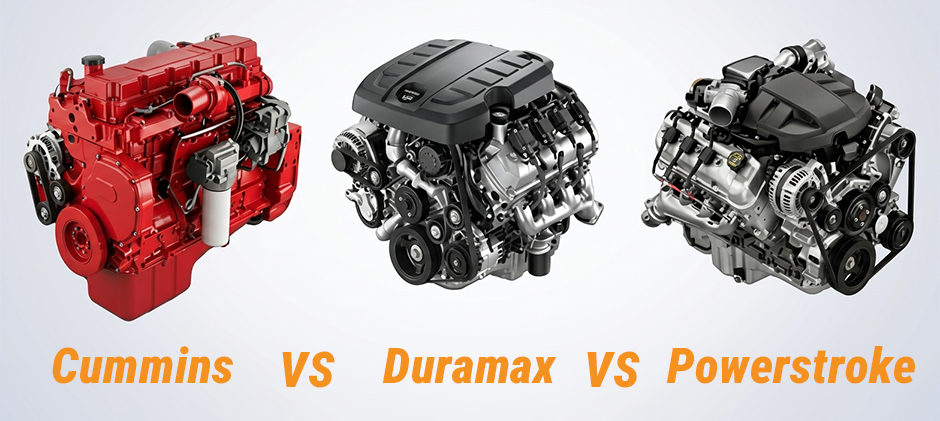
Duramax vs Cummins vs Powerstroke: each has its strengths, but none is the best at everything. Cummins is known for strong low-end torque, Duramax for smooth driving, and Powerstroke for high towing power. But power and performance are only part of the story. Common problems, repair costs, and long-term reliability can make a big difference. Let’s compare the three and see which one is the better fit for your needs.
Cummins vs Duramax vs Powerstroke
To get a fair look at Duramax vs Cummins vs Powerstroke, we must compare engines from the same era. Looking at a 2005 engine next to a 2023 engine will not give you helpful data. Below, we compare the recent High-Output (HO) versions of these heavy-duty diesel engines.
| Feature | Cummins 6.7L HO | Duramax 6.6L (L5P) | Powerstroke 6.7L HO |
|---|---|---|---|
| Engine Configuration | Inline-6 | V8 | V8 |
| Displacement | 6.7 Liters | 6.6 Liters | 6.7 Liters |
| Horsepower | 420 hp | 470 hp | 500 hp |
| Torque | 1,075 lb-ft | 975 lb-ft | 1,200 lb-ft |
| Transmission Options | Aisin 6-speed automatic | Allison 10-speed automatic | 10-speed TorqShift |
| Max Towing Capacity | Up to 37,100 lbs | Up to 36,000 lbs | Up to 40,000 lbs |
Note: Towing capacity is the max the whole truck (frame, axles, brakes) can handle, not just what the engine puts out.
For gas mileage, numbers shift depending on truck weight, axle ratio and tire size. That said, the inline-6 Cummins usually gets a bit better highway mpg when empty, since it runs at lower RPMs. Duramax and Powerstroke V8s use modern common rail injection and hold up well on fuel use. But their bigger horsepower burns more fuel when you hit the gas hard.
What Are the Common Problems With Cummins, Duramax, and Powerstroke?
Every diesel engine has weak spots. Knowing these common breakdowns helps you plan maintenance and keep from getting stuck on the road.
Common Cummins Diesel Engine Problems
Today’s 6.7L Cummins is a tough work engine, but 2019 and newer versions have a few known flaws. The big one people talk about is grid heater bolt failure. The bolt that holds the heating element can work loose from vibration, drop straight into the intake manifold, and wreck the whole engine.
Newer 6.7L engines also often get worn camshafts and roller lifters. If you want this motor to hit 300,000 miles, many mechanics recommend saving up for a flat tappet upgrade. The older 5.9L models are super reliable, but they usually need upgraded lift pumps to protect the main injection pump.
Common Duramax Diesel Engine Problems
The 2017–2023 Duramax L5P runs solid when stock, though it has some annoying electrical and sensor glitches. The injector wiring pigtails tend to go bad, which causes rough idling and turns on the check engine light. The good news: swapping out these wiring connectors is cheap and simple.
Another frequent issue is soot building up on the MAP sensor. The EGR system makes soot clog this sensor fast, hurting gas mileage and making the throttle feel slow. Clean or replace this sensor regularly to keep the engine running well. Older generations like the LB7 are well known for needing full injector replacements.
Common Powerstroke Diesel Engine Problems
Ford’s Powerstroke engines have a hit-or-miss track record. The old 6.0L models are notorious for blown head gaskets, plugged EGR coolers and high-pressure oil leaks. You have to add aftermarket head studs and upgraded coolers (bulletproof it) to make a 6.0L dependable.
The newer 6.7L Powerstroke is way better, but early 2011–2014 units had CP4 injection pump failures. When the CP4 pump breaks, metal shavings spread through the whole fuel system, and repairs get really pricey. Later 6.7L trucks mostly fixed this, but you can still run into occasional trouble with complicated emissions sensors and coolant leaks at the main radiator.
Cummins vs Duramax vs Powerstroke: Which Is Better for Towing and Hauling?
Peak torque numbers look awesome on spec sheets, but towing in real life feels totally different. The way these engines put out power changes how your truck handles heavy loads.
Low-End Torque and Pulling Power
The inline-6 Cummins has a big edge on low-end torque. It hits peak power at lower RPM than the V8s. When you pull a heavy trailer from a stop, the Cummins feels easy. You don’t need to rev it high to get that load rolling.
Highway Towing and Stability
Duramax really shines on the highway. Matched with the Allison transmission, it delivers power super smoothly.
“If you’re on long highway hauls with a medium or heavy trailer, Duramax keeps driver fatigue down the most. Shifts from the transmission are buttery smooth, and the engine stays quiet and steady at cruising speed.”
Towing Heavy Trailers and Mountain Driving
When you’re hauling max weight up steep mountain climbs, Powerstroke comes out on top. With 1,200 lb-ft of torque and 500 hp, it holds highway speed uphill better than the other two. Its 10-speed transmission keeps the engine right in its sweet spot. The stock exhaust brake also works great to hold back heavy loads on steep downhill runs.
Which Diesel Engine Is Best for Your Needs?
There’s no one-size-fits-all winner. Here’s a quick breakdown to help you pick based on real use cases.
Heavy Hauling and Low-RPM Pulling: Cummins
If you do hotshot runs, haul heavy gear like skid steers or mini excavators, or pull loaded gooseneck flatbeds through muddy job sites, go with Cummins.
This inline-6 is made for tough work and strong low-end torque. You don’t have to rev it high to get a 20,000-lb load of farm tractors or industrial gear rolling from a stop. That brute low-speed pulling power makes it a top pick for farm and commercial work, where grunt at low RPM beats fast highway acceleration.
Smooth Highway Driving and Recreational Towing: Duramax
If most of your miles are long highway trips pulling a luxury fifth-wheel RV, a big boat, or a multi-horse trailer, Duramax is the standout. It’s built for easy driving and smooth power.
The Duramax V8 runs polished, quiet and balanced with little cabin vibration. It keeps driver fatigue low on cross-country trips. It’s great for recreational towing — you get heavy-duty strength without that harsh work-truck feel.
Extreme Towing and High Power Output: Powerstroke
When you’re hauling super heavy loads: big toy haulers, multi-car trailers or logging gear up steep mountain hills, choose Powerstroke.
This V8 prioritizes max hp, torque and overall truck capability. It pushes hard and holds highway speed even when pulling the heaviest legal loads up steep grades. If you’re a commercial hauler moving max-weight loads fast and efficiently, Powerstroke delivers that high-output punch.
Long-Term Ownership and DIY Repairs: Check Each Engine Generation
If you plan to keep your truck long-term and want to do your own repairs or add aftermarket parts, engine layout and how easy it is to work on makes a huge difference. Older inline-6 Cummins engines have lots of space under the hood. You can easily reach fuel injection parts, swap sensors and do regular maintenance right in your garage.
Modern Duramax and Powerstroke V8s are crammed tight in the engine bay. Big engine jobs often mean pulling the whole truck cab off.
Conclusion
Cummins is known for strong pulling power, Duramax for a smooth ride, and Powerstroke for heavy towing. No matter which one you drive, regular maintenance and timely repairs help keep your truck running strong. FridayParts offers a wide range of replacement parts to help you keep your diesel truck on the road.
