

If you’re the one keeping excavators, loaders, skid steers, or tractors running, you already know this: grab the wrong fluid, and you’re not just looking at a hot engine. You’re looking at rust creeping through the system, and machines sitting idle when they should be working. So, is coolant and antifreeze the same thing? In practice, antifreeze usually comes as a concentrate. Coolant is what you get after you mix it—the stuff that’s actually flowing through the radiator. This guide starts with that basic split, then moves into why the water-to-concentrate ratio isn’t something to guess at, and finally helps you sort out whether your problem is fluid-related, mechanical, or maybe a bit of both.
Short Answer
So, is coolant and antifreeze the same thing? In casual speech, often yes. In service work, not always.
A simple rule helps:
- Antifreeze usually means concentrate
- Coolant usually means the working fluid
- Pre-Mixed Coolant is ready to pour
- Concentrate must be mixed with clean water first
That is why two bottles can both look right and still be used in different ways.
If the label says concentrate, do not pour it in like pre-mix. If it says pre-mixed coolant, do not dilute it again.
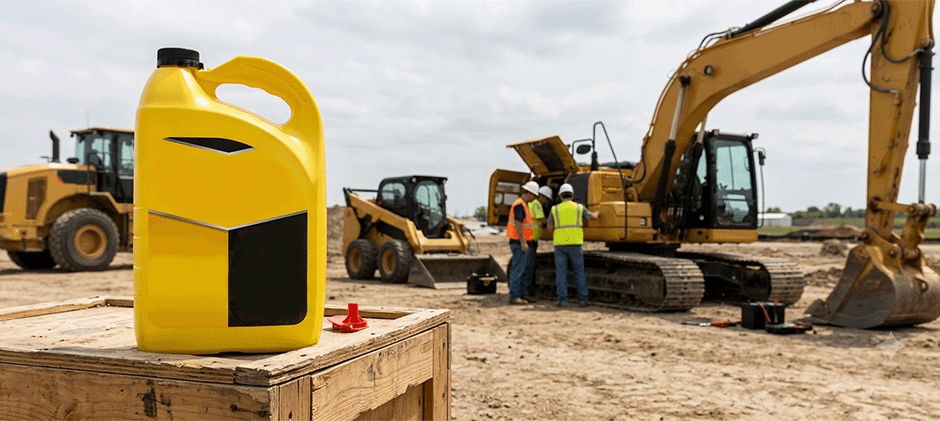
The Difference in One Table
| Product | What it usually means | Ready to use | Main risk |
|---|---|---|---|
| Antifreeze concentrate | Base fluid with additives | No | Wrong mixing ratio |
| Pre-mixed coolant | Antifreeze is already blended with water | Yes | Wrong chemistry for the system |
| Coolant | A general term that may mean either one | Maybe | Buying by name only |
So, is coolant and antifreeze the same thing? Not really. In most cases, antifreeze refers to the concentrated liquid in the jug, while coolant is what you get after you mix it—the actual fluid circulating through the engine.
Why 50/50 Is Common?
For many off-road machines, a 50/50 ratio of antifreeze to water is the standard go-to. It’s not magic—it just happens to offer a good middle ground for freeze protection, boiling point elevation, and heat dissipation.
A typical 50/50 mix can provide:
- Freeze protection to about -34°F −37°C-37°C
- Boil protection to about 265°F −129°C-129°C in a pressurized system
- Good corrosion protection
- Better heat transfer than richer antifreeze blends
Why not 60/40 or 70/30? Because water carries heat better than ethylene glycol. As antifreeze concentration rises, freeze protection improves only up to a point, but heat transfer drops. For a lot of systems, anything over 60% antifreeze starts to degrade cooling performance. At around 70%, you may have excellent freeze protection in extreme cold, but the fluid won’t shed heat as well as a standard 50/50 blend.
The belief that “more antifreeze equals better protection” is an expensive myth. In practice, running too rich a mixture often lowers cooling efficiency instead of improving it.
What Coolant Really Does?
Coolant does more than stop freezing. In non-road equipment, it has to do three jobs at once:
- Move heat away from the engine
- Prevent freeze and boil-over
- Protect metal surfaces from rust, scale, and corrosion
That third job is where many coolant problems begin. A machine can keep working for some time with the wrong fluid, but the damage builds slowly. In field service, wrong coolant rarely causes instant failure. More often, the machine starts running a little hotter under load, the fluid turns cloudy, or the inside of the system begins to collect deposits.
That is why coolant and antifreeze are the same thing is not just a wording issue. It is a maintenance issue.
Coolant Types Are Not All the Same
Even if two products are both called coolant, they may use different additive technology.
Main Coolant Types
| Type | Basic use | Typical service life |
|---|---|---|
| IAT | Older systems | Often about 2 years or shorter-hour service intervals |
| OAT | Long-life systems | Often up to about 6 years or 12,000 hours, whichever comes first |
| HOAT | Mixed additive formula | Varies by product and service program |
In off-road equipment, long-life coolant is often tracked by time and operating hours, not just years alone. That is why OAT programs in construction and agricultural machines are often described by both.
Many machines also use specific long-life coolant families, such as Caterpillar ELC, John Deere COOL-GARD II, Komatsu AF-NAC, or Cummins OAT-based coolant lines. The product names differ, but the rule stays the same: match the required specification and do not assume that color means compatibility.
Color helps with recognition. It does not prove chemistry or compatibility.
A Real Service Pattern
In real shop work, coolant mistakes usually show up in used machines with an unclear service history. A common example is an excavator that idles normally, then starts running hotter during trenching or hammer work after different coolants have been mixed over time. The operator may think the problem is only low coolant, but the real issue is often a combination of mixed chemistry, blocked radiator fins, and reduced coolant flow.
Another pattern shows up after a top-off with the wrong product. The machine may not fail that day. Instead, it starts showing repeated temperature rise under load, dirty fluid in the tank, and early wear around seals and hose connections.
These are not rare cases. They are typical signs that the cooling system needs more than a quick refill.
Can Different Coolants Be Mixed?
Sometimes, but only when compatibility is confirmed. If the fluid already in the machine is unknown, random mixing is a bad habit.
Mixing incompatible coolants can lead to:
- Reduced corrosion protection
- Shorter coolant life
- Sludge or gel formation
- Deposits in narrow passages
- Higher operating temperature under load
Filling a system with the wrong coolant type rarely causes instant failure, but it can shorten coolant life, weaken internal protection, and create overheating problems later.
If the coolant history is unknown, draining and refilling is usually safer than guessing.
Concentrate or Pre-Mix?
Once the chemistry is correct, the next choice is product form.
Concentrate
Concentrate makes sense when:
- Doing a full coolant change
- A specific ratio is needed
- Distilled or deionized water is available
Pre-Mix
Pre-mixed coolant works well when:
- Topping off in the field
- Reducing technician error matters
- Water quality is uncertain
- Faster routine service is the goal
For many owners, pre-mix is the safer day-to-day choice because it removes one common mistake from the job.
Water Quality Matters Too
When concentrate is used, water quality becomes part of the coolant. Hard water can leave minerals behind, and those minerals can form scale inside the system. Over time, that scale reduces heat transfer and makes the cooling system less efficient.
Use one of these when possible:
- Distilled water
- Deionized water
- Ready-to-use pre-mixed coolant
This matters even more in larger systems, where a poor mix affects more fluid volume and more parts at once.
Symptoms That Point to More Than Fluid
Coolant is only one part of the system. If the machine keeps running hot, look beyond the bottle.
If the Machine Overheats Under Load
Check these first:
- Blocked radiator fins
- Weak fan performance
- Incorrect coolant ratio
- Low coolant level
- Sticking thermostat
Poor airflow or a restricted core may mean a new radiator will restore normal cooling more effectively than another coolant change. Weak circulation, on the other hand, may point to the water pump as the real issue.
If the Coolant Level Keeps Dropping
Inspect:
- Hose connections
- Reservoir cap
- Radiator seams
- Pump area
- Drain points
A cracked tank or weak cap can slowly turn into a larger overheating problem. In those cases, replacing the coolant reservoir or related sealing parts can prevent repeated fluid loss.
If the Temperature Rises and Falls Too Fast
That often points to unstable coolant flow or poor temperature control. A worn thermostat is a small part, but it strongly affects warm-up time and operating temperature.
Wrong coolant usually does not fail fast. It fails slowly, then shows up on the hottest day or under the heaviest load.
A Simple Decision Method
If the shelf options feel confusing, use this three-step check:
- Identify the product form.
Is it concentrate or pre-mixed coolant? - Confirm the coolant type.
Match the coolant family already required for the machine. - Check the system condition.
If the fluid is correct but the machine still runs hot, inspect the cooling parts.
This is the most practical way to answer the question: Is coolant and antifreeze the same thing? The wording matters, but correct fluid choice and system condition matter more.
FAQ
Can Water Be Used as a Temporary Coolant?
Only as a short-term emergency step. Clean water can help prevent immediate overheating if coolant is low, but it does not provide the same freeze protection, boil protection, or corrosion control. Restore the correct coolant mix as soon as possible.
What Happens if Green and Orange Coolants Are Mixed?
The result depends on the formula, not just the color. Some mixtures may seem fine at first, but others can reduce corrosion protection or form sludge over time. If compatibility is unclear, a drain and refill is safer.
How Often Should Coolant Be Changed in Off-Road Equipment?
It depends on the coolant type and service program. Traditional IAT coolant often has shorter intervals, around 2 years in many systems. Long-life OAT coolant may run up to about 6 years or 12,000 hours, depending on the machine and operating conditions.
Is Universal Coolant Safe for Every Machine?
Not always. “Universal” on the label does not guarantee compatibility with every cooling system. The safer choice is to use a product that clearly matches the machine’s required coolant type and service specification.
Conclusion
People often use the terms antifreeze and coolant interchangeably, but they’re not always the same product, whether you’re looking at composition or actual use. Getting it right boils down to three things: choose the appropriate coolant, mix it correctly, and give the cooling system a thorough look if symptoms don’t go away. When what started as routine service becomes a hardware fix, FridayParts offers dependable aftermarket replacements, fair prices, ample inventory, and broad coverage for a wide range of off-road machinery.
