

ISO 32 hydraulic oil sits on the lighter end of the hydraulic fluid range, and it’s generally selected for systems that benefit from easy flow right at startup—especially when temperatures are on the cooler side. Being thinner than ISO 46, it typically moves through the system faster on cold mornings and cuts down on that dragging feeling during the first few minutes of operation. In this guide, we’ll go over what ISO 32 actually is, the kinds of applications it’s commonly found in, a head-to-head comparison with ISO 46, and a few things to think about before you decide to use it in your own equipment.

What Is ISO 32 Hydraulic Oil?
In plain terms, ISO 32 is nothing but a viscosity grade. The “32” tells you where that oil sits on the standard viscosity scale at a specific test temperature—it doesn’t speak to quality or performance, only to whether the oil is thinner or thicker than the next grade up or down.
And that thickness actually matters, because hydraulic fluid has several essential jobs to do all at once. It transfers power from one part of the system to another, keeps pumps and valves well-lubricated, pulls heat away from hot spots, and creates a protective layer that shields internal surfaces from wear. Choose an oil that’s too heavy, and you’ll notice it the moment you start up in cold weather—everything feels sluggish and unresponsive. Pick one that’s too light for the job at hand, and that protective film won’t stand up to the pressure.
One common misunderstanding worth clearing up right away: ISO 32 hydraulic oil is not engine oil, and it’s not the same as the combined transmission-hydraulic fluid you’ll find in tractors. Sure, they all lubricate in some fashion, but each is formulated for a specific type of equipment, and substituting one for the other is never a good idea.
In practical terms, ISO 32 hydraulic oil is known for:
- Easy flow during startup in cooler conditions
- Responsive hydraulic performance in systems designed for a lighter grade
- Use in applications where cold-start circulation matters
It is also important not to confuse ISO 32 hydraulic oil with engine oil or with tractor transmission-hydraulic fluids. They are not interchangeable just because they are all lubricants.
Uses of ISO 32 Hydraulic Oil
When Is ISO 32 Hydraulic Oil Used?
ISO 32 gets the nod in a lot of hydraulic systems that need to keep flowing when temperatures drop. Out on the jobsite, you’ll feel the benefit in the controls—steering that doesn’t hesitate, boom functions that keep up with your inputs, and a machine that doesn’t feel stiff and grumpy for the first several minutes after you fire it up. A lighter oil like ISO 32 can take the edge off that start-up lag, as long as the system is designed to handle it.
You’ll find this grade in a fair range of equipment that values easy start-up flow—loaders, excavators, motor graders, harvesters, and compact hydraulic machines are all in the mix. But don’t let the equipment type be your only guide. The right fluid always comes back to the system’s design and what the manufacturer puts in the service spec.
Another point worth remembering: if the hydraulics still feel weak even when you’re running the correct oil, don’t point the finger at the fluid too quickly. Worn pumps, clogged filters, control valves that have seen better days, or cylinder seals that are starting to leak can all behave like an oil problem.
Where Does ISO 32 Hydraulic Oil Work Best?
ISO 32 hydraulic oil generally works best in machines and conditions where easy flow is important. That often includes:
- Hydraulic systems operating in cooler weather
- Equipment that needs a quick startup response
- Machines with separate hydraulic reservoirs
- Applications where the manufacturer lists ISO 32 as an approved grade
Depending on the machine design, it may be used in some loaders, excavators, motor graders, harvesters, and compact hydraulic equipment. However, the machine type alone is not enough to make the decision. The correct fluid always depends on the system design and the manufacturer’s service requirements.
If hydraulic response remains weak even with the proper oil grade, it may be worth inspecting related components such as the hydraulic pump, hydraulic filter, or control valve. In real service conditions, fluid quality and component condition affect performance together.
Why Does Cold-Start Flow Matter?
You can really feel the difference cold-start flow makes when you’re running hydraulic equipment. If the oil is too slow to get moving at startup, everything feels off—delayed steering, jerky cylinder movements, and a general stiffness that doesn’t ease up until the fluid warms through. Meanwhile, the pump is working harder than it should just to keep things going.
Those first few minutes also add stress to the pump and can trick you into thinking the machine has a power problem when it’s really just the oil temperature holding things back. In systems that call for ISO 32, the lighter fluid circulates faster the moment you fire it up, and that’s exactly why you’ll see this grade specified so often in colder climates.
Benefits of ISO 32 Hydraulic Oil
- Better Cold-Temperature Flow:
This is the main reason. A lighter oil circulates faster during cold starts, so the system builds pressure and moves fluid with less delay.
- Smoother Hydraulic Response:
Better flow usually means less hesitation in steering, lift, boom, and tilt functions — especially during the first part of a shift.
- Wear Protection for Hydraulic Components:
Wear protection is a key factor. A good ISO 32 anti-wear hydraulic oil does a solid job of safeguarding pumps, valves, and motors. That said, the additive package still needs to line up with what the machine calls for—but with the right AW formulation in place, you’re looking at dependable, long-term performance. If wear has already affected sealing performance, replacing damaged hydraulic cylinder seal kits may also be necessary to restore proper hydraulic function.
- Protection Against Foam, Rust, and Oxidation:
Most quality hydraulic oils come with additives that resist foaming, fend off corrosion, and slow down oxidation. These extras help stretch the fluid’s usable life and cut down on the kind of breakdown-related problems that can crop up between oil changes.
ISO 32 vs ISO 46 Comparison
ISO 32 vs ISO 46 Hydraulic Oil
The difference between ISO 32 and ISO 46 comes down to viscosity. ISO 32 is thinner; ISO 46 is thicker. That single point drives most of the practical differences.
In cooler environments, ISO 32 flows faster and gives a better startup response. In warmer environments or under heavy sustained loads, ISO 46 holds its oil film better and stays more stable.
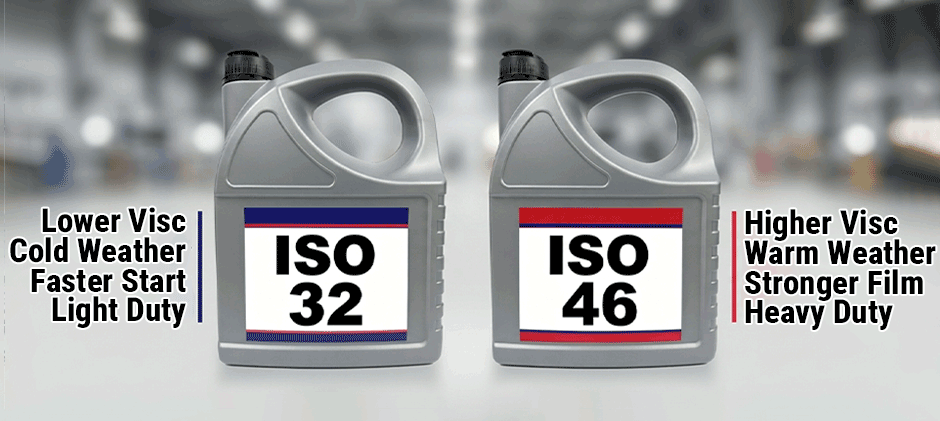
| Comparison Point | ISO 32 | ISO 46 |
|---|---|---|
| Viscosity | Lower | Higher |
| Cold-weather flow | Better | Slower |
| Startup response | Faster in cool conditions | Slower in cool conditions |
| Warm-weather performance | Lighter film protection | Stronger film stability |
| Typical use | Cool conditions, faster flow | Warm conditions, heavier load |
Main Difference in Viscosity
The difference between ISO 32 and ISO 46 comes down to viscosity. ISO 32 is thinner; ISO 46 is thicker. That single point drives most of the practical differences.
In cooler environments, ISO 32 flows faster and gives a better startup response. In warmer environments or under heavy sustained loads, ISO 46 holds its oil film better and stays more stable.
Cold-Weather Flow and Startup Performance
In cooler environments, ISO 32 flows faster and gives a better startup response. Going to a heavier oil in those conditions can make a cold machine feel sluggish. But that doesn’t mean ISO 32 is automatically right for every machine in cold weather—the grade still has to match what the system is designed to use.
Why ISO 32 and ISO 46 Are Not Interchangeable?
The two grades are not automatic substitutes. Switching from ISO 46 to ISO 32 in a system designed for the heavier grade can reduce protection under high load or high temperature. Going the other direction can make a cold machine feel sluggish. The grade should match the design — not the other way around.
How to Choose the Right Hydraulic Oil?
Check the Manufacturer’s Recommended Fluid Grade: Start with the manufacturer’s recommendation. The service manual reflects the actual system design, so it’s the strongest starting point.
Consider System Design and Operating Conditions: From there, consider two things: system design and operating conditions. Does the machine have a separate hydraulic reservoir, or does it share fluid with the transmission? A shared system usually calls for a specialized combined fluid, not a standard ISO 32. Cold-start behavior, ambient temperature, and workload all affect which grade performs best. A fluid that works well in a cool northern climate may not be the right choice for continuous heavy work in summer.
When Not to Use ISO 32 Hydraulic Oil?
ISO 32 hydraulic oil is not the right choice in every situation. It should generally be avoided when:
- The manufacturer specifies ISO 46, ISO 68, or another grade
- The machine runs hot or under sustained heavy load
- The system uses a shared transmission-hydraulic fluid instead of a standard hydraulic oil
- The application calls for a specialized additive package
The grade number alone is not enough. This is where many people confuse “hydraulic oil viscosity” with “hydraulic fluid suitability” — and it’s especially important for tractors and other equipment with combined systems.
FAQ
Is ISO 32 Hydraulic Oil the Same as AW 32?
Not exactly. ISO 32 refers to viscosity. AW 32 refers to an anti-wear hydraulic oil at that viscosity. Most ISO 32 products on the market are AW fluids, but the additive package can vary between brands.
Can I Mix ISO 32 and ISO 46 Hydraulic Oil?
It’s better not to unless the manufacturer allows it. Mixing changes the final viscosity, which affects both startup response and high-temperature film strength. If a top-up is unavoidable in the field, use the same grade the system is running on and plan a full change afterward.
Can I Use ISO 32 Hydraulic Oil in My Tractor?
Only if the tractor has a separate hydraulic system and the manufacturer approves ISO 32. Many tractors use a combined hydraulic-transmission fluid, so a standard ISO 32 hydraulic oil is often the wrong choice.
Is ISO 32 Better Than ISO 46?
The grade itself isn’t better or worse than ISO 46. What matters is matching the fluid to the machine’s design, temperature range, and workload. ISO 32 is often the better fit for cooler operating conditions and startup flow, while ISO 46 is often better for warmer conditions and heavier-duty work.
Bottom Line
ISO 32 hydraulic oil is a lower-viscosity fluid that improves flow and startup response in systems designed for it — most useful in cooler operating conditions. The grade itself isn’t better or worse than ISO 46. What matters is matching the fluid to the machine’s design, temperature range, and workload. If hydraulic response stays weak after switching to the correct oil, the problem often sits somewhere else in the system — worn pumps, tired seals, restricted filters, or aging valves. FridayParts supplies replacement hydraulic parts for a wide range of equipment models, and our team can help identify compatible parts if you need assistance matching them to your machine.
