

Shopping for a John Deere X350 in 2026? The real question isn’t horsepower — it’s which deck fits your yard, and which service parts you’ll need down the road. The 42-inch and 48-inch versions share the same tractor platform, but the decks themselves are built differently. In this guide, we compare current John Deere X350 specs side by side, walk through the two deck options, and help you decide which one is right for your property before you spend a dollar.
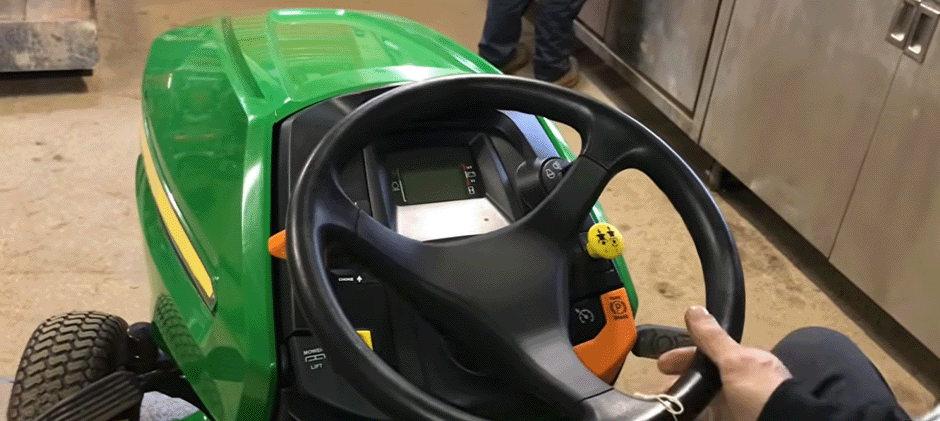
John Deere X350 Specs at a Glance
Both X350 versions share the same engine, transmission, and chassis. Cutting width, deck construction, and deck-mounted wear parts are where they diverge — and we’ll cover those in the next section. Here are the platform-level numbers that apply to both versions.
| Spec | Value |
|---|---|
| Engine | Kawasaki FR651V |
| Horsepower | 21.5 hp |
| Displacement | 726 cc |
| Transmission | K46 Hydrostatic |
| Fuel capacity | 3.3 gal |
| Top speed | 5.5 mph |
| Towing capacity | 600 lb |
| Cutting height | 1–4 in, 13 positions |
Deck configuration is where the two X350 versions actually diverge — cutting width, shell construction, blade count, and deck-specific wear parts. We break those down further below.
Engine and Drivetrain Specs
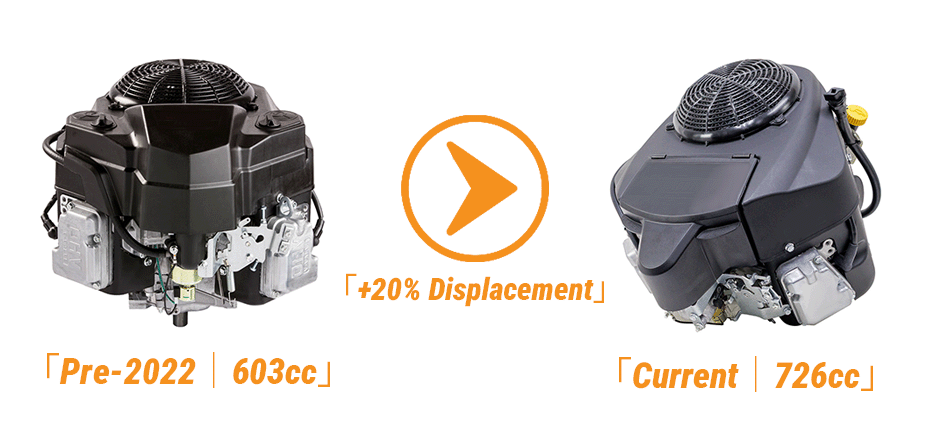
Under the hood, the current X350 runs the Kawasaki FR651V — an air-cooled V-twin with cast-iron cylinder liners and full-pressure lubrication. Full pressure means the oil pump forces lube through internal galleries rather than relying on splash, a setup common in commercial-grade engines. Paired with 726 cc of displacement, it delivers steady torque during long mowing sessions without the harshness of single-cylinder units.
If you’re shopping the used market, engine identification matters. Earlier X350 configurations are commonly associated with the Kawasaki FS541V at 603 cc, while many current listings show the FR651V at 726 cc — a larger displacement at the same 21.5 hp rating. Specifications can vary by model year and market, so it’s worth confirming the engine tag before ordering tune-up parts. The bigger engine typically offers:
- Better torque under load in tall grass
- More relaxed operation in demanding mowing conditions
- Less strain climbing slopes with a full deck
Two X350 units may look identical from the outside, but pull very differently in thick turf. Pop the hood and read the engine tag before buying used.
Transmission and Shared Service Parts
Power reaches the wheels through a Tuff Torq K46 hydrostatic transaxle. Twin Touch foot pedals control speed and direction, so no shifting is needed — push forward to go, push back to reverse. The K46 is a proven factory-sealed residential transaxle. To protect its lifespan, avoid towing beyond the rated 600-pound capacity and skip long stretches on steep slopes.
Because the engine and drivetrain are identical across the 42-inch and 48-inch versions, tune-up items are shared. A fresh air filter restores airflow when hard starting or power loss occurs, and new spark plugs resolve most rough-running complaints on air-cooled V-twins. The PTO clutch, oil filter, fuel filter, and drive belt are also common across both deck sizes. Just note that owners running an earlier FS541V engine should confirm the engine model before ordering tune-up parts, since the two generations don’t always use identical filters or ignition components. In practical terms, engine-side service parts are often shared across both deck sizes, while deck-mounted wear parts must be matched to the exact 42-inch or 48A deck configuration.
42-Inch vs 48-Inch: What’s Different?
Both decks share the same core features. They cut from 1 to 4 inches across 13 positions, ship with side discharge as standard, and accept optional mulch kits and rear baggers. Common features include:
- A wash port for rinsing clippings without going under the machine
- Exact Adjust ports for blade leveling from the top of the deck
- Belts routed through the electric PTO
Where the two diverge is in construction. The 42-inch version uses a stamped steel deck sized for tighter yards and easier storage. The 48A Accel Deep deck on the 48-inch version is made from heavier 10-gauge (0.135-inch) steel with a deeper shell profile, designed for larger properties and heavier mowing conditions.
Here’s a side-by-side look at the key differences:
| Feature | 42″ Deck | 48″ Deck |
|---|---|---|
| Deck model | Stamped steel deck | 48A Accel Deep |
| Steel construction | Stamped steel | 10-gauge (0.135 in) steel |
| Cutting width | 42 in | 48 in |
| Number of blades | 2 blades | 3 blades |
| Approx. deck width (with discharge) | ~47 in | ~55 in |
| Cutting height range | 1–4 in, 13 positions | 1–4 in, 13 positions |
| Best for | Yards under 1.5 acres | Yards 1.5–3 acres |
| Deck-specific parts | 42-in blades, belts, spindles | 48A blades, belts, spindles |
Two details worth flagging before ordering online: the 48A version uses three blades instead of two, so replacement blade sets differ in quantity; and the wider overall deck footprint (~55 in) can be tight through 4-foot side gates, while the 42-inch version fits most residential gates comfortably.
Deck Parts That Change Between the 42-Inch and 48-Inch Decks
That construction difference carries through to the wear parts. Anything bolted to the deck itself is version-specific and must match your deck size exactly:
- Mower blades — length, mounting hole pattern, and lift can vary
- Deck belts — 42-inch and 48-inch decks route belts differently
- Spindle assemblies — housing dimensions and shaft length may differ
- Idler pulleys and tensioners — matched to specific belt configurations
- Gauge wheels and rollers — position and mounting differ
- Mulch kit components — designed for each deck’s airflow pattern
When ordering mower blades and deck belts, the deck tag matters more than the tractor badge. Mixing 42-inch and 48-inch parts is one of the most common ordering mistakes owners make online.
A quick photo of both the engine tag and the deck tag before ordering can save you costly returns.
Which Deck Fits You?
Most buyers assume the 48-inch just adds six inches of cutting width. It doesn’t — it’s a heavier, more capable deck built for larger jobs. Here’s a quick decision guide.
| Your Situation | Best Fit |
|---|---|
| Yard under 1.5 acres | 42-inch |
| Narrow gates or tight fence lines | 42-inch |
| Compact storage space | 42-inch |
| Yard between 1.5 and 3 acres | 48-inch |
| Dense grass or frequent stick strikes | 48-inch |
| Frequent attachment swaps (snow blower, blade) | 48-inch |
| Mowing time over one hour per week | 48-inch |
As a rule of thumb, anyone mowing more than an hour a week tends to get better long-term value from the 48-inch version. Faster cuts, fewer passes, and a heavier deck that holds up better to seasonal wear. If your yard does not truly need the extra width, the 42-inch deck can also be the simpler and lower-cost setup to maintain over time.
Once you’ve picked a version, keep the four key identifiers handy for any future parts orders: the tractor model, the engine tag (FS541V or FR651V), the deck tag (42-in or 48A), and the serial number or model year. Getting these right the first time keeps replacement parts from fitting the first try.
Conclusion
The John Deere X350 specs make the choice fairly straightforward: pick the deck size that fits your property, then verify the engine tag and deck tag before ordering replacement parts. Engine-side service items are often shared across both versions, but deck-side wear parts must match the exact 42-inch or 48A configuration. For owners buying maintenance and deck wear parts online, FridayParts is one aftermarket source worth checking once those details are confirmed.
