

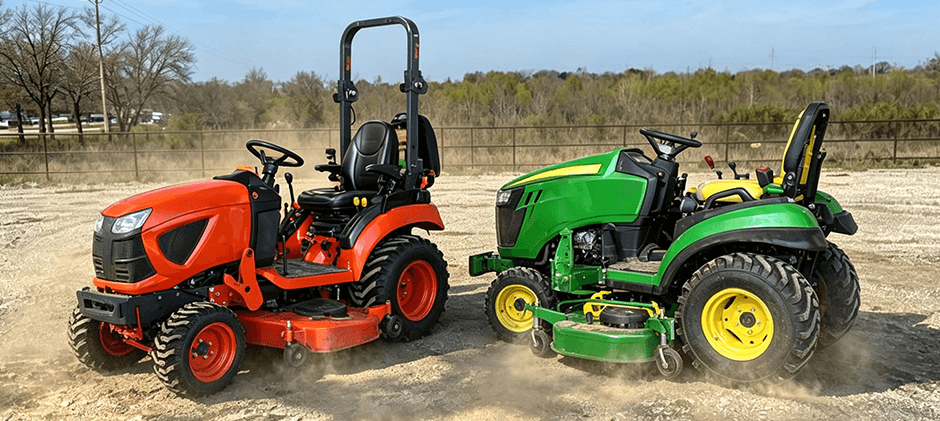
Buying a compact tractor is a big investment. Most landowners end up choosing between two brands: Kubota vs John Deere compact tractors. The right pick depends on your needs, budget, and long‑term plans. This guide skips the hype and breaks down the key points you should know before you buy.
Dealer Support vs. Aftermarket Parts Availability
One of the most common pieces of advice you’ll hear is to “buy the dealer, not the tractor.” There is a lot of wisdom in this. For warranty claims, complex diagnostics, and immediate access to specialized OEM parts, a responsive and knowledgeable local dealer is invaluable. A bad dealer experience can sour your entire ownership of an otherwise excellent machine.
However, the dealer is only part of the long-term ownership equation. For routine maintenance like oil, filters, and hydraulic fluid, or for common out-of-warranty repairs, you are not tied to the dealer. A vast ecosystem of high-quality aftermarket parts is available online, often at a fraction of the price of OEM parts. This is where savvy owners can save a significant amount of money over the life of their tractor.
The Takeaway: A great dealer is crucial for the first few years and for major issues. But for the long haul, having access to affordable aftermarket parts for both Kubota and John Deere levels the playing field, giving you control over your maintenance costs.
Attachment Compatibility: John Deere (JDQA) vs. Kubota (SSQA)
This is arguably one of the most significant long-term differences between the two brands. How you attach implements to your front-end loader can dramatically impact your costs and flexibility.
- Kubota: Skid Steer Quick Attach (SSQA): Most Kubota compact tractors use the common SSQA quick‑attach system. This universal fitting works with tons of aftermarket attachments from different brands. You can buy a new grapple, rent a post‑hole digger for the weekend, or even borrow pallet forks from your neighbor — SSQA plays well with all of them.
- John Deere: John Deere Quick Attach (JDQA): John Deere uses its own proprietary quick-attach system. While it works very well, it is designed to lock you into their ecosystem. This means you are largely limited to buying or using more expensive John Deere-branded attachments. While adapters are available to convert a JDQA to SSQA, they add cost, complexity, and can reduce your loader’s lift capacity.
If you plan to acquire many different attachments over time or want the flexibility to rent or borrow, Kubota’s universal SSQA system is a clear advantage.
DIY Maintenance & Repair Friendliness
For owners who prefer to handle their own maintenance, both brands design their subcompact and compact tractors with accessibility in mind. Oil filters, fuel filters, air filters, and fluid dipsticks are generally easy to reach without removing major components. Both are known for their reliability, but when things do go wrong, the complexity of the repair can differ.
Kubota is known for simple mechanical builds, especially on its base and budget‑friendly models. These are tough, no‑fuss work machines with less electronics, so DIY repairs feel much more manageable.
John Deere’s higher‑end R‑series tractors come with more advanced features and electronics. Tools such as the AutoConnect™ mower deck are really convenient, but they also make troubleshooting and fixing things more complicated.
Long-Term Ownership: Out-of-Warranty Parts & Resale Value
Your real total cost isn’t just what you pay upfront. Two big things to think about are resale value and how much parts cost once the warranty runs out.
Resale Value: John Deere tractors have long held top resale value. A well‑kept John Deere keeps its worth really well. If you plan to sell or trade it later, this can cut your overall costs. Kubota also has good resale value, but John Deere usually comes out ahead.
Out‑of‑Warranty Parts: After your warranty ends, replacement parts become a major consideration. OEM parts from both brands can be expensive. Luckily, there is a large aftermarket for both Kubota and John Deere compact tractors. You can get dependable aftermarket parts for starters, alternators, hydraulic filters, engine parts and more for far less than dealer prices, so owning the machine long‑term won’t break the bank.
Stability & Safety: Rollover Risk & Essential Add-ons
Safety is something you cannot skip. Compact and sub‑compact tractors aren’t super stable by default, especially when running a front‑end loader or working on bumpy ground. They have a narrow track and high center of gravity, so they can tip over easily. Tractor rollovers are the top cause of fatal tractor accidents.
Both brands are safe if you use them properly, but physics still applies. No matter which tractor you own, add these upgrades for much better stability and safety:
- Wheel Spacers: Fit spacers to push your rear wheels further apart. This is one of the best ways to stop tipping side‑to‑side when working on slopes.
- Tire Ballast: Fill your rear tires with liquid such as beet juice or windshield washer fluid. This lowers the tractor’s center of gravity, adds weight, and improves grip and stability.
- Counterweight: Whenever you use the front‑end loader, you have to attach a heavy tool on the rear for balance. Use a box blade, rotary cutter, or purpose‑built ballast box to operate safely.
Operator Experience: Treadle Pedal vs. Two-Pedal HST
How you make the tractor go forward and reverse is a point of major debate and comes down entirely to personal preference. You must test drive both systems before deciding.
- Kubota’s Treadle Pedal: This is a single, large pedal that you rock with your foot. You press down with your toe to go forward and press down with your heel to go in reverse. Some operators love that their foot is always on one pedal and find it intuitive. Others find the heel-toe motion tiring over long hours and less precise for delicate back-and-forth loader work.
- John Deere’s Twin Pedals: John Deere uses a side-by-side two-pedal system. There is one pedal for forward and a separate pedal for reverse. Many users find this layout more ergonomic and intuitive, similar to the gas pedal in a car. The primary criticism is the potential to hit the wrong pedal by mistake in a panic situation.
Quote: “I was pretty much set on the Kubota until I test-drove and hated the treadle pedal… Sid” Side-by-sideals worked and seem so much more intuitive to me.” – Forum User
Final Verdict
There’s no clear‑cut winner when comparing Kubota and John Deere compact tractors. The right pick all comes down to what matters most to you.
- Kubota: You want the flexible SSQA quick‑attach for lots of different attachments, like a simple, tough work‑focused machine, and you don’t mind the treadle pedal.
- John Deere: You want nice comfort features, top‑notch resale value, and prefer the twin‑pedal HST system.
Your local dealer’s service quality and how the tractor feels when you sit in the driver’s seat should weigh heavily on your final call. Either brand will get the job done well. Also, keep in mind you have plenty of part options to keep your tractor running long‑term. FridayParts offers quality aftermarket parts, with huge stock for both Kubota and John Deere. You can grab affordable replacement parts to keep your tractor working hard for many years.
