

The difference between a lawn tractor vs garden tractor starts to matter when a machine is asked to pull more than a cart. Lawn tractors are typically fine for mowing and lighter towing jobs. Garden tractors are usually the better fit for driveway touch-ups, sleeve hitch attachments, and heavier seasonal work. Even when two machines look close from the operator’s seat, the frame, rear end, and transmission setup can put them in very different categories once real load is involved. The details below break down what separates them and what to check before putting either one to work.
What Separates A Lawn Tractor From A Garden Tractor?
The simplest way to look at lawn tractor vs garden tractor is job type.
- Lawn tractor
- Mainly for mowing
- Can usually pull carts, spreaders, dethatchers, and other light tools
- Better for lighter yard work
- Garden tractor
- Can mow, but also handle heavier seasonal jobs
- Better suited for plowing, tilling, grading, and snow work with the right setup
- Usually has a stronger drivetrain and chassis parts
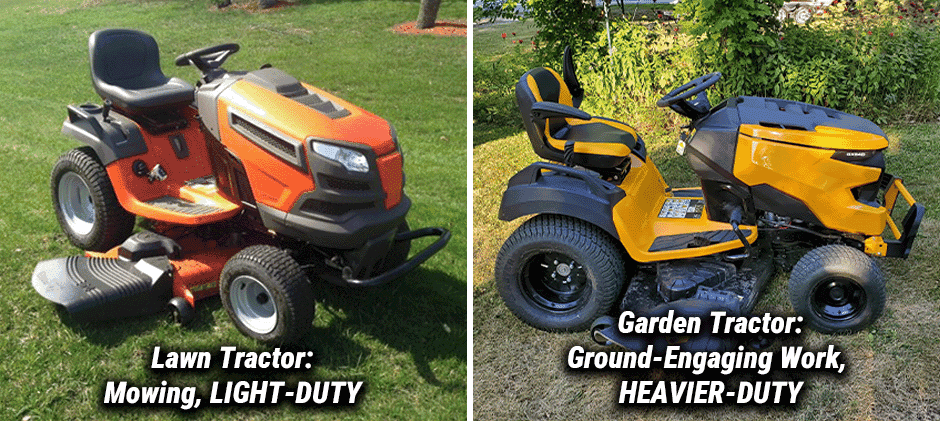
That basic split shows up in real use. A lawn tractor is mostly a mower with towing ability. A garden tractor is a small tractor that also happens to mow.
In practical terms, lawn tractors are built for mowing and lighter yard work, while garden tractors are better suited to heavier multi-season tasks, with more attachment options and more strength where it counts.
Quick Comparison Table
| Feature | Lawn Tractor | Garden Tractor |
|---|---|---|
| Main job | Mowing | Mowing plus heavier work |
| Typical power range | About 15 to 25 HP | About 20 to 30 HP |
| Frame and running gear | Lighter duty | Heavier duty |
| Attachment range | Limited | Wider range |
| Ground-engaging tools | Usually not ideal | Usually the better fit |
| Cost | Lower | Higher |
For driveway touch-up, pulling a sleeve hitch box scraper, or moving loose material, the difference matters more than the hood decal.
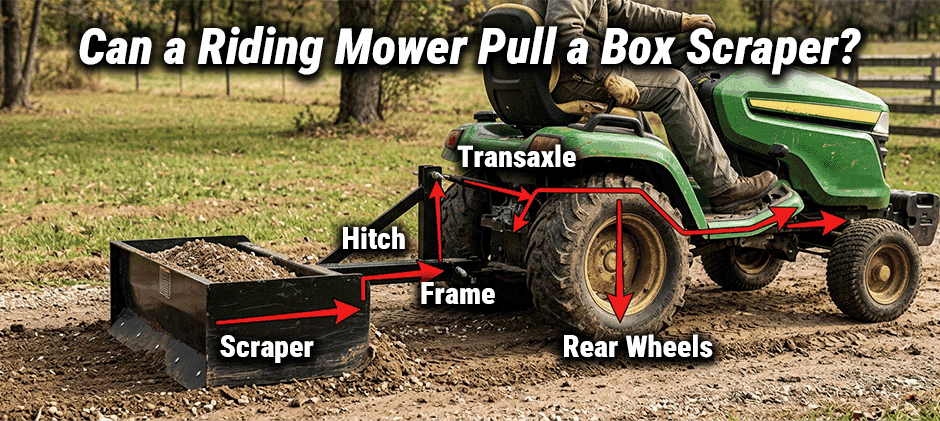
Can Your Riding Mower Pull A Box Scraper Safely?
This is where lawn tractor vs garden tractor stops being theory and becomes a repair bill.
A small sleeve hitch scraper can be handy for quick washout repair, smoothing loose gravel, and knocking down shallow ruts after rain. It is not the same as using a full-size tractor box blade, but for short maintenance jobs it can save a lot of time. The problem is that not every riding mower should do that kind of work.
Good Signs
Look for these signs before using a box scraper or other ground-engaging attachments:
- Heavy-duty transaxle
- Strong rear axle setup
- Thicker frame rails
- Attachment support for sleeve hitch or integral hitch
- Rear wheels mounted with lug hardware rather than the lightest spline-style setup
- Locking differential on models that offer it
- History of use with plows, tillers, rear blades, or snow equipment
One of the clearest separators is the transaxle. Machines built for heavier attachment work usually have a stronger transmission and heavier frame, which is why they are more likely to handle tools like blades, tillers, and small scrapers without constant strain.
Warning Signs
Stop and reassess if the machine has:
- A light-duty mowing-only build
- Known weak rear frame sections
- Loose torque brackets around the transaxle
- No support for liftable rear implements
- A history of belt, axle, or frame problems under towing load
A lawn tractor may still pull a small cart just fine. That does not mean it should grade a driveway. Pulling a cart full of leaves is very different from dragging a blade that bites into packed gravel.
This is also where the right lawn tractor parts matter. If the machine already shows wear, items such as transaxle brackets, steering parts, and wheel hub components deserve a close look before adding load.
Why Garden Tractors Hold Up Better Under Attachment Work?
In real use, the garden tractor vs lawn tractor difference comes down to how force moves through the machine.
When a scraper or plow bites into the ground, stress does not stay at the hitch. It moves into:
- The hitch mount
- The frame rails
- The rear axle and wheel hubs
- The transaxle case and brackets
- The tires and traction system
A garden tractor is more likely to survive that chain of load because the machine is heavier and the parts are meant for more than mowing. A few practical signs usually stand out:
- Heavier frame
- Larger tires and wheels
- Stronger spindles and axles
- More capable hydrostatic or geared transaxle
- Better support for plows, tillers, blades, or snow tools
The ability to run ground-engaging attachments is often the cleanest dividing line. It cuts past marketing names and focuses on the real job.
Still, labels can be messy. Some models are sold as garden tractors but use lighter-duty hardware than expected. Others sit in the middle and do more than their name suggests. That is why brand wording alone is not enough. It helps to inspect the running gear and attachment system directly.
If the machine is already in service and you want to keep it working, a stock of useful garden tractor parts like drive belts, rear axle parts, and front spindle assemblies can prevent downtime when the work season starts.
Husqvarna GT vs LT: Why Frames Crack Under the Seat?
The Husqvarna GT vs LT question comes up often because many of these machines look close at first glance, yet they do not all carry load the same way.
One practical concern is rear frame cracking, especially around the seat area and around heavily stressed bracket points. The issue is not just about the badge on the hood. It is about localized weak spots, hole placement in the frame, and repeated shock loads from towing or grading.
Common Trouble Areas
Pay close attention to:
- Frame metal around the seat base
- Areas with several holes close together
- Front transaxle torque brackets
- Rear hitch mounting points
- Welds and bends near the rear frame
Smart Prevention Steps
- Inspect the frame often if the machine pulls any hitch-mounted tool
- Recheck torque bracket hardware regularly
- Avoid shock loading from sudden starts
- Reduce scraper depth on packed material
- Add ballast carefully and only within what the chassis can handle
- Consider a bolt-on frame reinforcement kit if one is available for the exact model
This does not mean every Husqvarna garden tractor will fail. It means load-carrying work should be treated seriously. A machine that is fine for mowing can still suffer from grading loads if the frame or brackets are the weak link.
That is also why attachment advice should always start with machine class first, attachment second.
How To Choose The Right Machine For Driveway And Yard Work?
For many properties, the decision is not just lawn tractor vs garden tractor. It is also whether stepping up again to a small compact tractor makes more sense. A sub-compact or compact tractor sits in a different class entirely, with loader lift capacity, heavier frames, and transmissions aimed at real equipment work. That matters because some jobs push past what even a solid garden tractor should do every week.
Choose A Lawn Tractor If
- Main task is mowing
- Tow-behind tools are light
- Terrain is fairly easy
- No sleeve hitch or box scraper work is planned
Choose A Garden Tractor If
- The machine will mow and also grade, plow, or till
- A sleeve hitch or rear blade is part of the plan
- Gravel driveway maintenance is a regular task
- Better traction and stronger drivetrain matter
Consider A Small Compact Tractor If
- Washouts are deep and frequent
- The driveway is long
- Box scraping is a routine chore
- Loader work is also needed
- Ground-engaging work goes beyond light touch-up
Practical Fit Guide
| Property need | Best fit |
|---|---|
| Mostly mowing, light towing | Lawn tractor |
| Mowing plus sleeve hitch tools | Garden tractor |
| Repeated grading, heavier blade work, loader tasks | Small compact tractor |
A garden tractor can be a very useful middle ground. It handles quick driveway repair, light grading, and seasonal attachment work without the size and transport hassle of a larger tractor. That is exactly why sleeve hitch tools remain popular.
Final Words
For real driveway maintenance and sleeve hitch work, the useful lawn tractor vs garden tractor test is simple: look past the shape and ask what the machine can pull without hurting its frame, transaxle, or axle setup. A true garden tractor is usually the safer match for that kind of load. When service time comes, FridayParts is a solid source for affordable aftermarket parts, broad compatibility, and a large inventory for many equipment brands.
