

Are you stuck choosing between Ryobi vs DeWalt for your next power tool purchase? These brands are built for different people. Ryobi is for homeowners looking to save money, while DeWalt is made for tough‑duty pro work. In this guide, we’ll go over real costs, power output, and battery setups for both brands. That way, you can get exactly what you need and not waste cash. Keep reading to find which one works best for you.
What Is the Main Difference Between Ryobi and DeWalt?
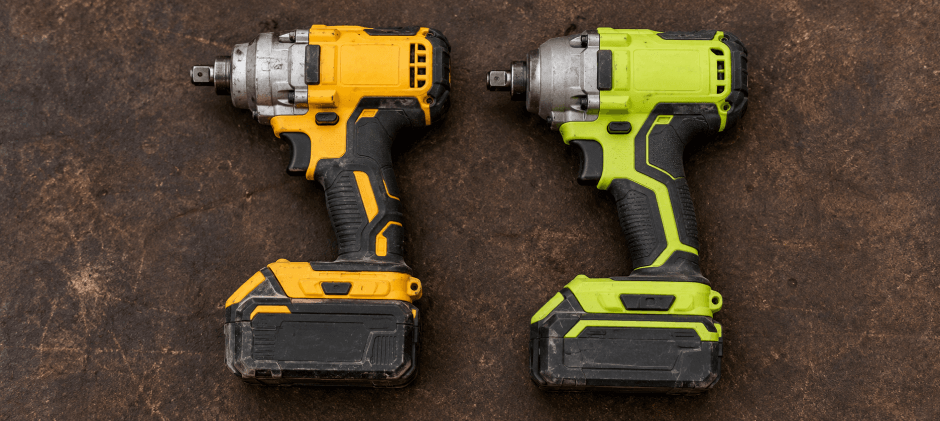
The two brands use different materials, different motor designs, and different pricing models. Knowing this basic split helps you see why a green drill costs less than a yellow drill. Let us look closer at the specific areas where these two popular cordless power tools differ.
Price and Value
Price is usually the first thing people check when buying tools.
- Ryobi is well‑known for being really cheap. You can grab a Ryobi drill, driver, two batteries, plus a charger for about what you’d pay for just one bare DeWalt tool. That makes Ryobi a great pick if you only do a few household fixes every month.
- DeWalt costs more since it’s built with thicker metal and better internal components. Yes, you spend more up front, but it pays off long‑term. If you run your tool eight hours every day, DeWalt will almost certainly last longer than a cheaper option. On the flip side, if you’re just hanging shelves or putting together a little birdhouse, splashing extra cash on DeWalt won’t get you much benefit. Always think about your actual budget before you decide.
Performance and Power
- DeWalt generally offers more torque, higher speeds, and better sustained power under heavy loads. When you push a large drill bit through thick, wet wood, a DeWalt drill will keep its speed and push right through. The motors are highly efficient, especially in their brushless models.
- Ryobi tools pack enough power for regular jobs. Driving screws, cutting thin wood, sanding doors — these are no problem for Ryobi. But if you’re slicing thick hardwood or drilling big holes in concrete, your Ryobi may start slowing down or bogging down. You’ll really see the performance difference once you push these tools hard to their max. You won’t tell them apart on light‑duty work. When it comes to tough jobs, DeWalt is the clear winner.
Battery Systems
- Ryobi uses a very unique stem-style battery. The best part about the Ryobi 18V ONE+ system is that the battery shape has not changed in over twenty years. You can take a brand new Ryobi battery and plug it into a blue Ryobi drill from the early 2000s. This backward compatibility is a massive win for loyal customers.
- DeWalt uses a slide-style 20V MAX battery. These batteries are very secure and slide onto the base of the tool smoothly. DeWalt also offers advanced battery options like the FlexVolt system, which changes voltage depending on the tool you connect it to. This gives you incredible power for large tools like table saws. Both brands offer great battery life, but they connect to the tools in very different ways.
Durability and Quality
Durability is where the professional grade really shows. DeWalt tools use thick glass-filled nylon bodies, heavy rubber bumpers, and metal gear housings. If a tool falls off a ladder and hits a concrete floor, a DeWalt tool has a very high chance of surviving with just a scratch. They handle dust, water drops, and extreme heat very well.
Ryobi tools use standard plastics and lighter metals. They feel fine in the hand, but they do not handle abuse well. If you drop a Ryobi drill from a roof, it might crack or break completely.
“For weekend repairs, a green tool does the job perfectly, but if you drop a tool from a roof every day, you want the yellow one.”
Which Brand Has a Wider Range of Tools?
When you buy a battery, you want to know what else you can run with it. Ryobi has one of the largest tool lineups in the world. They offer over 300 tools on their 18V battery line. You can power a drill, a lawnmower, a hot glue gun, a fan, and even a bug zapper with the exact same battery. This massive variety makes Ryobi incredibly fun and useful for homeowners who want one battery for everything.
DeWalt also has a huge lineup, but it stays strictly focused on construction and mechanical work. You will find endless variations of saws, grinders, nailers, and impact wrenches. They do offer some lawn care tools, but you will not find craft tools like glue guns or small hobby tools. If you want variety for home life, Ryobi wins. If you want variety for a job site, DeWalt takes the prize.
Can You Use Ryobi and DeWalt Batteries Interchangeably?
A very common question is whether you can mix and match these systems. Out of the box, the answer is no. A Ryobi battery will never fit into a DeWalt tool, and a DeWalt battery will never fit into a Ryobi tool. The shapes, connection points, and communication chips are completely different.
However, third-party companies sell battery adapters online. These small plastic blocks let you click a DeWalt battery into a Ryobi tool. While this sounds great, we must warn you to be careful. Using adapters can sometimes bypass the safety chips inside the batteries. This might cause the battery to drain too low and stop taking a charge forever. If you decide to use an adapter, always remove the battery when you finish working.
Ryobi vs DeWalt: Which One Fits Your Needs?
Choosing between Ryobi and DeWalt really depends on how you actually use your tools. Everyone wants the strongest, fastest tools out there, but shelling out for power you’ll never end up using is just throwing money away. Let’s go over the two main types of users.
Ryobi — Great for DIY & Home Use
Ryobi works really well for DIY jobs and around‑the‑house maintenance. If your weekend plans are hanging curtains, tightening up a wobbly deck board, or putting together a small garden box, Ryobi can knock all that out no problem. Since they don’t cost much, you can pick up more tools for your money. Instead of dropping $200 on just one drill, that same $200 gets you a drill, circular saw and sander. For most regular folks, having a bigger set of tools beats owning one super‑powerful tool you barely need.
DeWalt — Better for Pros
DeWalt is the obvious pick for professional work. When your paycheck depends on your tools holding up day in and day out, reliability matters most. DeWalt gives you the speed and durability you need for house framing, auto repairs, and tough plumbing jobs. That higher price is worth it, because your tool won’t die midway through a paying job.
Now, if you need to keep all your equipment running smoothly on the jobsite — and that includes bigger machines too — we’re an aftermarket parts supplier. We stock good‑quality replacement parts at fair prices. Our huge inventory fits lots of heavy‑equipment brands, so you can get repairs done quickly and get right back to work. Picking the right replacement parts keeps your projects on track, just like picking the right power tool.
Summary
Ryobi delivers great value with a highly‑consistent, backwards‑compatible battery system. DeWalt is the go‑to pick for professional‑grade jobs. Take your budget and real‑world work needs into account, and choose the brand that works best for you. Once you’ve got your power tools, use FridayParts to make them last longer. We carry quality aftermarket replacement parts for power tools for easy, hassle‑free repairs.
