

When comparing scissor lift sizes, the job is the best place to start. The required working height sets the range, and the machine dimensions and platform capacity narrow it down from there. A 19 ft model reaches about 25 ft working height. A 32 ft model reaches about 38 ft. Access restrictions and surface conditions usually decide which size makes sense. A full selection chart covering 6 common use cases is included at the end of this article.
The Main Specs That Define Scissor Lift Sizes
In real job conditions, scissor lift sizes are shaped by more than platform height. Width, overall length, stowed height, and rated platform capacity can all affect daily use. A machine may have enough vertical reach and still turn out to be inefficient or unsuitable because of access limits, transport limits, or load demands.
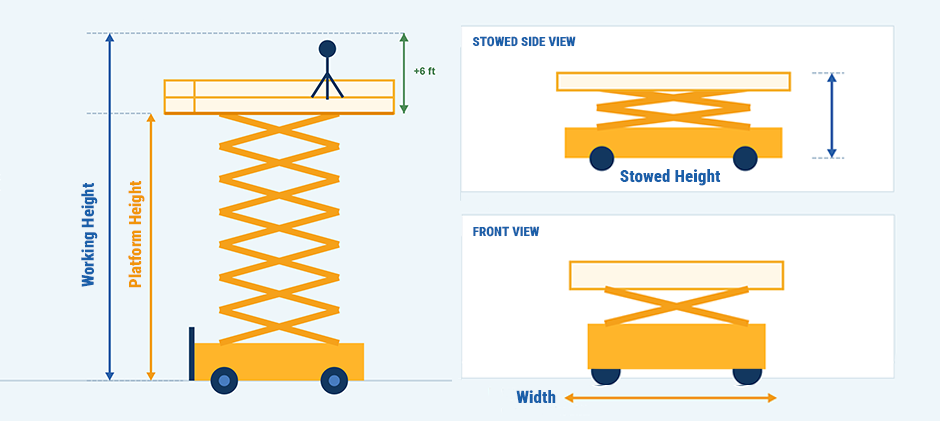
Key Height Definitions
Here’s what each one actually means:
| Term | What it means | Quick example |
|---|---|---|
| Platform height | Height of the floor of the platform | 19 ft |
| Working height | Platform height plus about 6 ft | 25 ft |
| Stowed height | Height when the lift is lowered | Important for doors |
| Machine width | Overall chassis width | Important for aisles and gates |
The 6 ft rule is widely used across lift spec sheets. A 19 ft scissor lift is commonly rated for about 25 ft of working height. A 26 ft model often gives about 32 ft of working height. A 32 ft model usually gives about 38 ft. This is the first sizing check, and it rules out many wrong choices before cost or brand even comes into the discussion.
Common Size Bands
Common scissor lift sizes usually fall into these ranges:
- 10 ft to 14 ft for low indoor access
- 19 ft for general maintenance and narrow access
- 26 ft for common shop, warehouse, and light exterior work
- 32 ft to 40 ft for larger buildings and service tasks
- 45 ft to 53 ft for higher outdoor work
- 60 ft to 70 ft for specialized high-reach jobs
Electric slab lifts are most common in the 19 ft to 40 ft range. Rough-terrain diesel lifts often start around 26 ft and extend to 70 ft. Slab models suit firm, level surfaces. Rough-terrain models suit outdoor areas where traction, gradeability, and deck space matter more.
That leads to the next point. Height alone does not determine the right lift.
How to Match Lift Size to Job Requirements
The best way to choose among scissor lift sizes is to start with the task, then narrow the choice by access space and load.
Height First, But Use Real Reach
A job that needs 25 ft of reach usually needs a 19 ft platform height. A job at 38 ft usually needs a 32 ft unit. The model number is useful, but the actual work point matters more than the label.
Use this quick guide:
| Job height needed | Typical platform height | Typical lift class |
|---|---|---|
| Up to 18 ft | 10 ft to 12 ft | Compact electric |
| Up to 25 ft | 19 ft | Narrow electric |
| Up to 32 ft | 26 ft | Electric or RT |
| Up to 38 ft | 32 ft | Mid-size electric or RT |
| Up to 46 ft | 40 ft | Larger electric or RT |
| Up to 59 ft | 53 ft | Rough terrain |
| Up to 76 ft | 70 ft | High-reach rough terrain |
This is also where the right hydraulic lift parts and scissor lift control parts support steady performance, especially when the lift moves between indoor floors and outdoor service areas.
Width And Length Are Often The Real Limit
A lift can have enough height and still fail the job if it cannot pass the access route.
A few published machine specs show how much widths can vary:
- Genie GS-1932 width is 32 in
- JLG 1930ES width is 30 in
- Skyjack 3219E width is 32 in
- Genie GS-2669 RT width is 69 in
- JLG RT5393 width is 92 in
- Skyjack SJ9664 RT width is 96 in
That gap matters. A narrow electric lift may fit through standard indoor paths. A wide rough-terrain lift may need a larger gate, open yard access, or a wide shop door.
Check these points before choosing:
- Narrowest gate or aisle
- Door height and stowed height
- Turning space
- Trailer deck space
- Storage space after the job
Some standard lifts also use folding rails to reduce vertical clearance for doorways. A 19 ft electric narrow unit can be listed at about 84 in high with rails up and about 79.6 in with rails down, which shows how close some access limits can be.
Capacity Changes Productivity
Another key part of scissor lift sizes is platform capacity. Small electric lifts often carry 500 lb to 800 lb. Larger rough-terrain models often carry 1,000 lb to 2,500 lb. Some high-capacity units go even further. For example, the Snorkel S9031RT-HC is listed at 4,000 lb capacity, while the Skyjack SJ9233 RT is listed at 2,750 lb.
Use total live load, not body weight alone:
- Operator weight
- Second worker, if allowed
- Tools
- Materials
- Cords, pipe, duct, fittings, and parts
For routine service work, dependable platform lift parts and aerial equipment parts — including options for JLG and Skyjack models — also help keep rated lift functions working as intended on older machines.
How Lift Type and Terrain Affect Size Choice
The same platform height can exist in very different machine types. That is why scissor lift sizes should always be checked with the terrain and power source.
Electric Slab Lifts
Electric slab lifts are the standard choice for indoor work.
Typical features include:
- Zero emissions at the point of use
- Lower noise
- Narrow chassis options
- Non-marking tires
- Good fit for firm, level surfaces
These lifts are a strong match for:
- Warehouses
- Shops
- Schools
- Hospitals
- Interior electrical work
- Smooth concrete yards
Rough Terrain Lifts
Rough-terrain lifts are made for uneven outdoor sites. Common features include:
- 4-wheel drive
- Lugged tires
- Higher capacities
- Larger decks
- Wider chassis
- Better traction on gravel, mud, and debris
Scissor Lift Tire is a key factor in how the lift performs on site. Still, rough terrain does not mean every surface is suitable. Soft ground, deep ruts, side slope, and wind can still limit safe use. That is why site conditions should be checked before focusing on extra height.
Diesel, Hybrid, and Specialty Types
Diesel power is common in rough-terrain classes because it supports longer outdoor shifts. Hybrid and electric rough-terrain options are also available. Pneumatic and hydraulic lifts are more specialized. Pneumatic units are often compact and used on clean, even floors. Hydraulic units can support heavy industrial lifting demands.
If the machine works long hours outdoors, quality lift cylinder parts can help support reliable movement and reduce avoidable downtime.
Scissor Lift Size Chart for Faster Selection
This part brings the main sizing factors together. Instead of picking by height only, match the lift to the job, access route, and load.
Quick Selection Table
| Use case | Recommended platform height | Common width range | Capacity range | Best type |
|---|---|---|---|---|
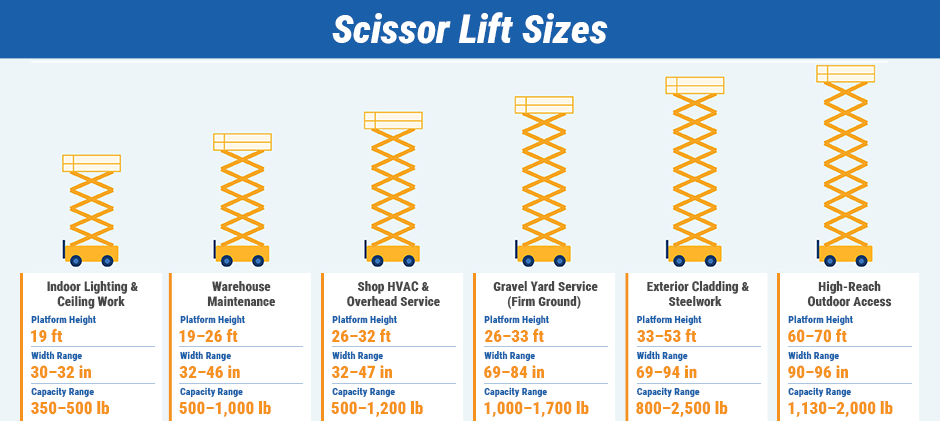
| Indoor lights, ceiling work | 19 ft | 30 in to 32 in | 350 lb to 500 lb | Electric slab |
| Warehouse maintenance | 19 ft to 26 ft | 32 in to 46 in | 500 lb to 1,000 lb | Electric slab |
| Shop HVAC and overhead service | 26 ft to 32 ft | 32 in to 47 in | 500 lb to 1,200 lb | Electric slab |
| Gravel yard service on firm ground | 26 ft to 33 ft | 69 in to 84 in | 1,000 lb to 1,700 lb | Rough terrain |
| Exterior cladding and steelwork | 33 ft to 53 ft | 69 in to 94 in | 800 lb to 2,500 lb | Rough terrain |
| Very high outdoor access | 60 ft to 70 ft | 90 in to 96 in | 1,130 lb to 2,000 lb | Rough terrain |
Practical Checks Before Renting Or Buying
Use this checklist:
- Measure the required working height
- Confirm platform height from the spec sheet
- Add the total load with tools and materials
- Check chassis width against the access path
- Check stowed height against doors and roofs
- Check machine weight against trailer and floor limits
- Match tire type to the surface
- Confirm indoor or outdoor power choice
- Confirm gradeability and travel rules when stowed
Published 19 ft electric narrow models usually weigh about 2,600 lb to 3,236 lb, with widths of 30 in to 32.5 in and capacities around 500 lb. Larger rough-terrain units can be over 90 in wide and much heavier, which changes transport and site planning right away.
Common Sizing Mistakes To Avoid
Most wrong choices come from a short list of sizing errors.
Choosing By Maximum Height Alone
A taller lift costs more, weighs more, and may not fit the route. If the work needs 25 ft, a 19 ft class machine is often enough.
Confusing Platform Height With Working Height
This is one of the most common mistakes in scissor lift size research. A 26 ft lift does not usually place the platform at 32 ft. It places working reach near 32 ft.
Ignoring Surface Conditions
Slab lifts work well on smooth concrete. They are not the first choice for loose gravel, muddy yards, or broken ground.
Underestimating The Load
Two workers, tools, pipe, fittings, and materials can exceed a small platform quickly. Capacities vary from about 300 lb on some push-around units to 4,000 lb on high-capacity rough-terrain models.
Forgetting Transport Limits
Machine width, machine weight, and overall length can determine whether the lift fits the fleet. This is also where replacement lift parts planning can support long-term service on existing equipment.
Using A Scissor Lift When Outreach Is Needed
Scissor lifts move straight up. If the task needs horizontal reach over obstacles, a boom lift may be the better choice even when the working height looks close.
Summary
The right scissor lift sizes come down to working height, access width, load capacity, and surface conditions. A careful check of those four points helps avoid costly mistakes. For long-term equipment support, FridayParts offers high-quality aftermarket parts at affordable prices, with a large inventory and wide compatibility across many heavy equipment brands.
