

Trying to decide between a single-stage vs two-stage snow blower? Here’s the big difference: single‑stage models use just one auger to pick up and shoot out snow. Two‑stage ones throw in a powerful fan, so snow flies way farther. This guide will help you pick the right one for your winter snow, yard setup and budget.
Single-Stage vs. Two-Stage Snow Blower: What’s the Difference?
Each machine’s name tells you how many steps it uses to toss snow off the ground.
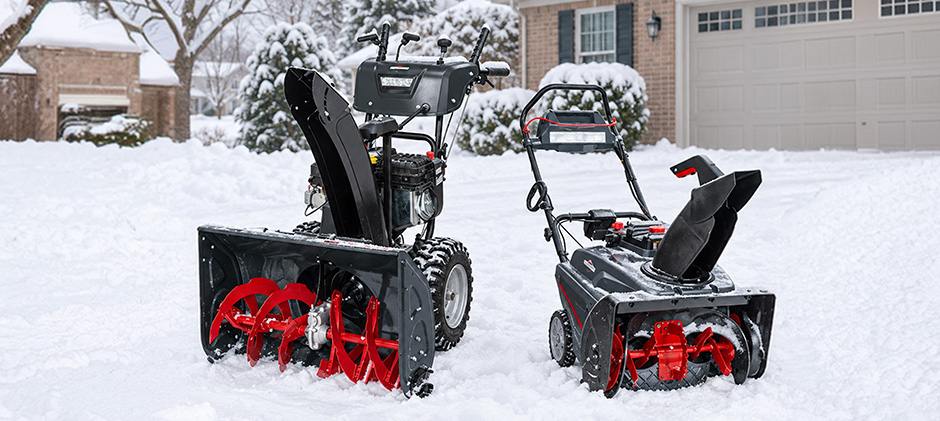
A single‑stage snow blower gets it all done in one smooth move. It has an auger fitted with thick rubber or tough leather paddles. When the engine fires up, the auger spins fast. It scoops snow and flings it straight out the discharge chute. Since those rubber paddles touch the ground directly, the spinning auger helps pull the blower ahead. But its wheels aren’t powered by the engine. You still need to push it some, especially in deep snow.
Now for two‑stage blowers — they work in two separate steps. First, a heavy metal auger breaks up snow and ice, feeding everything toward the middle of the machine. Next, a fast‑spinning fan called an impeller grabs that broken‑up snow and shoots it hard out the chute. Thanks to that strong impeller, two‑stage models can throw snow 50 feet or even farther. These bigger units also come with a real transmission. The engine turns those big, deep‑tread tires, so the blower is fully self‑propelled. Switch between different forward and reverse speeds, and let the machine handle all the hard work.
Which Snow Blower Handles Heavy and Wet Snow Better?
Your local winter weather makes a huge difference when picking between a single‑stage and two‑stage snow blower. Snow isn’t all the same. Light, fluffy, powdery snow is a breeze to clear. Wet, heavy, packed‑down snow is a whole different fight.
If your area usually gets no more than six inches of light snow at once, a single‑stage blower works great. Its fast‑spinning paddles clear that light snow really fast. But don’t run a single‑stage through a foot of thick, wet slush. The engine will bog right down, and soggy snow will plug up the discharge chute in no time. Clearing a clogged chute is annoying and slows you way down.
“When you’re up against heavy, wet snow, single‑stage blowers tend to bog down and clog the chute. The impeller on a two‑stage model plows right through slush without jamming.”
If you get big snowstorms, deep snow drifts, or lots of heavy wet snow where you live, you really need a two‑stage snow blower. Its sharp‑edged metal augers gnaw right through hard‑packed ice and that thick snow ridge the city plow leaves at the end of your driveway. The impeller fan spins super‑fast, which keeps the chute clear the whole time. No more of those frustrating, risky clogs you get on smaller machines.
Single-Stage vs. Two-Stage: Driveway Surface and Maneuverability
Your yard setup and driveway surface matter just as much as your local weather. You’ve got to think about how the blower touches the ground.
Single‑stage blowers are known for giving you that “clean shave.”
- Only for paved driveways: Since the rubber paddles scrape right along the ground, they strip snow all the way down to bare pavement. If you’ve got a smooth concrete or asphalt driveway, you end up with a perfectly clean surface.
- Bad news for gravel: Never run a single‑stage blower over a gravel driveway, dirt trail, or grass. Those rubber paddles will pick up loose stones and shoot them out the chute like flying debris. That can hurt someone or knock up your property.
Two‑stage blowers are built to handle rougher ground:
- Skid shoes: They sit on adjustable metal or plastic plates known as skid shoes. These plates hold the metal auger a little bit off the ground.
- Glides over gravel: That lets the unit glide across bumpy ground. For a gravel driveway, just tweak the skid shoes to lift the auger above the stones. It clears the snow without scooping up rocks.
- Leaves a light snow layer: The downside is it’ll leave behind a thin dusting of snow. You won’t get that spot‑free clean shave on paved surfaces.
For easy handling, single‑stage blowers take the win hands‑down. They’re small and light, pretty much like a small push lawn mower. You can spin them easily into tight corners, and tuck them away in a cramped garage. Two‑stage blowers are bigger, heavier, and bulkier. The self‑propelled wheels make straight‑line driving simple, but turning them in tight spots takes more muscle and extra space.
How Much Do Single-Stage and Two-Stage Snow Blowers Cost?
Budget is always a big factor when you’re picking up new gear for your garage. Thanks to differences in size, build materials and overall design, there’s a pretty noticeable price gap between these two snow blowers.
- Single‑stage price point: These are really budget‑friendly. You can grab a solid gas or battery‑powered model for just a couple hundred bucks. They don’t have tons of moving parts, so fewer things break down later. That keeps your long‑run maintenance costs fairly low.
- Two‑stage price point: They cost way more to build. You’re looking at heavy‑duty metal augers, impellers, big air‑filled tires, plus complicated transmissions. A regular two‑stage snow blower generally starts around $600. Top‑of‑the‑line versions with heated hand grips and electric chute controls can easily run you several thousand dollars.
Which Snow Blower Is Right for Your Driveway?
When it’s time to pick, just go with the blower that works for your real‑life situation. Think about your driveway length, any slopes, and how much physical work you’re okay with putting in.
If you’ve got a short, flat, paved driveway for two or three cars, a single‑stage blower is normally your best bet. It clears the space fast, leaves the pavement completely clean, and doesn’t take up much room inside your shed. It’s also a lot easier to move when you need to haul it somewhere.
Go for a two‑stage blower if your driveway is long, sloped, or not paved at all. Shoving a single‑stage model up a steep grade wears you out, since you have to supply most of the pushing power yourself. A two‑stage drives itself uphill, so you save your strength and spare your back. On top of that, if big storms dump a foot of heavy wet snow overnight fairly often, the two‑stage is the only machine you can count on. It keeps clearing without constantly getting plugged up.
Summary
Picking between a single‑stage and two‑stage snow blower all comes down to your local snow and your property. Single‑stage blowers are light, cheap, and great for light snow on flat paved driveways. Two‑stage models pack more power with self‑propulsion—the go‑to for heavy wet snow, steep slopes, and gravel driveways. Take stock of your winter‑time needs, and you’ll get the right blower to keep your place snow‑free all winter.
No matter which one you pick, routine upkeep keeps it running well. Belts wear, shear pins snap, and skid shoes wear down over time. FridayParts stocks tons of compatible replacement parts for many heavy‑equipment brands, so you can easily get what you need.
