

When choosing between tracks and wheels tractor, we can help you by breaking down the core differences, strengths, and weaknesses. This guide will make your decision a clear and confident one.
What Are Tractor Tracks?
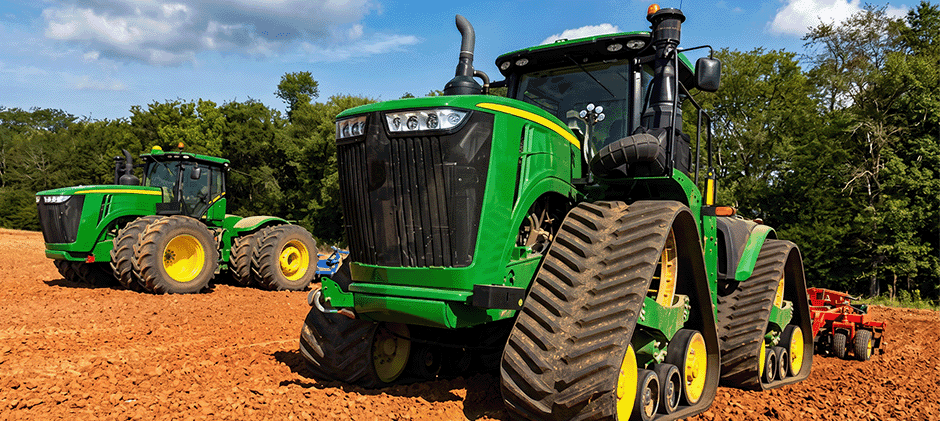
Tractor tracks are made from a continuous rubber loop, usually strengthened with steel cables inside. They wrap around a set of wheels called the undercarriage. This setup makes a big, long patch where the track touches the ground — we call this the footprint.
That large footprint spreads the tractor’s heavy weight across more ground. It’s just like wearing snowshoes instead of regular boots in deep snow. Snowshoes spread your weight so you stay on top instead of sinking. Tracks do the same for heavy tractors. This ability to stay on top of soft ground is what people love most about tracks. They work great on wet, soft or muddy land where regular wheeled tractors get stuck easily. The lugs on the tracks grip the soil and push the machine forward, giving strong traction without much slipping.
What Are Tractor Wheels?
Tractor wheels are the traditional choice for farm equipment. Today’s tractor tires are well-designed air-filled tires, and most are radial style. Compared to older bias tires, radials have softer sidewalls. As they roll and pull the tractor ahead, they spread out to make a bigger, steadier contact patch on the ground.
For wheeled tractors, tire air pressure matters most. The pressure sets how large that contact patch is and how well the tire works. Lower pressure lets the tire flatten and stretch, so more tread touches the ground. This gives better grip and compacts the soil less. If you pump the tire too full, it stays round with a smaller contact patch. Grip gets worse, the tractor’s weight presses harder on the ground, you burn more fuel, and you hurt the soil. Thanks to newer tire tech, operators can run very low air pressure now. This makes wheeled tractors perform much closer to track systems in many jobs.
What Is the Difference Between Tracked and Wheeled Tractors?
At the most basic level, the difference is in how the machine moves. A wheeled tractor uses traditional tires that roll across the ground, pulling the machine forward. A tracked tractor runs on a continuous belt, or track, that lays down a path for the machine’s undercarriage—its bogie wheels and idlers—to drive over, effectively pushing the machine forward. This fundamental difference in mechanics is the source of every pro and con for each system. Here is a direct comparison of their key features:
| Feature | Tracks | Wheels (Tires) |
|---|---|---|
| Footprint | Very large, long, and wide. | Smaller, but size is adjustable with inflation. |
| Primary Advantage | Superior flotation and traction in wet conditions. | Versatility, higher road speed, and lower initial cost. |
| Mechanism | Pushes the machine forward over a laid-down path. | Rolls and pulls the machine forward. |
| Maintenance | Requires checking track tension, bogie wheels, and idlers. | Requires managing and adjusting inflation pressure. |
| Lifespan | Typically 1,200–2,000 working hours. | Typically 2,000–4,000+ working hours. |
Which Is Better for Different Farm Conditions?
Now that we’ve covered the basics, let’s talk about how this works in real jobs. The better option usually depends on the weather and ground conditions.
When the ground is wet, muddy or soft, tracks win easily. They stay on top of the mud instead of sinking and leaving deep ruts. That means you can get into fields earlier in spring or keep working through a wet harvest, when wheeled tractors would get stuck.
On dry or hard ground, it’s not so one-sided. Tires with the right air pressure give great grip here. Wheeled tractors are also much better for driving on roads. They go faster — over 25 mph, while most tracks top out below 20 mph — and use less fuel when moving between jobs. Driving long distances on roads heats up rubber tracks a lot. This wears them out faster and makes them break sooner.
Maneuverability also has pros and cons for each setup. Tracked tractors can spin their tracks opposite each other for zero-turning, so they turn tightly at row ends. But this sharp turn rips up soil and leaves piles of dirt you’ll need to level later. Wheeled tractors need more space to turn, but they usually do less damage to the ground when turning.
Are Tracked Tractors Better for Soil Compaction?
Since tracked tractors are often heavier than their wheeled counterparts, they can pose a greater risk of harmful, long-lasting deep soil compaction. Ultimately, the deepest and most damaging compaction is a function of total axle weight, regardless of the system. S
The common assumption is that because tracks have a larger footprint, they must cause less soil compaction. While they do offer better flotation (which reduces ruts), the way they handle compaction is more complex. The problem is that a track does not distribute the tractor’s weight evenly. The machine’s load is concentrated in high-pressure spots directly beneath the undercarriage’s bogie wheels and idlers. This can create narrow but very deep zones of compaction that damage the subsoil structure.
In contrast, a pneumatic tire acts like an air cushion, distributing the machine’s weight evenly across its entire footprint. Numerous studies have shown that a wheeled tractor with properly inflated tires—especially modern, flexible radials running at low pressures—can exert less average ground pressure than a tracked machine. Research has found:
- When tire inflation pressure is below 20 PSI, tires often cause less surface compaction than tracks.
- Between 20 and 35 PSI, the two systems are generally comparable.
- Only when tire pressure is above 35 PSI do tracks consistently show a clear advantage in reducing surface compaction.
Do Tracked Tractors Use More Fuel Than Wheeled Tractors?
Fuel efficiency is another thing people often get wrong. Tracks grip better and slip less — the sweet spot for tracks is 0–3% slip, while wheels usually run 5–9% slip. But that doesn’t always mean you save fuel.
It takes a lot of power just to run a track system. The thick, heavy rubber belt bends around all the undercarriage parts, and friction from every moving piece uses up energy. That’s why tracked tractors often burn more fuel than similar wheeled models, especially when moving fast down roads. Field tests show wheeled tractors can use up to 15% less fuel doing the same work.
There’s one big catch, though: tire pressure. If you run a wheeled tractor with too much air in the tires, grip drops, wheels slip more, and the tractor burns extra fuel trying to pull your equipment. In that case, tracks are more efficient. But if you set tire pressure correctly for your load and field conditions, wheeled tractors usually match or beat tracked ones on fuel use.
Find the Parts Right for You
If your fields stay wet or have tough ground conditions, track machines work better and won’t sink as easily. But that advantage costs more: higher upfront prices and pricier maintenance down the line. On the other hand, modern wheeled tractors with good radial tires and proper tire pressure settings are more versatile and cheaper to run.
No matter which you pick, your machine needs reliable parts to keep running smoothly. FridayParts stocks plenty of replacement parts for most heavy equipment brands. We help you save money and get your machine fixed right the first time.
FAQs
What about the total cost of ownership?
Wheeled tractors usually cost less to own overall. Tracked tractors cost a lot more to buy upfront, often $60,000 or higher. They also cost more to maintain because their undercarriage is complicated. It has lots of bogie wheels, idlers and seals that wear out and need replacing. Tires can go flat, but replacing a full set of tires is way cheaper than putting on new tracks.
What are the main advantages of a tracked tractor over a wheeled tractor?
Tracked tractors offer superior traction, significantly reduced soil compaction due to a larger footprint, and better stability on steep slopes or wet clay.
Do tracked tractors cost more to maintain than wheeled ones?
Yes, track systems (undercarriage, rollers, and rubber tracks) have higher initial costs and more moving parts, leading to higher long-term maintenance costs compared to pneumatic tires.
