

Keeping your vehicle running smoothly means paying close attention to the health of your transmission. In terms of transmission drain and fill vs. flush, you should follow your manufacturer’s recommended maintenance guidelines. Choose a full flush if your vehicle has an unknown or neglected service history. However, this can actually dislodge settled debris and trigger catastrophic shifting failure. But how do you determine the transmission service based on your current mileage, and what are the hidden warning signs? In this guide, we’ll walk you through everything you need to know about this and make your final decision in terms of transmission service.
What Is Transmission Drain and Fill?
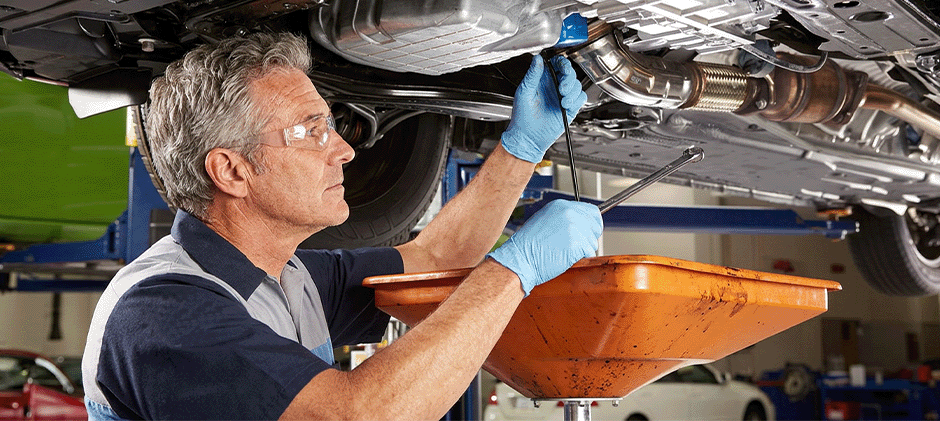
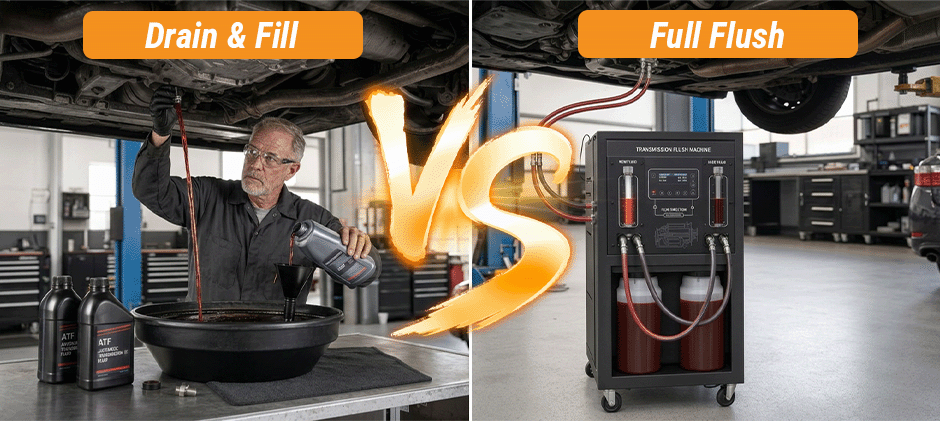
A Transmission drain and fill is as simple as draining the old transmission fluid from the transmission pan and then adding new transmission fluid to replace the already drained amount. This process can be done with any other machine. It involves removing the drain plug or the transmission pan to let the fluid out. Because some fluid remains in the system, the change is gradual. It typically includes:
- Drain about 30% to 50% of the old fluid
- Leave some used fluid inside the torque converter and cooler lines
- Take less time and is often less costly
- Helps if the fluid is not too old or dirty
The advantage of a transmission drain and fill is that it refreshes the fluid without disturbing material that has settled inside the transmission over time. If you have a higher-mileage vehicle or one without a consistent service history, a drain and fill could be a wise option. Repeating this service periodically can steadily improve fluid condition with minimal risk.
What Is Transmission Flush?
A transmission flush is a more complex process that requires using a particular machine to replace most or all of the old transmission fluid in one service. This includes replacing the fluid in the torque converter and cooler lines, ensuring a more complete reset of the fluid’s protective properties. This process typically involves:
- Replace up to 100% of the old fluid
- Often includes a cleaning solution to clear out sludge
- Can help if the fluid is dark, burned, or very old
- May cost more but gives a more complete clean
For owners who have bought a used vehicle with no records, it’s better to consider a full transmission flush for smooth operation and proper temperature control in the future.
Key Difference Between Transmission Drain and Fill vs Flush
The table below shows you a quick comparison between the two service methods.
| Aspects | Drain and Fill | Full Flush |
|---|---|---|
| Fluid Replaced | About 30–50% | Up to 100% |
| Time Needed | Shorter | Longer |
| Cost | Lower | Higher |
| Risk of Stirring Debris | Low | Higher |
| Ideal for | Well-kept transmissions | Older or unknown condition |
Transmission Drain and Fill vs Flush: Which Should You Choose?
Many factors determine which one you should choose between a drain & fill and a full flush. As mentioned above, this includes your vehicle’s condition, maintenance history and budget. Here are the guidelines for you.
- Routine Maintenance: If you service your transmission regularly and your transmission fluid is in good condition, a drain and fill might be sufficient.
- High Mileage or Dirty Fluid: If you have a vehicle with high mileage or dirty or contaminated fluid, you may need a transmission flush to clean the system completely.
- Manufacturer Recommendations: Always refer to your vehicle’s owner’s manual and follow the manufacturer’s recommendations for transmission maintenance.
Why Transmission Flush Isn’t Always the Right Choice?
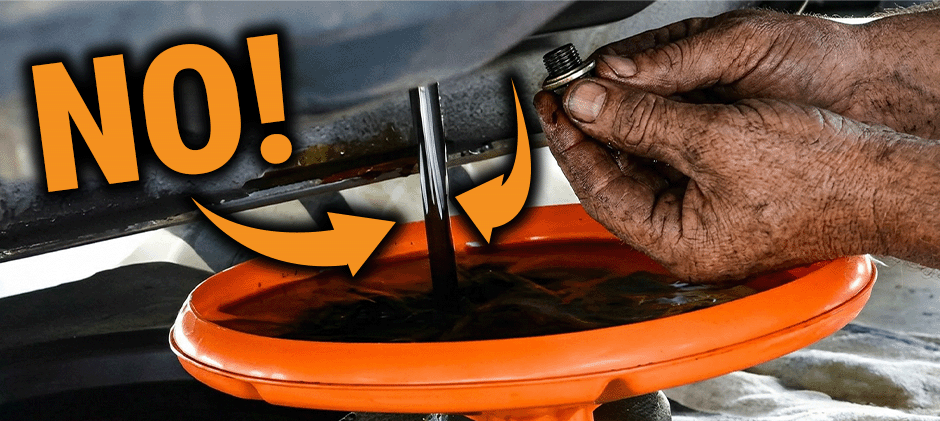
A full transmission fluid change can lead to undesirable problems if your transmission is already worn or the fluid is heavily contaminated. Over time, finer particles from normal wear can settle in low-flow areas. If you choose to flush, it can circulate those particles back through sensitive components like solenoids and valve bodies, thus leading to shifting issues or accelerating internal wear. So, it’s not always recommended to choose a full transmission flush for each vehicle, especially when the maintenance has been delayed.
When Is a Transmission Drain and Fill Enough?
If your mileage is less than 12,000 miles a year or you keep up with the oil and filter changes according to the recommended replacement intervals, it’s enough to drain and fill your transmission. You can also check if the transmission fluid is dark or burnt to determine whether to choose a transmission fluid change or a full flush.
Final Thoughts
If you’re experiencing delayed or harsh shifting, or if the fluid hasn’t been serviced within typical intervals on your vehicle, it’s time for a close inspection. Your transmission fluid color, smell and overall condition can help you determine between a drain and fill and a full flush. At FridayParts, you can learn more about your transmission maintenance and care through our blogs and explore a vast selection of quality transmission parts to keep your vehicles running at their optimal performance.
See Related
How Often Should You Change Your Transmission Fluid?
