

Donald Trump signed on October 5, 2026, a highly anticipated Executive Order (EO) temporarily lifting the federal ban on using tax-free, red-dyed diesel in highway vehicles through December 31, 2026. This may sound like a massive victory for anyone trying to cut down on fuel costs, including farmers and truckers. However, before you grab that red nozzle, you need to hear the hard truth: the fuel is not necessarily permanently tax-free. This could be a financial and legal trap. This guide explains why you should NOT impulse-buy red diesel under the new Trump executive order. Let’s dive in!

What Did Trump Red Dye Diesel Executive Order Change?
For many farmers and truckers, we are familiar with the normal rules that red-dyed diesel is generally intended for nontaxable uses, such as farming and off-road equipment. Anyone knowingly using dyed diesel improperly may face federal taxes and significant $1,000 or $10 per gallon penalties.
Trump’s October 5 executive order changes that temporarily. It directs Treasury to determine whether it can defer federal diesel excise-tax payments associated with highway use of dyed diesel between October 5 and December 31, 2026. Also, it directs the IRS not to impose the normal dyed-fuel penalties for qualifying highway use during that period, subject to the guidance Treasury is required to issue.
As described by the White House, the policy is a temporary opening of dyed diesel to highway use while deferring the federal diesel tax through the end of the year without interest or penalties.
Why Farmers or Truckers Should NOT Use Red Dyed Diesel?
There is an important catch: the loosening policy on dyed fuel for highway use doesn’t necessarily mean permanent tax-free status.
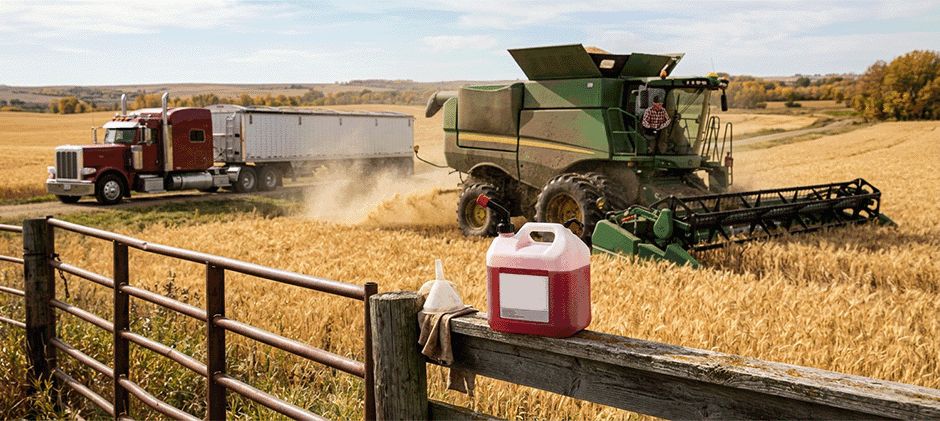
Farmers Should Think Twice Before Putting Red Oil in Road Pickups
Like other farmers, you may be incredibly familiar with red-dyed diesel, as it’s long been the lifeblood of your tractors, combines and irrigation pumps. While Trump’s new executive order aims to help the agricultural sector, pouring that red diesel into your pickup truck, like a Ford F-250, Chevy Silverado, or Ram 2500, is not a good idea. You may face the following three risks:
- Permanent Dye: The red dye in diesel featuring Solvent Red 164 is incredibly potent. It not only dyes the fuel but also leaves permanent stains on your fuel lines, fuel tank, and, most often, your fuel filters.
- Hefty Fines: The red dye diesel executive expires on December 31, 2026. If a DOT officer or state trooper dips your tank or inspects your fuel filter in 2027 and finds even a trace of red stain, you will have to prove exactly when you bought that fuel. If you can’t, you are looking at a significant $1,000 fine or $10 per gallon penalty. The cost of flushing your fuel system to get rid of the stain will easily wipe out any savings you made in late 2026.
- Warranty Denials: Modern highway diesel pickups utilize highly sophisticated high-pressure common rail fuel systems and complex emission equipment, such as DPF, SCR and DEF systems, making it difficult to burn this without issue, unlike older tractors whose bulk tanks often sit for long periods, accumulating condensation, rust, and microscopic debris. As a result, if you take your truck to a dealership for a multi-thousand-dollar warranty repair, the red dye in the system will likely void your manufacturer’s warranty on the spot.
Truckers Must Stay Far Away
If you are an over-the-road (OTR) trucker or operate a commercial motor vehicle (CMV) across state lines, using dyed diesel right now is practically an invitation for financial ruin. Here are the main reasons for you to consider:
- State Taxes Remain Independent: Trump’s executive order on red dyed diesel only waives the federal tax and penalty. It does not wipe out state road fuel taxes. While federal authorities encourage states to match the waiver, state-level rules vary widely. Crossing into a state that has not suspended enforcement leaves operators vulnerable to state tax evasion penalties.
- IFTA Nightmare: The International Fuel Tax Agreement (IFTA) does not care about temporary federal executive orders. IFTA requires you to report and pay fuel taxes based on the miles driven in each jurisdiction. If you use tax-free dyed diesel, you still owe the state fuel taxes for the miles you drive. As a result, when you file your quarterly IFTA returns, you will have to pay those taxes back anyway. Even worse, running dyed diesel makes your records highly inconsistent, virtually guaranteeing a painful, time-consuming IFTA audit that could tie up your business for months.

Does Red Dyed Diesel Stain Fuel Filters?
Yes, absolutely. While the red dye (Solvent Red 164) is soluble in diesel, it chemically bonds with the paper, synthetic, or cellulose media inside your fuel filters and water separators.
Even if you flush your tank and run clear highway diesel later, your fuel filter will remain stained a bright pink/red. When state troopers or DOT officers inspect your engine bay or dip your fuel system, a stained filter is a dead giveaway of illegal fuel use. To avoid massive post-deadline fines in 2027, replacing your fuel filters and water separators is non-negotiable.
Pre-Checklist for Using Bulk Fuel Under A Waiver
So, under the waiver, what can we do to minimize the risks?
- Verify state-level alignment: Confirm whether the specific states where you operate have formally matched the federal enforcement waiver.
- Retain paper trails: File all purchase invoices, gallon amounts, dates, and supplier delivery tickets for at least 12 months in case of deferred tax audits.
- Test the bulk tank: Use water-finding paste to check the bottom of stationary tanks before drawing fuel.
- Treat every fill: Add Diesel Kleen for lubricity and injector detergent chemistry with every fill, and switch to Diesel Fuel Supplement as fall and winter weather approaches.
Frequently Asked Questions About Red Dye Diesel
Is red dye diesel really tax-free now?
No. Under Trump’s new executive order, that tax is temporarily deferred. We shouldn’t assume that every deferred federal tax dollar has already been permanently forgiven. Besides, even though the federal government can encourage states to provide similar relief, each state controls its own fuel-tax policy. That means the actual savings can vary depending on where you fuel.
Is red diesel the same as regular diesel?
The key differences lie in the red dye, tax treatment and traditional restrictions on its use. Modern highway and most off-road diesel are subject to the same 15 ppm ultra-low sulfur standard.
Where can I buy red diesel?
You can find red diesel commonly from agricultural suppliers, rural fuel stations, commercial fuel distributors, and bulk-fuel companies. Availability at ordinary highway truck stops may be limited, especially while suppliers adjust to the new policy.
Conclusion
While President Trump’s temporary tax relief sounds tempting, using red-dyed diesel in highway vehicles is a gamble. Beyond state tax fines and voided warranties, the red dye permanently stains your fuel filters and water separators. Once the Executive Order expires on December 31, 2026, driving with a stained filter into 2027 is a financial ticking time bomb during DOT inspections. To stay 100% compliant, you must flush your system and swap out those stained filters before the new year. At FridayParts, we offer a comprehensive selection of quality fuel filters, water separators, and fuel system parts to keep your fleet safe. Don’t let a temporary tax break turn into a permanent financial headache. Browse FridayParts.com today and get your clean replacements shipped fast before the December 31 deadline!
