

What is the exact difference between a wet clutch vs dry clutch? Simply put, a wet clutch operates completely bathed in lubricating oil to cool the plates, while a dry clutch operates in the open air, relying on direct friction for highly efficient, drag-free power transfer during continuous driving. In this guide, we break down exactly how each system works, their pros and cons, and which one fits your specific job site needs.
Wet Clutch Vs Dry Clutch: What’s the Difference?
Heavy-duty machines need to send power from the engine to the transmission, and this job is super important. The big difference between these two clutch types is where they run and how they get rid of friction heat. Here’s their main differences:
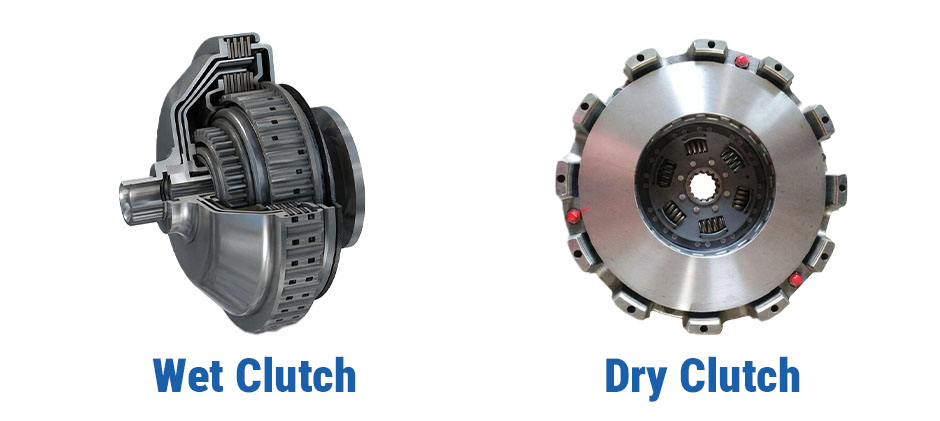
- Working space: A dry clutch spins in open air inside the bell housing. A wet clutch sits fully sealed and soaked in transmission oil.
- Cooling: Dry clutches use air vents to let hot air out. Wet clutches use a pump to move oil over parts nonstop and carry heat away.
- Friction materials: Dry clutch discs use tough materials like organic mix, ceramic or Kevlar, since they work in air. Wet clutches use paper or sintered bronze. These materials can still grip well even with oil on them.
- Contact area: Dry clutches usually have one big friction disc. Oil makes surfaces slippery, so wet clutches stack many small discs to get the same holding strength.
Understanding wet and dry clutches helps pick the right one for your machine. Loaders that work nonstop need a different clutch than equipment just driving straight across fields all day.
How Wet and Dry Clutches Work?
While both do the exact same job, connecting and disconnecting engine power, they go about it in very different ways.
A dry clutch uses a heavy metal pressure plate to clamp a single friction disc tightly against the engine’s flywheel. When the operator releases the pedal, the pressure plate locks the disc in place, creating a direct mechanical link. Because there is no fluid to cushion this action, the torque transfer is instant. The friction materials used here offer a very high grip, ensuring that engine power moves directly to the wheels without slipping.
A wet clutch looks entirely different. Instead of a single large disc, it features a drum filled with a “sandwich” of alternating steel plates and friction discs. A hydraulic pump constantly pushes transmission oil through this assembly. Because oil is slippery, the friction coefficient is much lower than in a dry setup. To make up for this lower grip, the system uses multiple plates to increase the total surface area. When engaged, a piston squeezes this stack of plates together, forcing the oil out from between them to lock the drive in place.
Wet Clutch Benefits
The biggest advantage of a wet system is its ability to handle extreme heat. In heavy machinery, heat destroys moving parts quickly.
“Because the friction plates are constantly bathed in oil, a wet clutch absorbs the extreme heat generated during heavy slippage, allowing operators to inch forward without burning out the system.”
- Wet clutches dissipate heat way better. With heavy loads, they can last 3 to 4 times longer than dry clutches. You’ll commonly see them in PTO clutch packs, wet brakes and powershift transmissions. These spots create friction really fast. The steady oil flow stops that thin friction material from getting glazed or burned up.
- Oil also gives much smoother engagement. When you do precise loader work or start a heavy tractor on a steep slope, the oil lets you ease into the pedal gently, no sudden jerks. Just use the right hydraulic fluid. Wrong oil will lead to slipping and wear out your friction parts early.
Dry Clutch Pros, Cons, and Common Issues
Wet clutches handle heat really well, but dry clutches win when it comes to pure power efficiency and simple design. Still, dry clutches have their own problems. Let’s go over the good and bad points.
Dry clutch pros:
- No parasitic drag. Wet clutches make the engine burn extra power to stir thick transmission fluid. Dry clutches spin in open air, so no horsepower gets wasted moving fluid. That means better power transfer and better fuel mileage.
- Simple maintenance. Swapping a dry clutch disc is basic mechanical work. Pull the transmission, unbolt the pressure plate, and put in the new disc. No messy oil to drain, and no complicated hydraulic drums to take apart.
- Cheaper upfront. They have fewer parts and don’t need special oil pumps. So they cost less to build and replace.
Dry clutch cons and common problems:
- Bad at handling heat. Dry clutches overheat fast with constant stop-start work or repeated loader operations. If the operator rides the clutch pedal, the friction disc burns out quickly.
- Vibration and noise. If overworked or overheated, they chatter loudly and give off a strong burnt smell.
- Sticking trouble. On old machines that sit idle for years, dry clutches can rust and stick to the flywheel. Fixing it means tearing the whole assembly down.
Choosing Between Wet and Dry
When deciding between a wet clutch vs dry clutch for your heavy equipment, the choice always comes down to your daily duty cycle.
- If you use farm tractors for plowing, pulling loads, or long hauls out in open fields, a dry clutch usually works best. Most of the time these machines stay locked into one gear. You get better efficiency, less fuel use, and simpler maintenance with a dry clutch.
- If you run wheel loaders, mining equipment, or tractors doing nonstop front loader work, you need a wet clutch. These machines switch between forward and reverse hundreds of times every day. A dry clutch would overheat and break down within days under this repeated heavy load. The cooling from a wet clutch is a must here.
Lots of newer tractors use a mix of both. They use a low-cost single-plate dry clutch for the main drive, but add wet multi-disc packs for the PTO and brakes. This handles the extra heat from those tough jobs.
Final Thoughts
Dry clutches transfer power really well and cost less to maintain for steady open-field jobs. Wet clutches handle heat better and engage smoothly, perfect for repeated heavy work like operating loaders. FridayParts stocks replacement aftermarket parts for all major equipment brands. Shop with us today.
