

A spreader bar is a lifting tool that helps you safely lift wide or fragile loads without bending or crushing them. It spreads your lifting slings or chains apart, keeping the rigging forces balanced and your load steady. If you work with heavy attachments or uneven loads, understanding how it works can help you lift safely and protect your equipment.
Clear statement: It changes the direction of lifting forces—not the weight of your load.
What Is a Spreader Bar?
A spreader bar is a strong metal bar placed between two rigging legs during a lift. It keeps those legs apart so they don’t pull inward on the load. One or two top links attach to your lifting hook, while each end of the bar connects to slings or chains fixed to your load.
This setup prevents squeezing, bending, or cracking delicate parts like sheet metal, radiators, or tanks.
Simple quote to remember: “Keep the legs apart, keep the load happy.”
Why Use a Spreader Bar?
Use one when:
- Sling angles are too steep.
- The load could be crushed or bent by inward pull.
- You need extra clearance above the load.
It’s especially useful for lifting wide, long, or uneven loads such as attachments, dozer blades, moldboards, forks, cylinders, or packed crates.
Spreader Bar vs. Lifting Beam
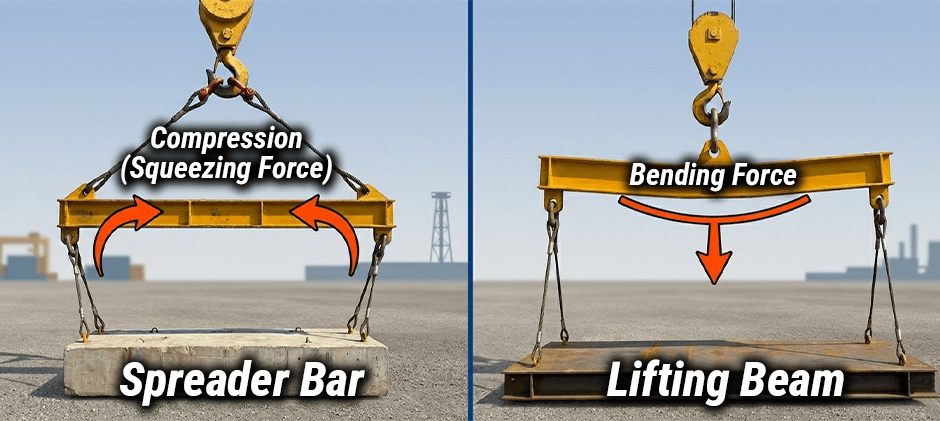
A spreader bar works mainly in compression — pushing outward to separate slings.
A lifting beam works in bending — supporting the load from above.
In simple terms: If it pushes out, it’s a spreader bar. If it bends up, it’s a lifting beam.
How Does a Spreader Bar Protect the Load?
When you lift without a bar, the sling legs pull inward, squeezing the sides of the load.
A spreader bar stops this inward force, making the lift smoother and reducing stress.
It also keeps sling angles wider, which lowers tension and protects rigging hardware from overload.
Main Parts of a Spreader Bar Setup
A safe setup usually includes:
- The Bar – fixed or adjustable length.
- Top Connection – master link or hook point.
- End Connections – pad eyes or lugs for shackles.
- Shackles – properly sized and pinned.
- Slings or Chains – rated and in good condition.
- Tag Lines – control swing and rotation.
How to Choose the Right Spreader Bar
- Match bar length to lift-point spacing – it should fit your load without pulling in the rigging.
- Check Working Load Limit (WLL) – bar, slings, shackles, and hooks must all match or exceed the load weight.
- Verify geometry – confirm sling angles, load balance, and headroom before lifting.
Clear rule: The right spreader bar fits your load, your space, and your lift angles—at the proper rating.
7 Safety Checks Before Using a Spreader Bar
- Check WLL on every component.
- Inspect bar and lugs for bends or cracks.
- Ensure shackle pins are secure.
- Use edge protectors on all slings.
- Confirm the center of gravity before lifting.
- Do a test lift a few inches off the ground.
-
Keep everyone out of the fall zone. This is a critical rule discussed in many safety guides, including Tractor Safety: 10 Ways Your Tractor Can KILL you! All Avoidable.
“If you can’t explain the rigging, you can’t justify the lift.”
Common Mistakes to Avoid
- Ignoring sling angle forces.
- Picking from weak or bent points.
- Forgetting the sling edge protection.
- Using shackles too small or misaligned.
- Lifting too fast and shock-loading the rigging.
These small errors can damage equipment or create safety risks. Always plan the lift first.
Storing and Maintaining a Spreader Bar
- Keep it clean, dry, and protected from impact.
- Store it flat, not leaning against walls.
- Record inspection dates to avoid using untested gear.
Like your machinery, rigging equipment lasts longer when maintained properly.
Summary
A spreader bar lets you lift wide, heavy, or fragile loads safely by keeping sling legs apart and reducing pressure on the load. It’s an essential tool for stable lifting and preventing damage on job sites. For safe lifting and attachment handling, keep reliable rigging gear ready.
Find durable attachment parts, tested lifting components, and essential tool accessories from FridayParts — built to help your off-road machinery lift safely, work efficiently, and stay jobsite-ready.
