

What is shuttle shift on a tractor? It can be confusing, especially with so many different transmission types available. This guide covers all the key details you’ll need.
What Is Shuttle Shift on a Tractor?
The tractor’s shuttle shift lets you quickly switch between forward and reverse without shifting your main gear. It’s basically a separate lever just for changing direction. Once you pick your working speed with the main gear shifter — like 3rd gear — you can flip back and forth all day while staying in that same gear. This comes in really handy for jobs that need lots of back-and-forth movement, such as using a front-end loader, hauling materials, or getting around tight spots. That said, not all shuttle shifts work the same. The name covers several different designs, and they perform very differently.
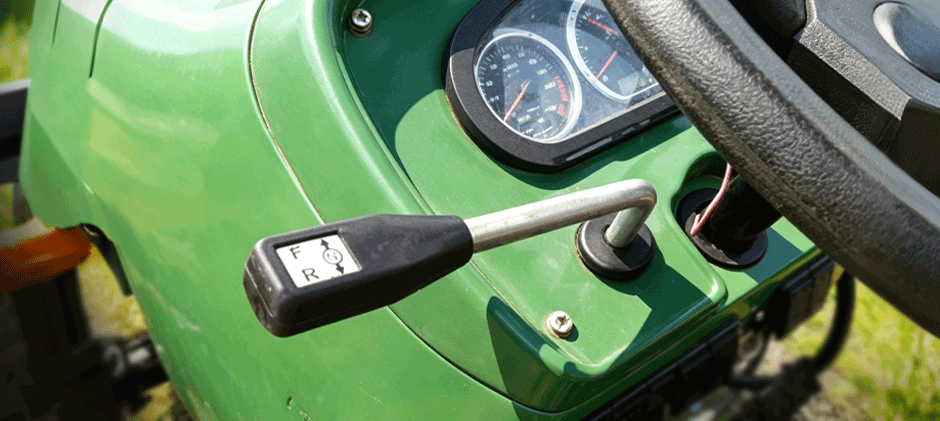
Different Types of Shuttle Shift
“Shuttle shift” is a general term. Whether it’s mechanical, synchronized or power shuttle, the type makes a huge difference in how easy it is for the operator to use.
Standard or Mechanical Shuttle
This is the most basic type. It’s just a simple reverse gear set added to a regular manual transmission. To switch direction, you have to press the foot clutch, bring the tractor to a full stop, flip the shuttle lever between forward and reverse, then let out the clutch. If you try to shift while the tractor is still moving, you’ll hear that harsh grinding noise that hurts the gears. It’s better than a transmission with just one reverse gear, but you still need to follow several clear steps every time you change direction.
Synchro Shuttle
This system uses synchronizers, or synchros, inside the shuttle mechanism. These rings get the gears spinning at the same speed before they connect.
A synchro shuttle is a major improvement over a mechanical shuttle. You can push the clutch and switch between forward and reverse when the tractor is moving slowly, without any gear grinding. This makes work cycles quicker and the tractor easier to operate.
You still need to step on the clutch every time you change direction. But shifting at low speeds without coming to a full stop saves time and cuts down on operator fatigue, so it’s far more suitable for loader work than a standard shuttle.
Power Shuttle (Sometimes Known As a Power Reverser)
This is the most advanced and preferred shuttle transmission. It relies on hydraulic pressure and wet clutch packs — one for forward, one for reverse — to switch directions. When you move the shuttle lever, it triggers a hydraulic valve that sends fluid to activate the right clutch pack. The biggest plus: you don’t need to use the foot clutch to shift between forward and reverse. Just flip the lever, and the tractor will slow and change direction smoothly. This lets you work much faster with less effort when running a loader. You can keep one hand on the wheel and the other on the loader joystick the whole time.
Shuttle Shift vs. Hydrostatic Transmission
Power shuttle and hydrostatic transmission (HST) both make tractors easier to run, but they work in totally different ways.
A power shuttle still runs on gears. It has a fixed number of speeds, with a direct mechanical connection from the engine to the wheels. Power transfers very efficiently this way, so more of the engine’s horsepower reaches the wheels and PTO for tough jobs.
- Controls: Pick a gear to lock in your speed, then use a hand lever to change direction.
- Power efficiency: Great. Little power gets lost inside the transmission, so it works well for heavy work like plowing or pulling big loads.
- Operation feel: Direct and responsive. The tractor keeps a steady speed in your chosen gear, which is ideal for tilling or seeding.
Hydrostatic transmission, or HST, acts more like an automatic car transmission. It uses a hydraulic pump and motor to send power.
- Controls: Most models have two foot pedals next to each other, one for forward and one for reverse. Press harder, and the tractor speeds up.
- Speed control: Infinite adjustment. You can tweak speed very gently with your foot, perfect for careful work or moving through tight spots.
- Operation feel: Super smooth and easy to get used to. No shifting or jerks, so new operators can learn quickly.
Choosing between power shuttle and HST comes down to what you value most. Power shuttle keeps the high efficiency of a standard gear transmission. HST focuses on simple operation and fine speed tuning, though some power gets wasted through hydraulics.
Pros and Cons of Shuttle Shift
To pick the right transmission, you should know the upsides and downsides of shuttle shift, especially next to other types.
Pros:
- Great Power Delivery: Since it’s gear-based, shuttle shift sends more engine power straight to the wheels and PTO. This is a big plus for tough jobs such as plowing, harrowing and running big attachments.
- Steady Speed: Once you pick a gear, the tractor holds that constant speed, and you don’t have to hold down a pedal. This works perfectly for jobs that need consistent movement, like spraying, seeding or mowing big open fields.
- Long-Lasting Build: Mechanical and synchro shuttle setups are fairly simple and tough. They’ve been widely used on off-road machines for years and stay reliable if you use them properly.
- Quick Direction Swaps (Power Shuttle): Power shuttle lets you switch direction extremely fast for back-and-forth work. You can keep your hands on the controls without stepping on the foot clutch.
Cons:
- Takes Some Practice: Even power shuttle needs more active handling than HST. You have to learn which gear and speed fit each job.
- Limited Fine Speed Adjustment: You can only use the preset gear speeds. You can’t make tiny speed tweaks like you can with HST, which makes it less suitable for delicate work.
- Can Feel Jerky: Basic mechanical shuttles will shift roughly if you don’t fully stop the tractor before changing direction.
- Tiring on the Clutch (Mechanical/Synchro): Models that need a foot clutch can wear out your left leg after a full day of loader work.
Is Shuttle Shift Right for Your Tractor?
So, after all this, how do you decide? There is no single “best” transmission; there is only the best transmission for your job.
You should choose a tractor with a shuttle shift if:
- A significant portion of your work involves ground-engaging implements like plows, tillers, or box blades. The superior power efficiency will make a noticeable difference.
- You perform tasks that require a consistent, maintained speed over long distances.
- You do a mix of heavy implement work and loader work. A power shuttle offers a fantastic compromise, giving you clutchless directional changes for the loader while retaining the raw power of a gear drive.
- You are an experienced operator who is comfortable with a gear-driven machine and wants maximum control and power.
You might be better off with a hydrostatic transmission (HST) if:
- Over 75% of your tractor’s life will be spent doing loader work, especially in confined areas.
- The primary task is mowing, where the ability to easily slow down for corners and speed up on straightaways is a huge benefit.
- Multiple people, including some with little to no tractor experience, will be using the machine.
- Your work requires extremely precise, slow-speed maneuvering.
In Conclusion
A shuttle shift is a highly effective feature designed to make repetitive, back-and-forth tasks far more efficient. No matter which transmission your equipment uses, ensuring it runs smoothly is vital. We offer high-quality, affordable transmission components for equipment brands. Browse our one-stop shop now!
